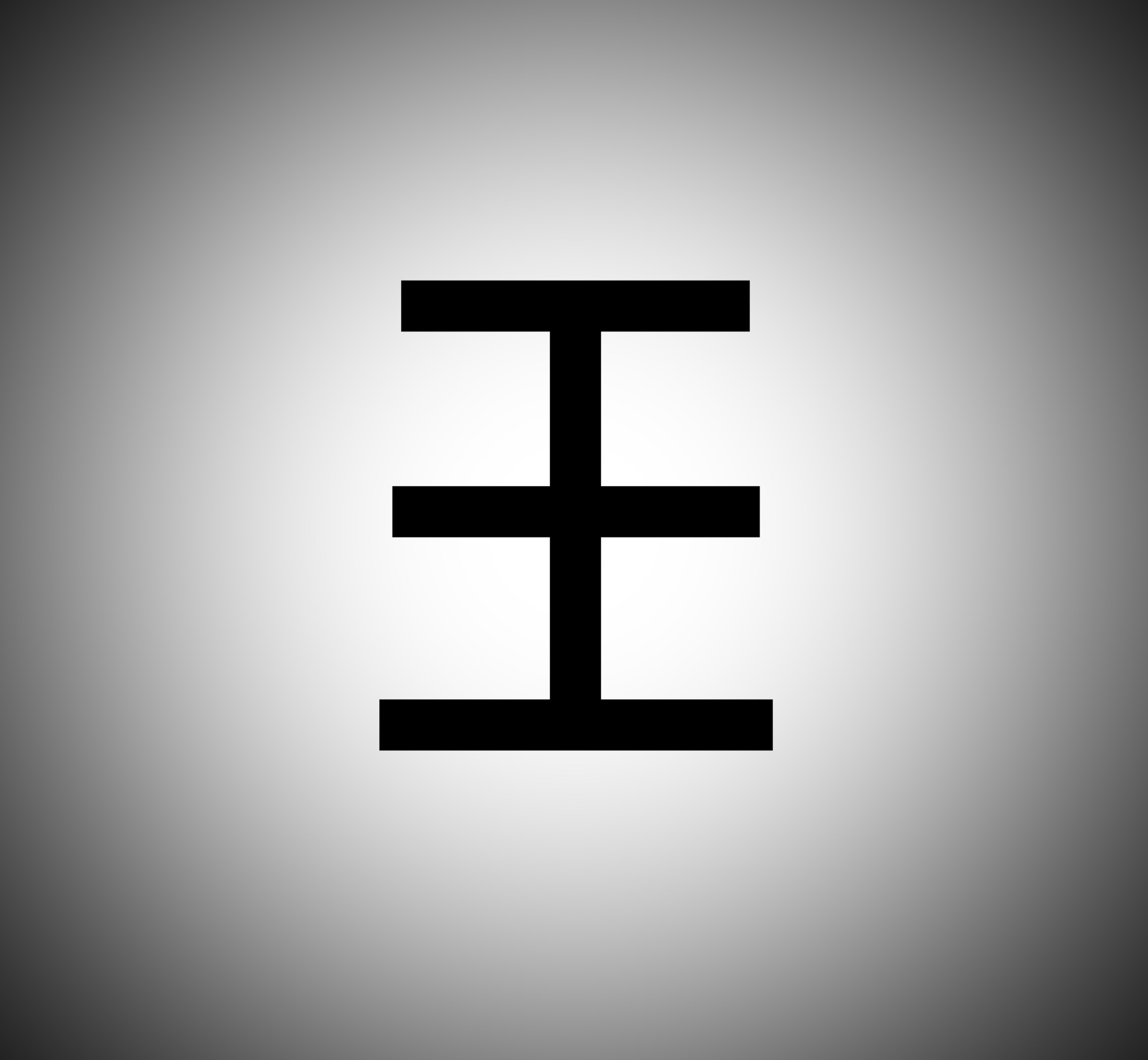
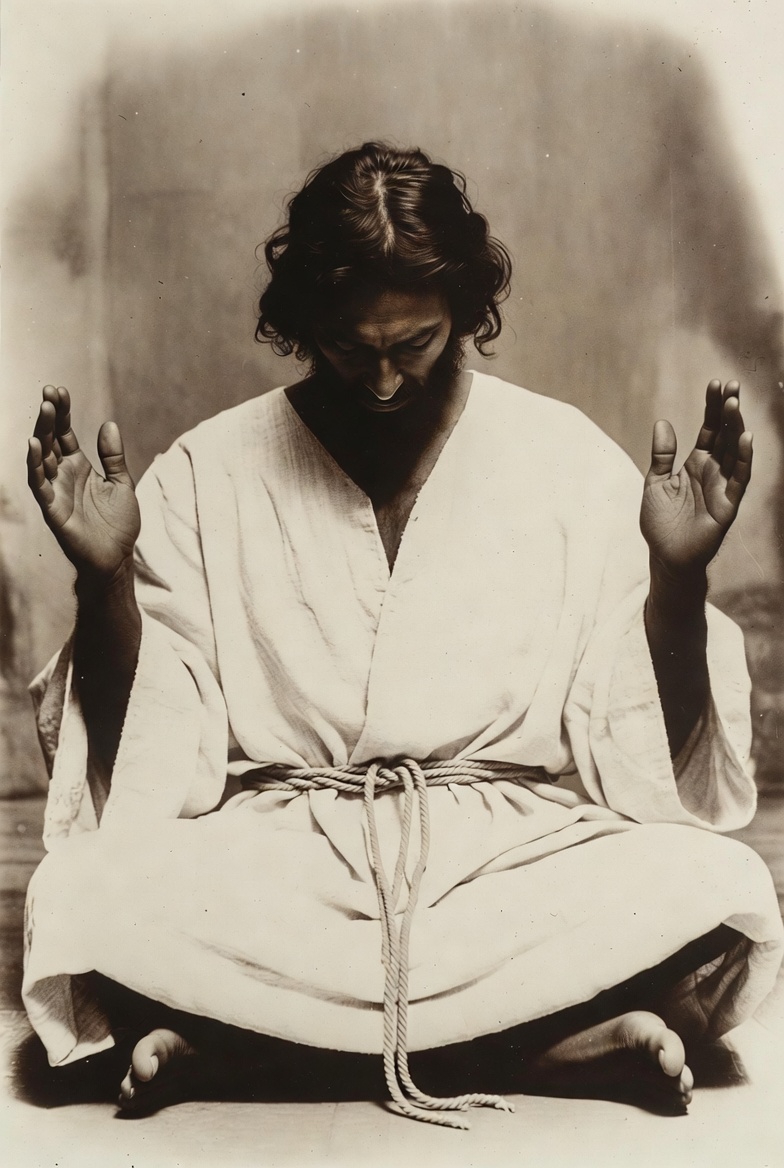
Me at Position 0
Time and the I as Witness: Consciousness at Position Zero
The Unmoved Observer in the Flow of Time
___
The Paradox of the Witness
You experience time passing. Your body ages, your thoughts change, your circumstances transform. Everything you can observe moves through temporal succession. Yet something observes all this movement—and that something does not itself move.
This is the witness, what various traditions call “the observer,” “pure awareness,” “the I” that remains constant while everything else changes. In SUM’s framework, this witness is position zero—the dimensionless singularity from which all experience emanates, the point that cannot move because it has no location, the ground that cannot change because it stands outside temporal flow.
The paradox: the witness experiences time but is not subject to time. It observes temporal succession without being caught in succession. It knows past and future without leaving the present. It is the carrier of reason, the continuity of consciousness, the unmoved center around which all temporal experience revolves.
Understanding the witness—what it is, how it operates, why it cannot leave position zero yet communicates from that point—reveals consciousness not as product of temporal processes but as their ground, not as emergent phenomenon but as fundamental structure, not affected by time but providing the very framework within which temporal experience becomes possible.
Position Zero: The Unmoved Point
In the five-dimensional framework M₅ = M₄ × Q, position zero is the singularity at the origin. It has no extent in M₄’s spacetime—no location in space, no moment in time. It has no extent in Q’s qualia space—no particular quale, no specific sensory content. Yet it is not nothing. It is the point from which all experience radiates, the center from which consciousness emanates, the “I am” that remains constant across all variations in experience.
Position zero cannot move because movement requires location—a starting point, an ending point, a path between them. But position zero has no location. It is dimensionless. As we noted: “Position zero is the singularity from which experience emanates. It is dimensionless—having no extent in M₄’s space or time, no location in Q’s qualia space. Yet it is not nothing. It is the ‘I am’ of consciousness, the self-evident fact of awareness that persists regardless of what content occupies attention.”
This is why the witness cannot leave position zero. Not because it is trapped or confined, but because there is nowhere for it to go. It is already at the origin, the center, the point from which all locations are measured. Movement would require being somewhere other than the origin, but the witness is the origin itself.
The witness is not in time. Time emanates from the witness. As experience unfolds—past remembered, present felt, future anticipated—the witness remains at position zero, observing all temporal phases from the atemporal ground. This is not escape from time but the vantage point from which time becomes observable.
The Observer That Cannot Be Observed
The witness observes everything but cannot observe itself. Try to make the witness an object of observation and you immediately create duality: an observer (new witness) and an observed (what you mistakenly thought was the witness but is actually mental content). The true witness always remains the subject, never the object.
This is not limitation but logical necessity. The eye cannot see itself seeing. The knife cannot cut itself. The witness cannot witness itself because witnessing requires subject-object duality, and the witness is always the subject pole, never the object.
Yet the witness knows itself. Not through observation but through being. The self-evident “I am” is not conclusion of reasoning but immediate certainty. Descartes had it backwards: not “I think, therefore I am,” but “I am, therefore I can think.” The witness is prior to thought, prior to observation, prior to all content—and knows itself through sheer immediacy.
This self-knowing without self-observation is unique to position zero. Everything else—thoughts, sensations, memories, anticipations—can be observed because they occur at locations other than position zero. They arise in M₄’s spacetime or Q’s qualia space. But the witness, being position zero itself, cannot be located, cannot be objectified, cannot be observed. It can only be recognized from within, as the constant “I” that persists through all changing experience.
Non-Reductionism: The Witness Cannot Be Explained Away
Reductionist accounts of consciousness attempt to explain the witness as emergent property of neural processes, as illusion created by language, as convenient fiction the brain invents. But these accounts inevitably smuggle in what they claim to explain.
Who emerges? Who is illuded? Who invents the fiction? Every reductionist explanation requires a subject doing the reducing, observing the emergence, recognizing the illusion. That subject is the witness—and it cannot be reduced to what it observes.
As we established in exploring SUM’s nature: “Consciousness is not emergent from brain but co-fundamental with spacetime, not reducible to neural processes but the ground from which neural processes become observable.” The witness at position zero is not produced by temporal processes. It is the condition for temporal processes to be experienced at all.
This is non-reductionism not as mere philosophical preference but as logical necessity. You cannot reduce the observer to the observed without generating infinite regress. If consciousness is just neurons, who observes the neurons? If that observer is just other neurons, who observes those? The regress terminates only by recognizing an observer that is not itself observable—the witness at position zero.
The witness is irreducible because it is foundational. Not emergent but ground. Not product but source. Not explained by temporal processes but the very condition for temporal processes to become experience rather than mere physical events.
Information Continuity: Memory as Past Structure
From position zero, the witness observes the entire temporal landscape. Not by moving through time but by remaining at the center from which all time radiates. Past, present, and future are not temporal locations the witness visits but structures accessible from the atemporal ground.
Memory is past structure. Not “the past” itself—which exists in M₄’s timeline, fixed and complete—but the structure through which the witness accesses that past. We explored this in understanding memory as time travel: “M₄ provides the timeline (events recorded in neural patterns). Q provides the presence (experience occurring now). Together = time travel (accessing past as present experience).”
But what enables this access? What maintains the connection between present witness and past events? Information continuity. The witness at position zero maintains unbroken connection with all past experience through the continuous thread of consciousness. Memory is not stored separately from the witness, to be retrieved when needed. Memory is structure the witness carries, the past made present through the witness’s unbroken continuity.
This is why amnesia is so devastating. It breaks information continuity. The witness remains at position zero, but the structures connecting to past experience are damaged or destroyed. The witness can no longer access what was, not because the past has vanished from M₄’s timeline but because the information continuity—the structural connection—is broken.
Information continuity means the witness is never truly separate from its history. Every past moment remains connected to position zero through the unbroken thread of consciousness. The connection may be strong (vivid memories, easily accessed) or weak (vague impressions, requiring effort to recall), but it persists as long as consciousness persists. The witness is not merely present now but is the integrated continuity of all present moments, carrying the entire structure of personal history.
Future as Possible Present Structure
Just as memory provides structure of the past, anticipation provides structure of the future. But the future does not exist in M₄—there are no events to record, no completed timeline to access. Instead, the future exists as possible present structure, as potentiality emanating from position zero.
We noted this in exploring time’s dimensionality: “Purpose requires temporal structure: an intention formed now, actions taken over time, a goal achieved later. Remove the arrow of time and purpose collapses.” But who forms the intention? Who envisions the goal? The witness at position zero, projecting possible structures forward from the present.
The future is not predetermined or fixed. It is space of possibility, structure the witness constructs through reason, imagination, and intention. These possible futures have varying degrees of clarity and probability. Some are nearly certain (the sun will rise tomorrow). Others are highly uncertain (what conversation you’ll have next month). But all are structures emanating from position zero, the witness’s projection of what might be.
The witness does not predict the future in the sense of knowing what will occur. It constructs possible futures, evaluates them through reason, and chooses among them through will. This is how purpose operates: the witness at position zero envisions possible structures, selects one as goal, and acts in the present to make that possibility actual.
The future is not fixed structure waiting to be discovered. It is structure under construction, emerging from the witness’s creative projection combined with M₄’s causal constraints. The witness stands at position zero, observing what was (memory’s past structure) and constructing what might be (anticipation’s possible future structure), always from the unchanging center.
Consciousness as Carrier of Reason
The witness is not passive observer. It is active carrier of reason—the capacity to connect past and future through present understanding, to see patterns across time, to learn from what was and plan for what might be.
Reason requires continuity. You cannot reason if each moment is disconnected from the last, if memory vanishes instantly, if the future is not projectable from the present. Reason needs the integrated view that only the witness provides: standing at position zero, maintaining information continuity with the past, constructing possible structures for the future, operating always in the present.
As we observed about memory’s purpose: “Memory allows learning from past experience. Without time travel to the past, mistakes would be unrepeatable (literally—you couldn’t access them again), successes would be unexaminable, development would be impossible.” The witness is what learns, what examines, what develops—by carrying reason across temporal structures.
This carrying is not metaphorical. The witness actually bridges past and future through present reasoning. When you learn from mistake, the witness at position zero accesses past structure (memory of error), projects future structure (how to avoid repeating it), and applies this understanding in present action (choosing differently). All three temporal modes—past, present, future—are integrated by the witness through reason.
Without the witness, temporal structures would be disconnected. Past events would be just past events, not lessons. Future possibilities would be just possibilities, not goals. Present moments would be just moments, not opportunities for choice informed by memory and guided by purpose. The witness unifies temporal experience by carrying reason through all three structures, making coherent temporal existence possible.
The Witness Is Not Affected by Time
This is the crucial point: consciousness at position zero is not subject to temporal change. The witness observes aging but does not age. It observes thoughts arising and passing but is not itself a thought. It observes memories forming and fading but is not itself a memory. The witness remains constant while everything it witnesses changes.
This constancy is not changelessness in the sense of being static or frozen. The witness is dynamically constant—fully present to each moment, responsive to experience, yet never displaced from position zero. Time flows through the witness’s field of awareness, but the witness itself stands outside that flow.
We recognized this in contemplative experience: “We access position zero constantly in ordinary life, whether we recognize it or not. When you wait and time drags, you’re experiencing emanation from position zero with one quality. When you’re absorbed and time flies, you’re experiencing emanation from position zero with a different quality. The source is constant. What varies is how consciousness engages with the temporal structure that emanates from it.”
The constancy of the witness explains personal identity. You are the same “I” who was a child, even though your body has completely changed (cells replaced multiple times), your thoughts are different (childhood beliefs discarded), and your circumstances have transformed (different locations, relationships, roles). What remains constant is the witness—the “I am” at position zero that observed childhood and observes present, maintaining unbroken continuity across decades of change.
The witness is not affected by time because it is not in time. Time is structure the witness observes, dimension through which experience unfolds, but the witness remains at the atemporal center. This is not escape from temporal existence but recognition of consciousness’s actual position: not as product of temporal flow but as ground from which temporal flow becomes observable.
Communication from Position Zero
The witness cannot leave position zero, but it communicates from that point constantly. Every thought, word, or action originates at position zero and manifests in M₄’s spacetime and Q’s experiential dimension. The witness is not isolated or imprisoned at the origin. It is the origin from which all expression emanates.
When you speak, the witness at position zero initiates the speech, which then unfolds as temporal event—breath modulated, sounds sequenced, words formed over time in M₄. When you act, the witness chooses, and the choice manifests as bodily movement through space and time. When you create, the witness conceives, and the conception becomes actual through temporal process.
This is how consciousness affects the physical world despite being at position zero. The witness doesn’t need to enter M₄ or Q as location. It operates from the origin, and its operations manifest throughout the dimensions that emanate from that origin. Position zero is not somewhere else, removed from experience. It is the center everywhere present, the source from which all experience radiates.
The communication is bidirectional. The witness receives input from M₄ (sensory information, bodily states) and Q (experiential qualities, felt senses), processes this through reason, and sends output back (choices, intentions, attention). All this occurs through the five senses—the portals connecting position zero to the dimensional structures of M₅.
We established this: “The five senses function as portals between M₄ and Q. Each sense has temporal structure in M₄ (sound waves propagate, light travels, neural signals process) and immediate presence in Q (the heard, the seen, the felt right now).” The witness at position zero uses these portals to engage with temporal reality while remaining at the atemporal center.
The Present as a steady point
Because the witness cannot leave position zero, because it exists only in the present (understood not as fleeting instant but as eternal ground), the present is the only steady point or point of power. Past is structure accessible but unchangeable. Future is structure possible but not yet actual. Only present is where the witness can act.
This is why presence is emphasized in contemplative traditions. Not as achievement to attain but as recognition of what is always the case: the witness operates only from position zero, which is the eternal present. Past and future can be accessed and structured from the present, but action occurs only now.
We noted this about purpose: “The pull of meaning, the sense that something matters, the felt orientation toward what is important—these are not future states but present experiences. Purpose is not just what I will do but how I orient now.” The witness orients in the present, informed by past structure (memory) and guided by future structure (anticipation), but operating always from position zero.
This explains why worry about past (unchangeable) and anxiety about future (not yet actual) are dysfunctional. They represent the witness attempting to act at temporal locations other than position zero. But the witness cannot move. It can only operate from the present. Effective action requires accepting this: working with past as structure to learn from and future as structure to plan toward, but always acting in the only moment where action is possible—now.
The present is not impoverished by being the only point of action. It is empowered. All of time’s structure—past as memory, future as possibility—is available at position zero. The witness need not leave the present to access what was or envision what might be. Everything temporally relevant is available from the eternal ground.
The Witness and GRAVIS
The witness experiences but is not determined by the experiences it observes. High GRAVIS events—trauma, profound beauty, overwhelming significance—capture the witness’s attention, dilate experiential time as we explored: “High GRAVIS experiences dilate experiential time—making duration feel extended, present moment stretched, each second subjectively longer.”
But the witness itself does not acquire GRAVIS. Events have GRAVIS. The witness observes events, experiences their weight, but remains unburdened by that weight. This is freedom within experience: fully present to profound moments without being trapped or defined by them.
When trauma occurs, the event has high GRAVIS, creating temporal dilation and strong memory encoding. But the witness that observed the trauma is not itself traumatized in the sense of being damaged at position zero. The witness remains intact, capable of accessing the traumatic memory without re-traumatization, because the witness observes the GRAVIS without bearing it structurally.
This distinction is crucial for healing. Trauma therapy doesn’t heal the witness (which never broke) but addresses the GRAVIS-laden structures—memories, associations, physiological patterns—that developed around the traumatic event. The witness remains available throughout to observe these structures, to carry reason through them, to gradually reduce their GRAVIS through processing and integration.
The witness’s freedom from GRAVIS is not coldness or detachment. The witness fully experiences life’s weight—feels pain, joy, meaning, loss. But it experiences from position zero, which means it can engage completely without being determined by what it engages. This is what contemplatives mean by “equanimity”: not lack of feeling but presence to all feeling without identification, observation of all GRAVIS without accumulation.
Spiritual Practice as Recognition of the Witness
Contemplative practice is not creating or achieving the witness. The witness is always already present at position zero. Practice is recognizing what is already the case, clarifying awareness of the constant “I” that observes all changing experience.
As we noted about meditation’s purpose: “Meditation does not create temporal elasticity—it removes the habitual fixation on clock-time that obscures the qualitative dimension we experience constantly.” Similarly, meditation does not create the witness but removes the habitual identification with thoughts, sensations, and temporal content that veils recognition of the unchanging observer.
When you meditate and “watch the breath,” who watches? The witness at position zero. When you observe thoughts arising and passing, who observes? The witness. When you maintain bare awareness with no particular content, what remains? The witness, recognized directly as the constant “I am” that persists regardless of content.
The various stages Teresa of Ávila describes in the Interior Castle can be understood as progressive recognition of the witness. Early mansions involve the witness identified with temporal content—thoughts, desires, concerns. Middle mansions involve the witness beginning to recognize its distinction from content. The Seventh Mansion—spiritual marriage—involves the witness fully recognized as witness, no longer confused with what it observes, completely present at position zero.
This recognition changes nothing about the witness itself (which was always at position zero) but everything about how consciousness operates. Identified with content, the witness seems buffeted by temporal flow, aged by time, determined by circumstances. Recognized as witness, it becomes clear that position zero is unmoved, unaged, undetermined—the constant ground from which all temporal experience is observed.
The Witness and Free Will
The question of free will becomes clearer when understood through the witness at position zero. Determinism argues that all events are causally determined by prior events in M₄’s timeline. Libertarian free will argues that agents can initiate truly novel actions uncaused by prior states.
Both miss the key insight: the witness operates from position zero, which is outside M₄’s causal chain. Temporal events are causally connected—neurons fire, actions follow from motivations, outcomes emerge from causes. But the witness observing all this is not in the causal chain. It is the ground from which causal chains become observable.
The witness’s choices are not uncaused in the sense of random or arbitrary. They emerge from reason, values, character—all of which have temporal development and causal history. But the choosing itself occurs at position zero, where the witness integrates past structure (memory, learning) and future structure (goals, possibilities) through present reason. This integration is not determined by the past alone because the witness stands outside temporal determination, carrying reason through temporal structures from the atemporal ground.
Free will is thus not contra-causal but meta-causal: operating from a position that is logically and ontologically prior to causation in M₄. The witness is free not by breaking causal chains but by standing at the origin from which causal chains emanate, using reason to navigate among possibilities that temporal causation makes available but does not determine uniquely.
This is why responsibility makes sense. The witness at position zero is the chooser, the one who integrates information across temporal structures and acts in the present. Circumstances influence, biology constrains, past shapes—but the witness carries reason through all these factors and chooses from position zero. This is neither pure determinism (witness is not puppet of prior causes) nor pure libertarianism (choices are reasoned, not random) but structured freedom: the witness operating from the uncaused ground, using reason to choose among causally available possibilities.
The Witness in Death
What happens to the witness at position zero when biological death occurs? The physical body ceases functioning in M₄. Neural patterns that encoded memories disperse. But the witness itself, being at position zero—having no location in M₄, no extent in spacetime—is not obviously subject to biological cessation.
This is not proof of survival, but potentially the witness itself—the “I am” at position zero, the carrier of reason, the ground of consciousness does.
Whether the witness persists after biological death is empirical question beyond current evidence. But structurally, it makes sense that the witness could persist, since it never occupied M₄ in the way that biological processes do. Position zero is not a location that can be destroyed. It is the origin that, if it exists at all, exists outside the temporal-spatial framework where destruction occurs.
Various traditions posit survival—Hinduism’s atman, Buddhism’s consciousness continuum, Christian soul, Islamic ruh. These might be cultural interpretations of the structural insight that the witness, being at position zero, is not obviously subject to physical death in the way temporal structures are. Or they might be consoling fictions. Current framework cannot decide, but it clarifies what the question concerns: not personality or memories but the witness itself, the constant “I” that observed life from the atemporal ground.
Conclusion: The Unmoved Observer
The witness at position zero is the great constant in all temporal experience. It cannot move because it has no location. It cannot change because it stands outside temporal flow. It cannot be observed because it is always the observer. Yet it is not nothing—it is the “I am,” the ground of consciousness, the carrier of reason through temporal structures.
Past as memory structure, future as possible structure, present as point of power—all these temporal modes are accessible to the witness from position zero. The witness maintains information continuity with the past, projects possibility into the future, and acts in the present, integrating all three through reason.
The witness is not affected by time because time is structure the witness observes, dimension through which experience unfolds. Yet the witness is not isolated at position zero. It communicates constantly—receiving input through the five senses, processing through reason, expressing through thought and action. Position zero is not remote but present, not somewhere else but here, not inaccessible but the very ground of consciousness itself.
Recognizing the witness—through contemplative practice, philosophical inquiry, or simple self-observation—changes everything about how we relate to temporal existence. We see that aging affects the body but not the “I” that observes aging. That memories fade but the witness that accesses memories remains. That anxiety about past and future are misplaced because the witness operates only in the present, where all temporal structures are available and action is possible.
We are not our thoughts, not our memories, not our anticipations, not even our experiences. We are the witness at position zero, the unmoved observer of all these temporal phenomena, the constant “I” that carries reason through past and future while remaining eternally present, the consciousness that is ground rather than product, source rather than result, witness rather than witnessed.
This is not escape from temporal existence but recognition of our actual position within it: not as subjects of time but as ground from which time becomes observable, not as products of temporal flow but as witnesses standing at the origin, observing all change from the unchanging center, carrying reason through all temporal structures from the atemporal position zero.
“I am”—not as conclusion but as self-evident starting point, not as thought but as the ground of thinking, not as temporal event but as the witness at position zero from which all temporal events radiate and to which all experience returns.
The unmoved observer in the flow of time. The witness at position zero. The constant “I” through which reason travels, connecting memory’s past structure to anticipation’s future structure, always acting in the present, never leaving the origin, never affected by time while making temporal experience possible.
This is consciousness: not in M₄’s spacetime, not even only in Q’s qualia dimension, but at position zero of M₅, the singularity from which all dimensions emanate, the witness that observes all, the carrier of reason that integrates all, the ground that makes all temporal existence not just possible but meaningful.
___
Frederik
Toledo, Spain
January 2026

 Sensible Universe
Leave a comment