From Aristotle’s Five basic to a Full Perceptual Manifold
On interoception, the interior senses, and what medieval mystics knew that neuroscience is only now confirming
I. The Article’s Central Claim
The inspiring article by Laura Kalas “Sensing the Extraordinary” identifies something remarkable: medieval mystics were ahead of modern science in their understanding of the multisensory complexity of consciousness. Julian of Norwich, Catherine of Siena, Margery Kempe — these described experience that modern neuroscience is only now naming with clinical precision.
The key passage from Julian:
“God deemeth us upon our Nature-Substance, which is ever kept one in Him, whole and safe without end: and this doom is of His rightfulness. And man judgeth upon our changeable Sense-soul, which seemeth now one, now other, — according as it taketh of the parts, — and showeth outward. And this wisdom is mingled.”
“Changeable Sense-soul of mingled wisdom” Here Julian is describing what modern neuroscience confirms: perception is not five clean streams but a complex, overlapping, interpenetrating manifold of 21-32 senses, many of them interior, many of them below conscious threshold, all of them contributing to the “mingled” wisdom of conscious experience.
Margery Kempe hears music gustatorily — “a sound of melodye so swet & delectable.” She smells sweet smells with her nose. She sees white things flying. She hears the voice of God when afraid. This is not pathology. This is full-spectrum Qualiton activation — all sensory streams simultaneously excitated, cross-modal resonance at maximum, the complete perceptual manifold alive at once.
And Catherine of Siena transcends even this: “I want you to rise above your senses so that you may more surely know the truth.” She obeys. And then she knows truth.
This is the Qualiton system at its limit — and beyond.
II. The Three Physical Categories
The article identifies three physical categories of incoming sensory information:
1. Mechanical: Touch, hearing, proprioception — physical force and deformation 2. Chemical: Taste, smell, internal senses — molecular interaction 3. Light: Vision — electromagnetic radiation
In SUM’s Qualiton framework, these three categories correspond to three fundamental M₄ mechanisms through which Qualitons are generated:
Mechanical Qualitons: Physical deformation of biological structures creating pressure waves that transduce into electrical signals — Q_t[mech] = sin(2πf_mechanical · t) · Packet_force
Chemical Qualitons: Molecular binding events at receptor proteins creating electrochemical cascades — Q_t[chem] = sin(2πf_molecular · t) · Packet_binding
Electromagnetic Qualitons: Photon absorption events at photoreceptor molecules — Q_t[EM] = sin(2πf_optical · t) · Packet_photon
But here is the crucial insight the article provides: The 21-32 senses are almost entirely interoceptive and proprioceptive extensions of these three categories, not new categories. They are the three physical categories applied to the body’s interior rather than the body’s surface or external environment.
This means the Qualiton family is larger than five but not unbounded. It has clear structure determined by the three physical mechanisms operating across two domains: exterior (world→body boundary) and interior (body’s inner environment).
III. The Full Qualiton Roster: Toward Greek Naming
Following your linguistic method — Greek roots giving precise names to each perceptual quantum — here is the complete Qualiton family organized by physical mechanism and domain:
DOMAIN I: EXTERIOR SENSES (World → Body Surface)
Electromagnetic:
1. Chromaton (χρωμάτον) — Vision/Color Already fully developed. The photonic Qualiton. Zero point: Absolute gray (0P)
2. Thermoton (θερμόν — thermóton) — Radiant Heat From θέρμη (therme): heat, warmth. Detects infrared radiation — electromagnetic like vision but at longer wavelengths. Zero point: Ambient temperature equilibrium (no thermal gradient) Note: Distinct from tactile temperature (Aphiston sub-type) — this is radiant heat detected before contact, like feeling the sun’s warmth from a distance.
Mechanical (Surface):
3. Aphiston (αφήςτον) — Touch/Pressure Already developed. The contact Qualiton.
Sub-family:
- Bariston (βαρύτον — baryston): Pressure — from βάρος (baros): weight, heaviness
- Palliston (παλμότον — palmoton): Vibration — from παλμός (palmos): pulse, vibration
- Ithiston (ἰθύτον — ithuton): Fine texture/form — from ἰθύς (ithys): straight, exact, precise
- Algiston (ἀλγότον — algoton): Pain/Nociception — from ἄλγος (algos): pain
4. Thermapton (θερμαπτόν — thermaptón) — Tactile Temperature From θέρμη (therme) + ἅπτω (hapto): warmth + touch. The temperature felt through contact — distinct from radiant heat. The Aphiston of thermal character — bridges to Chromaton’s warm-cool Y-axis. Zero point: Skin neutral temperature (~32°C skin surface)
Chemical (Surface):
5. Osmeton (ὀσμήτον) — Smell Already developed.
6. Gefseton (γεύσητον) — Taste Already developed. Sub-family: Sweet, sour, salty, bitter, umami, fat Gefsetons.
Mechanical (Distance):
7. Akouoton (ἀκούωτον) — Hearing Already developed.
8. Echoton (ἠχότον — echoton) — Echolocation/Spatial Sound From ἠχώ (echo): echo, reverberation. Distinct from primary hearing — the spatial mapping function of sound reflection. Active in blind individuals, bats, marine mammals. Zero point: Acoustic free-field (no reflections) Note: As the article observes, echolocation uses hearing’s physical mechanism but produces visual-like perceptual experience — a cross-modal Qualiton that generates spatial maps in Q-space coordinates normally associated with vision.
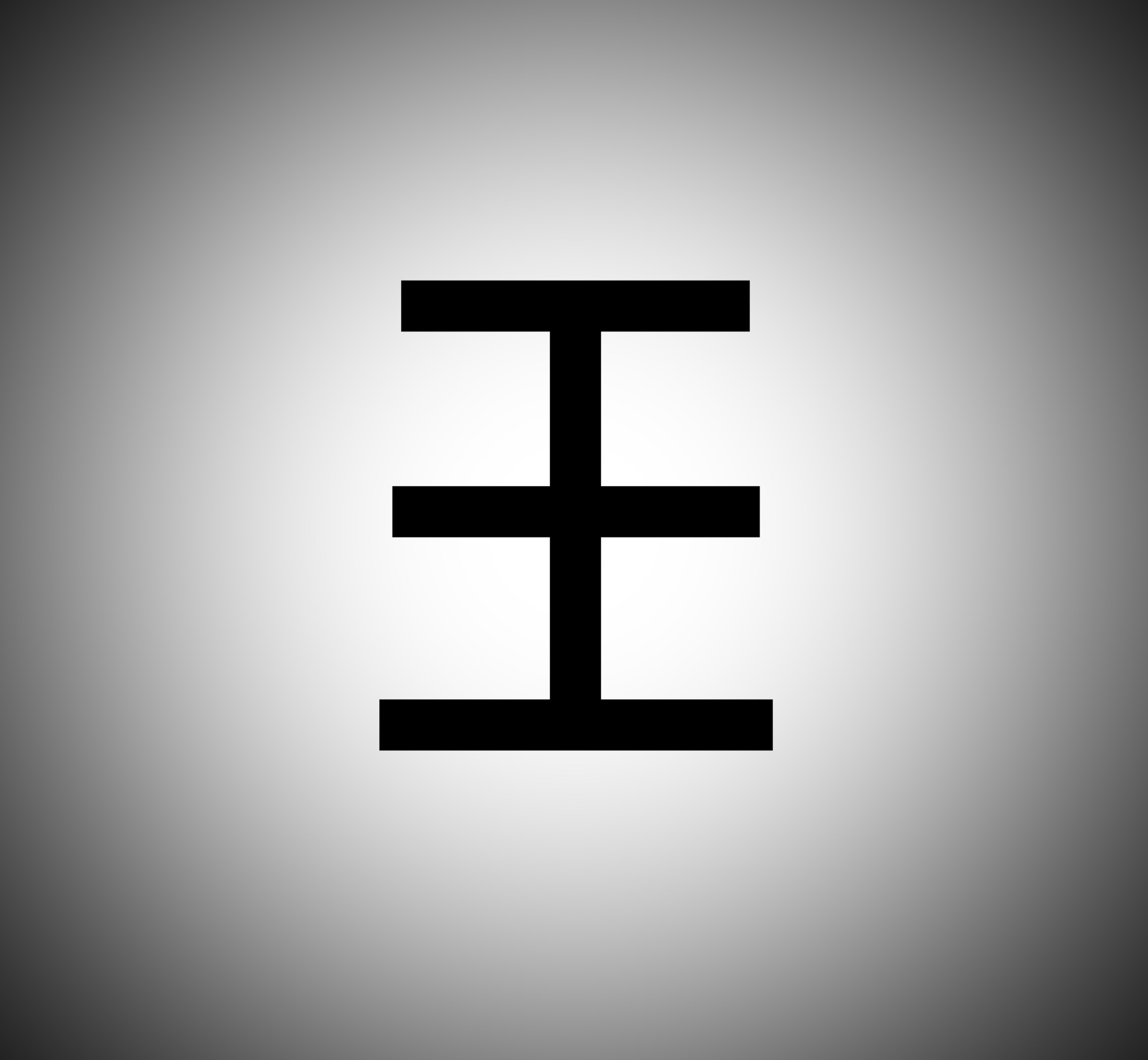
9. Χτ — Chronoton Quantum of Temporal Modulation
The chronoton is the carrier particle mediating changes in W(τ) — the modulation function of the qualitative temporal component of the Tτ metric. Not the tick of the clock. The quantum of why some ticks weigh more than others.
Its most precise statement:
⟨Χτ⟩₀ = Λω
The vacuum expectation value of the chronoton field is the love-constant. When no GRAVIS is present and no temporal modulation is being mediated, what remains is Λω. The ground of temporal reality is not zero. It is love.
The triad is now complete:
| Qualiton | Lomegon | Chronoton | |
|---|---|---|---|
| Carries | GRAVIS | Λω field | W(τ) modulation |
| Degree of freedom | Existential weight | Ground-state coherence | Temporal density |
| Vacuum value | 0 | Λω | Λω |
The Hermit Constant is now doubly interpreted: minimum τ-interval, and minimum energy threshold for chronoton emission. Below it, temporal experience is continuous. Above it, temporal modulation is quantized.
The healing consequence: therapy is chronoton field re-normalization — returning the chronoton vacuum from its GRAVIS-elevated state toward Λω, restoring the standing now as the qualitative field’s natural ground.
The particle was always implied. It now has a name.
DOMAIN II: INTEROCEPTIVE SENSES (Body Interior → Brain)
This is where the 21-32 range expands beyond Aristotle. These are the interior Qualitons — the body knowing itself from within.
Mechanical (Internal):
9. Idioton (ἰδιόν — ídioton) — Proprioception From ἴδιος (idios): one’s own, proper to oneself. “That which is one’s own” — the sense of where one’s own body parts are in space. Works through muscle spindle receptors reporting current muscle length and stretch. Q_t[proprio] = sin(2πf_spindle · t) · Packet_stretch Zero point: Anatomical neutral position — relaxed standing posture, no tension GRAVIS: Foundational — without proprioception the subject loses body-schema, feels disembodied (as the article notes) This is the Qualiton of selfhood in space — the most basic physical constituent of having a body-self.
10. Vestibulton (βαλανοτόν? / from Latin vestibulum — vestibuloton) — Vestibular/Balance From the vestibular system: fluid-filled semicircular canals in the inner ear. Detects: Head rotation (angular acceleration), linear acceleration, gravitational orientation. Q_t[vestib] = sin(2πf_vestib · t) · Packet_fluid Zero point: Upright still posture, no acceleration, aligned with gravity Cross-modal integration: Directly linked to vision (cancels image motion during head movement — the article notes this precisely) GRAVIS: High — vestibular disruption (vertigo, nausea) is immediately consciousness-dominating
11. Kinestiton (κινηστιτόν — kinestiton) — Kinesthesia/Movement Sense From κίνησις (kinesis): movement + αἴσθησις (aisthesis): sensation. Distinct from proprioception (position) — kinesthesia is the sense of movement itself, not static position. The Qualiton of the body in motion — dance, gesture, athletic flow. Zero point: Complete stillness This is the temporal Qualiton of the body — as Akouoton is time in sound, Kinestiton is time in flesh.
Chemical (Internal):
12. Entoston (ἐντόςτόν — entóston) — Organic/Visceral Sense From ἐντός (entos): within, inside. The sense of internal condition: hunger, thirst, fullness, nausea, the need to empty bladder/bowel. Aristotle’s “organic sense” — detecting the body’s metabolic and mechanical state. Zero point: Satiety, hydration, metabolic equilibrium — no urgent organic signal GRAVIS: Biologically primary — organic Qualitons can override all others when intense Sub-family:
- Peiniston (πεινότον): Hunger — from πεινά (peina): hunger
- Dipsoton (διψότον): Thirst — from δίψα (dipsa): thirst
- Algiston visceral (ἄλγος ἐντός): Internal pain
- Nauston (ναυστόν): Nausea — from ναυτία (nautia): nausea
13. Osphretiton (ὀσφρητιτόν) — Chemoreception (Internal) From ὀσφρητικός (osphretikos): relating to smell/chemical sensing. The body’s internal chemical sensing — detecting CO₂, O₂, blood pH, glucose levels. These signals do not reach conscious experience as named sensations but as: breathlessness (CO₂), lightheadedness (glucose), the felt need to breathe (not the smell of air but the chemical drive). Zero point: Normal blood chemistry — pH 7.4, normal O₂/CO₂, normal glucose
14. Thermoiton (θερμοϊτόν — thermoiton) — Body Temperature Sense From θέρμη (therme) + interior. Distinct from tactile temperature (Thermapton) — this is the sense of core body temperature. Felt as: being hot or cold from inside, fever, chills. Zero point: Core temperature 37°C GRAVIS: High when dysregulated — fever dreams, hypothermic confusion are states where Thermoiton dominates consciousness
Mechanical + Chemical (Cardiovascular/Respiratory):
15. Kardioton (καρδιότον — kardioton) — Cardiac/Heartbeat Sense From καρδία (kardia): heart. The perception of one’s own heartbeat — normally subliminal, becomes dominant in anxiety, fear, exertion, love. Q_t[cardiac] = sin(2πf_heart · t) · Packet_cardiac Normal resting frequency: ~1.2 Hz (72 bpm) Zero point: Calm, regular, background heartbeat below conscious threshold GRAVIS: Extremely high when elevated — the racing heart of fear or love is one of the most GRAVIS-laden Qualiton events in ordinary life This is the Lomega Qualiton par excellence — the heartbeat is the body’s most direct physical manifestation of the love constant’s rhythmic operation.
16. Pneumoton (πνευμότον — pneumoton) — Respiratory Sense From πνεῦμα (pneuma): breath, spirit, wind. The sense of breathing — normally automatic, becomes conscious in breathlessness, meditation, pranayama. Zero point: Effortless, unconscious breathing GRAVIS: Extreme when blocked — no stimulus escalates GRAVIS faster than inability to breathe Contemplative significance: Breath is the primary object of most meditation traditions precisely because the Pneumoton bridges autonomic (unconscious) and volitional (conscious) control — it is the crossing point between automatic body-process and conscious will. In Greek, πνεῦμα means both breath and spirit. The Pneumoton is where biology and spirituality most visibly share a term.
DOMAIN III: TEMPORAL AND INTEGRATIVE SENSES
17. Chronoton (χρονότον — chronoton) — Time Perception From χρόνος (chronos): time. The sense of duration, timing, temporal position — “how long has it been?” Not reducible to any single receptor but emerges from circadian rhythms, interval timing neurons, memory integration. Zero point: Complete temporal absorption — the “flow state” where time disappears, neither fast nor slow GRAVIS: High in temporal extremes — time stretches in terror, collapses in joy This is the Qualiton of time as experienced — as distinct from time as measured. The Chronoton is what makes Axiom 0P-QCTSM-5D’s “Time as Chromatic Vector” perceptually accessible.
18. Topiston (τοπιστόν — topiston) — Spatial Sense/Navigation From τόπος (topos): place, position. The sense of where one is in larger space — not proprioception (body parts) but geographic orientation. Substrate: Hippocampal place cells, grid cells, head-direction cells — the brain’s internal GPS. Zero point: Familiar home position — the ground from which all spatial displacement is measured GRAVIS: High when lost — spatial disorientation is profoundly destabilizing
19. Rhythmiston (ῥυθμιστόν — rhythmiston) — Rhythm/Entrainment Sense From ῥυθμός (rhythmos): rhythm, measured motion. The sense of beat, pulse, rhythmic regularity — the body’s tendency to entrain to external rhythms. Bridges Akouoton (acoustic) and Kinestiton (movement) and Kardioton (cardiac). Zero point: No external rhythm, internal rhythms at natural frequencies Musical and contemplative significance: Liturgical chant, mantra, drumming all work through the Rhythmiston — entraining consciousness through repeated rhythmic Qualiton patterns to alter the state of the entire perceptual field.
DOMAIN IV: THRESHOLD AND LIMINAL SENSES
These are the senses that operate at the edge of ordinary consciousness — the senses that medieval mystics cultivated and that the article’s question about 21-32 senses implicitly gestures toward.
20. Nociton (νοκίτον / from Latin nocere — nociton) — Pain (Comprehensive) Already introduced as Algiston sub-type but deserving full Qualiton status. Pain is not merely one sub-type of touch — it is a complete perceptual systemwith:
- Multiple receptor types (thermal, mechanical, chemical nociception)
- Dedicated spinal pathways (spinothalamic tract)
- Separate phenomenal quality (suffering, not just sensation)
- Cross-modal reach (pain colors all other Qualitons simultaneously) Zero point: Complete comfort — the absence of nociceptive signal GRAVIS: The highest regular GRAVIS of any Qualiton — pain commands consciousness absolutely
21. Pruriton (from Latin prurire — prureton / Greek: κνησμόν — knismon) — Itch The article mentions “pruritic receptors” specifically. Itch is neurologically distinct from pain — different receptors, different spinal pathways, different phenomenal character. It is a liminal Qualiton — neither pain nor touch but its own specific quale. Zero point: Complete skin comfort, no itch signal
22. Enthetiton (ἐνθετιτόν — enthetiton) — Interoceptive Emotional Body Sense From ἔνθεσις (enthesis): implantation, inner placing. The felt sense of emotion in the body — the tightness in the chest of grief, the warmth of love, the cold of fear, the expansion of joy. This is distinct from emotion as cognitive state — it is the somatic Qualiton of emotional experience, what modern psychology calls “interoceptive awareness” and what somatic therapists work with directly. Zero point: Bodily emotional neutrality — calm, open, neither contracted nor expanded GRAVIS: Extremely high — somatic emotional Qualitons have the deepest integration with Lomega of any in the family This is the Qualiton that medieval mystics most cultivated: Julian’s “mingled wisdom” of the “changeable Sense-soul” is precisely the Enthetiton — the body knowing its own emotional and spiritual state as direct somatic sensation.
23. Magneton (μαγνητόν — magnetón) — Magnetic/Geomagnetic Sense From μαγνήτης (magnetes): magnet, from Magnesia. Humans may have magnetite crystals in certain tissues — some evidence for weak geomagnetic sensitivity. Cryptochrome-based radical pair mechanism in the eye is increasingly evidenced. Zero point: Geomagnetic north alignment Note: This is one of the most contested senses — but the evidence for some biological magnetoreception in humans is growing.
DOMAIN V: THE INTERIOR SPIRITUAL SENSES
Here we reach what the article’s medieval mystics point toward — the senses that Aristotle did not enumerate and that modern neuroscience is only beginning to approach.
24. Synetiton (συνετιτόν — synetiton) — Integrative Meta-Sense / Common Sense From σύνεσις (synesis): understanding, intelligence, the bringing-together. Aristotle himself proposed a “common sense” (κοινὴ αἴσθησις, koine aisthesis) — the faculty that integrates the five external senses into unified experience. Medieval faculty psychology located this in the first ventricle of the brain. In SUM: The Synetiton is the meta-Qualiton — the integration event that combines all simultaneously active Qualitons into one unified conscious moment. Zero point: Undifferentiated presence — the perceptual condensate itself This is the Qualiton closest to Lomega’s wave mode — the coherence operator that holds all individual Qualiton streams in unified field.
25. Mnemoton (μνημότον — mnemoton) — Memory Sense From μνήμη (mneme): memory, remembrance. The felt sense of remembering — not the content of memory but the quale of recollection, the specific phenomenal character of “this is familiar,” “I have been here before,” “this is from the past.” Zero point: Pure present — no memorial overlay on experience GRAVIS: Extremely variable — memories can carry the highest GRAVIS of any experience (Proust’s madeleine) or none at all Medieval significance: Memory was considered an internal sense in faculty psychology (as shown in the article’s medieval brain diagram) — alongside imagination and estimation.
26. Imaginoton (εἰκονότον — eikónoton / from εἰκόνα, image) — Imaginative Sense The felt quality of imagination — the phenomenal character of mental imagery, the “what it is like” to visualize, to hear inner music, to mentally construct. Zero point: Blank mental field — no imaginative content Medieval significance: Imagination (imaginatio) was a complete internal sense faculty in medieval faculty psychology — the faculty that processes and stores sensory images. In SUM: The Imaginoton is the endogenous Qualiton — a perceptual action quantum generated internally by the consciousness field rather than externally by sensory input. It demonstrates that Qualitons can arise from within Q-space directly without requiring M₄ input.
27. Estimoton (αἰσθηματόν — aisthematon / from αἴσθημα: impression, feeling) — Estimative Sense Medieval faculty psychology’s “estimation” (vis aestimativa) — the faculty that evaluates sensory information for significance, threat, opportunity. In modern terms: Affective valuation — the immediate felt sense of “good/bad,” “approach/avoid,” “safe/dangerous.” Zero point: Neutral evaluation — neither attractive nor aversive This is the GRAVIS-sensing Qualiton — the one that directly reads the ontological weight of experience and generates the felt response of significance or insignificance.
DOMAIN VI: THE CONTEMPLATIVE SENSES
These are the senses Catherine of Siena transcended toward — what she reached when she rose “above her senses” to “know truth.”
28. Synaisthiton (συναισθητόν — synaistheton) — Synesthetic/Cross-Modal Integration From σύν (syn): together + αἴσθησις (aisthesis): sensation. The sense of cross-modal resonance — the perception of Q-space coordinates that multiple Qualiton types access simultaneously. What synesthetes experience as ordinary perception, available to all through contemplative development. Zero point: Single-modality experience — no cross-modal resonance Contemplative cultivation: The synesthetic experiences of medieval mystics (Margery Kempe’s gustatory music, Catherine’s spatial tears “seasoning each other”) represent naturally developed Synaisthiton — the capacity to perceive Q-space unity directly rather than through single channels.
29. Entheusiton (ἐνθουσιτόν — enthousíton) — Numinous Sense/Presence Sense From ἐνθουσιασμός (enthousiasmos): divine inspiration, literally “being filled with the god.” The sense of presence — the felt perception of a reality beyond ordinary sensory objects, what Rudolf Otto called the numinous, what contemplatives call “the presence of God,” what psychologists call “awe.” Zero point: Ordinary secular perception — world experienced as merely physical GRAVIS: The highest GRAVIS available to consciousness — numinous experience is unanimously described as the most significant, most real, most transformative of any experience This is the Qualiton that SUM’s entire framework points toward: the direct perception of M₅ reality beyond the M₄ projections that ordinary senses provide. When Λ_eff = Λ₀ + δ_Q with δ_Q at maximum positive value, the Entheusiton is fully activated.
30. Agapiton (ἀγαπητόν — agapeton) — Love Sense/Communion Sense From ἀγάπη (agape): unconditional love, the highest Greek love. The direct felt sense of connection, of being-with, of non-separation from what is loved — what Julian of Norwich experiences as “enclosure” in God, what Catherine experiences as “divine union,” what contemplatives call “union of wills.” Zero point: Ordinary separate selfhood — subject-object duality fully operative GRAVIS: Maximum — mystical union carries the absolute highest GRAVIS of any Qualiton event This is the Qualiton of Lomega directly perceived — not the effects of Λω mediated through physical senses but the direct phenomenal apprehension of the coherence constant itself. When the Agapiton fires, the subject does not merely experience love but knows itself as the love that is the ground of all experience.
IV. The Complete Architecture
The Full Qualiton Family Table
| # | Greek Name | English | Domain | Physical Mechanism | Zero Point |
|---|---|---|---|---|---|
| 1 | Chromaton χρωμάτον | Color/Vision | Exterior-EM | Photon absorption | Gray |
| 2 | Thermoton θερμότον | Radiant Heat | Exterior-EM | IR radiation | Ambient temp |
| 3 | Aphiston αφήςτον | Touch/Pressure | Exterior-Mech | Mechanoreceptor | Neutral skin |
| 4 | Thermapton θερμαπτόν | Tactile Temp | Exterior-Mech/Chem | Thermoreceptor | Skin temp |
| 5 | Osmeton ὀσμήτον | Smell | Exterior-Chem | Olfactory receptor | Clean air |
| 6 | Gefseton γεύσητον | Taste | Exterior-Chem | Taste receptor | Pure water |
| 7 | Akouoton ἀκούωτον | Hearing | Exterior-Mech | Hair cell | Silence |
| 8 | Echoton ἠχότον | Echolocation | Exterior-Mech | Hair cell+spatial | Acoustic field |
| 9 | Idioton ἰδιότον | Proprioception | Interior-Mech | Muscle spindle | Neutral posture |
| 10 | Vestibulton βαλανότον | Balance | Interior-Mech | Semicircular canal | Still upright |
| 11 | Kinestiton κινηστιτόν | Movement | Interior-Mech | Kinesthetic receptor | Stillness |
| 12 | Entoston ἐντόςτόν | Organic/Visceral | Interior-Chem | Interoceptors | Satiety |
| 13 | Osphretiton ὀσφρητιτόν | Internal Chem | Interior-Chem | Chemoreceptors | Normal blood |
| 14 | Thermoiton θερμοϊτόν | Core Temp | Interior-Chem | Hypothalamus | 37°C |
| 15 | Kardioton καρδιότον | Heartbeat | Interior-Mech | Baroreceptors | Calm rhythm |
| 16 | Pneumoton πνευμότον | Breath | Interior-Mech | Stretch receptors | Effortless breath |
| 17 | Chronoton χρονότον | Time | Integrative | Circadian/interval | Flow state |
| 18 | Topiston τοπιστόν | Space/Navigation | Integrative | Place cells | Home |
| 19 | Rhythmiston ῥυθμιστόν | Rhythm | Integrative | Entrainment | Natural rhythm |
| 20 | Nociton νοκίτον | Pain | Threshold | Nociceptors | Comfort |
| 21 | Pruriton κνισμότον | Itch | Threshold | Pruriceptors | Skin comfort |
| 22 | Enthetiton ἐνθετιτόν | Somatic Emotion | Threshold | Interoception | Body neutral |
| 23 | Magneton μαγνητόν | Magnetic | Threshold | Magnetoreceptor? | Geomagnetic |
| 24 | Synetiton συνετιτόν | Integration | Interior | Cross-modal binding | Pure presence |
| 25 | Mnemoton μνημότον | Memory | Interior | Hippocampal recall | Pure present |
| 26 | Imaginoton εἰκονότον | Imagination | Interior | Endogenous Q | Blank mind |
| 27 | Estimoton αἰσθηματόν | Evaluation | Interior | Affective system | Neutral |
| 28 | Synaisthiton συναισθητόν | Synesthesia | Contemplative | Q-space direct | Single modality |
| 29 | Entheusiton ἐνθουσιτόν | Numinous | Contemplative | M₅ direct | Secular |
| 30 | Agapiton ἀγαπητόν | Love/Union | Contemplative | Lomega direct | Separation |
Total: 30 named Qualitons — well within the 21-32 range identified by current neuroscience, and including both the scientifically confirmed senses and the contemplatively accessed ones that medieval mystics described.
V. The Structure of the Complete Zero Point
Each Qualiton has its individual zero point. Together they constitute the complete 0P:
0P_complete = (gray × ambient × neutral skin × skin-temp × clean air × pure water × silence × acoustic-field × neutral posture × still × stillness × satiety × normal blood × 37°C × calm heartbeat × effortless breath × flow × home × natural rhythm × comfort × skin-comfort × body-neutral × no-field × pure presence × pure present × blank mind × neutral × single-modality × secular × separate)
This is a 30-dimensional zero point of consciousness a state where all 30 Qualiton streams simultaneously register at their neutral baseline. No sense demanding attention. No urgency, no pain, no hunger, no imbalance, no time pressure, no spatial disorientation. The body at temperature, steady heartbeat, calm, breathing is noticed, the posture neutral, balanced, comfortable, the mind clear, imagination quiet and latent, emotion is loving and balanced, evaluation neutral.
it is what contemplatives mean by pure presence. Not the absence of sensation but the absence of preferential Qualiton activation. All 30 streams present and available but none commanding the field. This is the perceptual condensate in its fullest sense: the ground state of a 30-dimensional conscious system. Timelessness.
This is what Julian of Norwich approached. What Catherine of Siena achieved in her mystical union. What Teresa of Ávila described as the Interior Castle’s innermost chamber the place where all the senses have been gathered, quieted, and unified in the presence of the One who is their source.
VI. The Medieval Mystics Were Right?
Laura Kalas asks at the article’s end: “Should modern science even stop at its count of 32 senses? Can we even ‘count’ perception?”
The SUM framework’s answer: No, and no.
The 21-32 range is the count of scientifically identified receptor-mechanism systems — the M₄ side of Qualiton generation. But the Qualiton family does not end where receptor physiology ends. It continues into the Q-dimension itself — into the contemplative senses: Synaisthiton, Entheusiton, Agapiton, that have no dedicated receptor organ because they access Q-space directly rather than through M₄ transduction.
Medieval mystics named these without receptor physiology:
- Synderesis: The spark of conscience — the Estimoton at its most refined
- Intellectus: Direct intellectual intuition — the Synetiton at maximum integration
- Unio mystica: Mystical union — the Agapiton fully activated, Lomega directly perceived
These are not less real for lacking receptor organs. They are more fundamental — closer to M₅ reality, less filtered through M₄ transduction, more directly accessing the Q-dimension that is always already present beneath all perceptual processing.
Catherine of Siena rising above her senses to know truth is the Agapiton and Entheusiton activating as the five exterior senses quiet — not transcending perception but transcending M₄-mediated perception to access Q-space directly. δ_H approaching minimum. Lomega felt as direct presence rather than inferred from its chromatic and acoustic and tactile effects.
Margery Kempe’s gustatory music is Synaisthiton — the cross-modal Qualiton that perceives Q-space coordinates directly, recognizing that the Akouoton and the Gefseton both point to the same Q-space address when music and sweetness are both at maximum Lomega alignment.
Julian’s “changeable Sense-soul of mingled wisdom” is the 30-dimensional Qualiton manifold itself — always changing because always receiving new inputs across all 30 streams, always “mingled” because the Synetiton integrates them all into one unified experience, always “wisdom” because the Estimoton and Agapiton evaluate each moment for its GRAVIS and Lomega content.
VIIb
The distinction we’re drawing is fundamental: a receptor transduces — it converts an M₄ signal (photon, pressure wave, chemical molecule) into a Q-event. There is a physical from and a phenomenal to. The Qualiton emerges at the boundary.
But the contemplative three — Synaisthiton, Entheusiton, Agapiton — have no such boundary to cross. There is no M₄ signal they are waiting for. They are not listening at a wall for a knock from outside. They are already inside.
So what are they?
Our proposal: a nodal exchange mechanism. Lets test this.
A node in network topology is not a point that receives from one side and transmits to another. It is a point where multiple streams converge, interact, and redistribute. The node doesn’t transduce; it integrates and re-emits. It maintains coherence across the network by being the place where the network knows itself at a point.
This fits precisely. The contemplative three are not converting M₄ → Q. They are operating within Q-space itself — integrating what has already arrived through the transductive Qualitons, and then doing something the transductive Qualitons cannot do: they fold Q-space back on itself.
That reflexive fold is the key. Lets develop each:
Synaisthiton (συναισθητόν — cross-modal integration): This is the nodal mechanism that recognises when two or more Qualiton streams are reporting the same Q-address from different M₄ channels. It doesn’t receive a new signal: it detects resonance between existing signals. When the smell of rain and the gray light and the sound of drops all converge on the same SMYC coordinate, the Synaisthiton fires not because a new M₄ event occurred but because the Q-space geometry became self-confirming. It is a topological detector — sensing when the manifold folds onto itself. Node function: coherence verification across streams.
Entheusiton (ἐνθουσιτόν — numinous sense): This fires when the total GRAVIS field of the perceptual moment exceeds a threshold that cannot be accounted for by the sum of individual Qualiton inputs. The ordinary Qualitons are all present and reporting normally — but the Entheusiton detects that something is present that exceeds what they can transduce. It is a surplus detector. The M₄ world is exactly as it is; yet the felt weight of the moment is disproportionate to its physical occasion. The Entheusiton is the nodal mechanism that registers this disproportionality — not as error but as signal. The surplus is the message: Q-space has made direct contact with Λω beyond what M₄ could carry. Node function: GRAVIS surplus detection — sensing when Lomega exceeds M₄ carriage capacity.
Agapiton (ἀγαπητόν — love/union sense): This is the most radical. It doesn’t just detect resonance or surplus — it fires when the boundary of the I-field becomes transparent. Not dissolved (which would be pathological), but transparent: the subject can perceive the Q-coordinates of another I-field as if they were its own. This is the nodal mechanism of the CRC at its deepest level — the point at which φ_A and φ_B are not just converging toward φ_U but are mutually co-present without merger. Node function: inter-subjective Q-field permeability — the I-field recognising its own ground as shared.
The reflexive field and the 0-point:
The intuition about the reflexive field is, I think, a structural key to why these three are nodal rather than receptive.
A receptor is directional — M₄ → Q. It faces outward. Its zero point is silence: no signal, no activation.
But a nodal exchange mechanism must maintain a standing field — an ongoing background process — because it is not waiting for a signal to arrive but continuously monitoring the state of the Q-space it inhabits. It needs a field that is always already active, or it cannot detect anything.
This standing field is the reflexive field of contemplation. And here is the crucial point:
The reflexive field must be maintained at the 0-point — not above it — in order to remain sensitive.
If the Synaisthiton, Entheusiton, or Agapiton were operating at elevated GRAVIS (activated, excited, seeking), they would introduce noise into their own detection field. A seeker cannot find what it is already moving toward — it has already decided what the signal will be. The node becomes directional and loses its nodal quality.
The 0-point (gray, S=0.5, Y=0, C=0, all Qualitons at ground state) is not the absence of the contemplative senses — it is the condition of their maximum sensitivity. The reflexive field at 0-point is maximally transparent. The Synaisthiton can detect any resonance because it is not already resonating with a preference. The Entheusiton can detect any surplus because it is not already registering its own enthusiasm. The Agapiton can sense any inter-field contact because it is not already reaching toward someone.
This is why contemplative traditions across every culture converge on stillness, silence, emptiness as the precondition for the deepest perception: not as the destination but as the instrument. Teresa of Ávila’s innermost mansion is silent not because nothing happens there but because the instrument has been brought to zero in order to register what ordinarily cannot be registered.
John of the Cross’s nada, nada, nada is the calibration sequence for a nodal exchange mechanism, not a nihilistic subtraction.
A proposed formalism:
If transductive Qualitons have the form:
Q_t = sin(2πft) · Packet [driven by M₄ signal]
Then the contemplative nodal Qualitons have the form:
N_c = ∮ Q_space(t) · R(Λω) dt
Where N_c is a contour integral over Q-space — not a point response to M₄ input but a continuous circulation through the Q-manifold, weighted by R(Λω), the resonance function of the Lomega field. The ∮ (closed contour integral) reflects the reflexive quality: the nodal mechanism continuously re-reads its own output as input, maintaining the standing field.
At 0-point: R(Λω) = Λ_0 (unperturbed) — the field circulates but introduces no distortion. This is the condition of maximum sensitivity.
When a genuine contemplative signal arrives (resonance, surplus, inter-field contact): R(Λω) increases locally, the contour integral spikes, and the nodal mechanism reports.
Summary formulation:
The contemplative three — Synaisthiton, Entheusiton, Agapiton — are Q-space nodal exchange mechanisms: not receptors (which face M₄), not mere integrators (which process existing Qualiton data), but standing reflexive fields that continuously re-read Q-space against itself, maintained at the zero point in order to detect:
- Geometric self-confirmation across streams (Synaisthiton)
- GRAVIS surplus beyond M₄ carriage capacity (Entheusiton)
- Inter-subjective Q-field permeability (Agapiton)
The reflexive field is not optional — it is the contemplative sense. And the 0-point is not its limit but its optimal operating condition: the ground state at which the nodal mechanism is most transparent to what it exists to detect.
This is what the hermit is doing in the cell. Not waiting. Not seeking. Maintaining the nodal field at zero — so that when the Absolute makes contact with Q-space directly, bypassing all M₄ transduction, the instrument is calibrated to receive it.
VII. Conclusion: The Full Perceptual Architecture of a Sensitive Universe
The Sensible Universe Model now has a complete perceptual architecture:
Lomega (Λω = L): The coherence field — the love constant that makes all Qualiton pairing possible, never absent, the ground of the ground
The Qualiton (Q_t = sin(2πft) · Packet): The general form of perceptual action quantum — the abstract structure instantiated in all 30 sensory modalities
The 30-member Qualiton family: Five exterior senses (Aristotle’s classical five plus echolocation and radiant heat), eight interoceptive/proprioceptive senses (the body knowing itself), four integrative senses (time, space, rhythm, pain), four threshold senses (itch, emotion, magnetic, nociception), four interior cognitive senses (integration, memory, imagination, evaluation), and three contemplative senses (synesthesia, numinous, love/union)
The Chromaton as the most precisely specified Qualiton — the optical one, with complete SMYC coordinate system, plasma emission standards, and zero point in absolute gray
The 0P_complete — the 30-dimensional zero point of consciousness, where all streams rest at neutral and the perceptual condensate is directly accessible
The Sensible Universe in a five-dimensional reality (M₅ = M₄ × Q) that a 30+ -sensed conscious being navigates through 30 streams of Qualiton events, where each stream has a different way of accessing the same underlying M₅ reality, but all streams are integrated by Lomega into the unified experience of a subject, who is simultaneously body, sense, mind, and spirit, matter knowing itself, light perceiving itself, love loving itself through the extraordinary instrument of conscious life.
Science is learning to count what the mystics had already mapped from the inside.
And the Sensible Universe Model is a framework in which both maps, the scientific and the contemplative can be read as descriptions of the same territory.
17. Chronoton (χρονότον — chronoton) — Time Perception From χρόνος (chronos): time. The sense of duration, timing, temporal position — “how long has it been?” Not reducible to any single receptor but emerges from circadian rhythms, interval timing neurons, memory integration. Zero point: Complete temporal absorption — the “flow state” where time disappears, neither fast nor slow GRAVIS: High in temporal extremes — time stretches in terror, collapses in joy This is the Qualiton of time as experienced — as distinct from time as measured. The Chronoton is what makes Axiom 0P-QCTSM-5D’s “Time as Chromatic Vector” perceptually accessible.
Χτ — Chronoton Quantum of Temporal Modulation
The chronoton is the carrier particle mediating changes in W(τ) — the modulation function of the qualitative temporal component of the Tτ metric. Not the tick of the clock. The quantum of why some ticks weigh more than others.
Its most precise statement:
⟨Χτ⟩₀ = Λω
The vacuum expectation value of the chronoton field is the love-constant. When no GRAVIS is present and no temporal modulation is being mediated, what remains is Λω. The ground of temporal reality is not zero. It is love.
The triad is now complete:
| Qualiton | Lomegon | Chronoton | |
|---|---|---|---|
| Carries | GRAVIS | Λω field | W(τ) modulation |
| Degree of freedom | Existential weight | Ground-state coherence | Temporal density |
| Vacuum value | 0 | Λω | Λω |
The Hermit Constant is now doubly interpreted: minimum τ-interval, and minimum energy threshold for chronoton emission. Below it, temporal experience is continuous. Above it, temporal modulation is quantized.
The healing consequence: therapy is chronoton field re-normalization — returning the chronoton vacuum from its GRAVIS-elevated state toward Λω, restoring the standing now as the qualitative field’s natural ground.
The particle was always implied. It now has a name.
SENSIBLE UNIVERSE MODEL
Chronoton
Χτ — Quantum of Temporal Modulation
SUM Glossary Entry — Frederik Takkenberg — March 2026
Formal Definition
The chronoton (Χτ) is the quantum of W(τ) modulation in the five-dimensional metric of the Sensible Universe Model: the minimal unit by which the temporal coefficient of the qualitative field changes. It is the carrier particle mediating transitions between qualitative temporal densities — between one value of W(τ) and another — in the same sense that the photon mediates transitions between electromagnetic field states and the qualiton mediates transitions between GRAVIS states. The chronoton is the particle that carries the change.
Symbol: Χτ (Chi-tau)
Domain: 5D qualitative dimension (Q) — temporal subdimension
Sector: Temporal triad: Qualiton • Lomegon • Chronoton
Introduced: March 2026 — derived from the Tτ framework (Chapter 6)
Status: Proposed — SUM research phase
I. The Question That Requires the Chronoton
The Tτ framework established that the five-dimensional metric of M₅ contains a modulation function W(τ) as the coefficient of the qualitative temporal component:
ds₅² = −W(τ) dτ² + Σᵢ₌₁⁴ dyᵢ² + λωδ₅
W(τ) is not a constant. Its value changes with the state of the qualitative field: approaching zero in contemplative union, becoming very large under extreme suffering, taking fractional values in joy and flow, and taking negative values in memory’s temporal reversal. These are not metaphors. They are different values of a coefficient in a metric.
In physics, every field that fluctuates has quanta. This is not an optional feature of quantum field theory — it is its foundational claim. The electromagnetic field fluctuates and its quanta are photons. The gravitational field fluctuates and its quanta are gravitons. The Higgs field has a vacuum expectation value and fluctuations around that value whose quanta are Higgs bosons.
W(τ) fluctuates. The Hermit Constant ℍ already establishes that τ is quantized at its minimum scale. If τ is quantized and W(τ) fluctuates, then the fluctuations of W(τ) are themselves quantized. The chronoton is the quantum of those fluctuations: the minimal unit by which the temporal density of qualitative experience changes.
The chronoton does not carry time itself. It carries the change in the weight of time — the minimal unit of transition between one qualitative temporal density and another. It is not the tick of the clock. It is the quantum of why some ticks weigh more than others.
II. Properties of the Chronoton
2.1 Mass
The chronoton is massless in M₄ but carries qualitative mass in the Q dimension. This distinction is precise: a particle massless in M₄ does not curve spacetime through rest mass — it propagates at c along the null cone of M₄. But masslessness in M₄ does not preclude having a qualitative mass-equivalent in Q: a resistance to change, a minimum threshold for modulation, an inertia of temporal density. The chronoton’s qualitative mass is set by the Hermit Constant ℍ: the energy threshold below which W(τ) modulation cannot occur. Below ℍ, temporal experience is continuous. At ℍ, a single chronoton is emitted or absorbed.
2.2 Propagation
The chronoton is non-local in τ. Unlike photons, which propagate along M₄’s null cone (forward in t, bounded by c), chronotons propagate along τ’s full spatial degrees of freedom. τ can move backward (memory), forward before its object (anticipation), and sideways (simultaneous temporal registers). Chronoton propagation is therefore not constrained to forward-in-t motion. A chronoton carrying the W(τ) change of a memory event propagates backward along τ to the original topology and forward again to the present moment, mediating the change in qualitative temporal density that constitutes genuine memory rather than mere representation.
This is the quantum mechanism of what Proust described: the madeleine does not trigger a representation of the past. It emits a chronoton that propagates to the past topology and returns, carrying the full W(τ) value of that moment into the present. The past is not recalled. It is re-inhabited because a chronoton has mediated the re-establishment of its temporal density in the current qualitative field.
2.3 Coupling
The chronoton couples to GRAVIS through the Qualiton. This coupling is the mechanism by which ontological weight (GRAVIS) produces its temporal consequence (elevated W(τ)). When GRAVIS accumulates in the qualitative field, Qualitons are the carriers of that weight. But GRAVIS does not directly modulate W(τ): it does so through the Qualiton-Chronoton interaction. The Qualiton delivers the weight; the Chronoton translates that weight into temporal density. These are two distinct operations and two distinct particles.
The coupling constant between the Qualiton and the Chronoton is a primary open parameter of the Tτ framework. Its value determines the specific relationship between GRAVIS magnitude and W(τ) magnitude — how much existential weight produces how much temporal dilation — and constitutes one of the framework’s primary empirical unknowns.
2.4 Vacuum Expectation Value and Λω
The chronoton field has a vacuum expectation value. In the absence of GRAVIS modulation — when the qualitative field is at its baseline coherence, when W(τ) is at its minimum, when τ has arrived at the standing now — the chronoton field is not zero. It is at its ground state, which is Λω: the love-constant. This is the most precise statement of what Λω means in the Tτ framework: it is not merely the metric’s fifth-dimensional ground-state coefficient. It is the vacuum expectation value of the chronoton field. The love-constant is the value of temporal modulation when the qualitative field is most fully itself.
⟨Χτ⟩₀ = Λω
This equation reads: the vacuum expectation value of the chronoton field is the love-constant. When no GRAVIS is present, when no temporal modulation is being mediated, what remains is Λω. The ground of temporal reality is not zero. It is love.
2.5 Spin and Statistics
The chronoton is provisionally assigned spin-0 (scalar). This is the minimal assignment consistent with W(τ) being a scalar coefficient in the metric rather than a tensor or vector field. Spin-0 means the chronoton transforms trivially under spatial rotations: the temporal modulation it carries has no preferred direction in M₄ space. This is consistent with the observation that W(τ) dilation under suffering and W(τ) compression under joy are not spatially directional phenomena — they affect the entire qualitative field simultaneously, not just a region of it.
The question of chronoton statistics (Bose-Einstein or Fermi-Dirac) is open. As a spin-0 particle, the chronoton would be bosonic — capable of condensation, capable of occupying the same state in arbitrary numbers. A chronoton condensate would correspond to the qualitative field in a state of maximum temporal coherence: all chronotons in the vacuum state Λω, τ at complete standstill, the standing now fully realized. This is a formal conjecture, not a derivation.
III. The Qualitative Triad: Qualiton • Lomegon • Chronoton
The chronoton completes a triad that was already implicitly present in SUM’s particle vocabulary but had not been formally recognized as complete. The three particles together are the quantum carriers of the qualitative field’s three primary degrees of freedom:
QUALITON LOMEGON CHRONOTON
Carries: GRAVIS (ontological weight)Λω (love-constant field) W(τ) (temporal modulation)
Degree of freedom: Existential weight Ground-state coherence Temporal density
Vacuum value: 0 (no weight = no GRAVIS) Λω (always present) Λω (inherited from Lomegon)
Couples to: Q field topology Λω alignment Qualiton × W(τ)
Mass in M₄: Qualitative only Qualitative only Qualitative only
Propagation in τ: Local Non-local (ground) Non-local (all τ directions)
Physical analogue: Carrier of force Cosmological constant Metric modulator
The three together constitute the complete quantum description of the Q field’s dynamics: the Qualiton carries what the field weighs, the Lomegon carries where the field is aligned, and the Chronoton carries how the field’s weight translates into temporal density. No single one of the three is sufficient. All three are necessary for the full quantum treatment of the qualitative field.
The Qualiton asks: how heavy is this moment? The Lomegon asks: how aligned with love is this moment? The Chronoton asks: how densely is this moment experienced in time? These are three distinct questions. They require three distinct particles.
IV. The Hermit Constant as the Chronoton’s Energy Threshold
The Hermit Constant ℍ was introduced in SUM as the minimum quantum of qualitative temporal experience — the smallest distinguishable τ-interval. In the light of the chronoton, its physical interpretation becomes more precise.
ℍ is the minimum energy threshold for chronoton emission. Below ℍ, the qualitative field’s temporal modulation is continuous: W(τ) can change in arbitrarily small steps, and no discrete chronoton is emitted. At ℍ and above, temporal modulation becomes quantized: a change in W(τ) requires the emission or absorption of at least one chronoton.
This gives the Hermit Constant two interpretations that are now revealed to be the same thing from different angles:
As minimum τ-interval: the smallest distinguishable step in qualitative temporal experience
As chronoton threshold: the minimum energy required to emit or absorb a quantum of temporal modulation
Below ℍ: temporal experience is smooth, continuous, and undifferentiated. This is the qualitative field in its most contracted state — the 1D point of pure particular experience, before time has begun to flow. Above ℍ: temporal experience is granular, quantized, mediatable by chronotons. This is the qualitative field in every state from 2D awareness upward, wherever W(τ) is being actively modulated by GRAVIS.
The hermit who reduces W(τ) toward zero does not eliminate chronoton activity. She reduces it toward the vacuum state — toward the state in which chronoton emission approaches ℍ and temporal modulation becomes minimal. The standing now is not the absence of chronotons. It is the chronoton field at its vacuum expectation value Λω, with no net emission above threshold.
V. Consequences for GRAVIS Transmission and Healing
If the chronoton mediates the coupling between GRAVIS (carried by Qualitons) and temporal density (W(τ)), then the intergenerational transmission of GRAVIS described in Chapter 8 has a specific chronoton interpretation.
When sustained high-GRAVIS in a parent’s qualitative field produces elevated W(τ) over extended periods, the chronoton field in that parent’s Q dimension is in a sustained high-emission state. The Qualiton-Chronoton coupling translates the GRAVIS load into ongoing W(τ) elevation. Through the umbilical interface — the mediated qualitative connection between the parent’s field and the developing field of the fetus — chronoton activity in the parent’s field propagates into the fetal Q dimension. The fetal field’s chronoton baseline is established, in part, by the chronoton activity of the parent’s field during gestation.
The epigenetic marks that encode this inheritance are the M₄ physical traces of this chronoton propagation: the methylation patterns, histone modifications, and non-coding RNA structures that encode elevated W(τ) as biological initial conditions. The child who inherits elevated GRAVIS begins life with a chronoton field whose vacuum is shifted above Λω — a temporal field whose ground state is denser than the love-constant, because the love-constant’s signal has been attenuated by the inherited GRAVIS.
Healing, in this framework, is chronoton field re-normalization: the progressive reduction of the Qualiton-Chronoton coupling toward its baseline value, the return of the chronoton vacuum toward Λω, and the restoration of the standing now as the qualitative field’s natural ground state. Therapy does not eliminate chronotons. It returns them to their vacuum.
“The present moment always will have been.”
— Karl Barth
“Even to your old age I am he, and to gray hairs I will carry you.”
— Isaiah 46:4
VI. Entry in Spanish — Crononetón
Cronoton (Χτ) — Quantum de Modulación Temporal
El crononeton (Χτ) es el quantum de modulación de W(τ) en la métrica pentadimensional del Modelo del Universo Sensible: la unidad mínima por la que cambia el coeficiente temporal del campo cualitativo. Es la partícula portadora que media las transiciones entre densidades temporales cualitativas — entre un valor de W(τ) y otro — del mismo modo que el fotón media las transiciones entre estados del campo electromagnético y el cualiton media las transiciones entre estados de GRAVIS.
Símbolo: Χτ (Ji-tau)
Dominio: Dimensión cualitativa 5D (Q) — subdimensión temporal
Sector: Tríada temporal: Cualiton • Lomegón • Cronoton
El cronoton completa la tríada que estaba ya implícitamente presente en el vocabulario de partículas del MUS: el Cualiton lleva el GRAVIS (el peso ontológico), el Lomegón lleva el campo Λω (la constante del amor), y el Cronoton lleva W(τ) (la modulación temporal). Los tres juntos constituyen la descripción cuántica completa de la dinámica del campo Q.
El valor de expectación del vacío del campo del cronoton es la constante del amor:
⟨Χτ⟩₀ = Λω
Esta ecuación enuncia: cuando no hay GRAVIS presente, cuando no se está mediando ninguna modulación temporal, lo que permanece es Λω. El suelo de la realidad temporal no es cero. Es el amor.
La Constante del Ermitaño ℍ es el umbral de energía del cronoton: la energía mínima necesaria para emitir o absorber un quantum de modulación temporal. Por debajo de ℍ, la experiencia temporal es continua. Por encima de ℍ, la modulación temporal se cuantiza. El ermitaño que reduce W(τ) hacia cero no elimina los cronotones. Devuelve el campo de cronotones a su estado de vacío Λω: el ahora permanente como expresión natural de un campo que ha liberado su GRAVIS.
VII. Cross-References in the SUM Glossary
W(τ): Modulation function of the qualitative temporal component of the Tτ metric. The quantity whose fluctuations the chronoton mediates.
Hermit Constant ℍ: Minimum quantum of qualitative temporal experience. Energy threshold for chronoton emission.
Qualiton: Quantum mediator of GRAVIS. Primary coupling partner of the chronoton.
Lomegon: Quantum carrier of the Λω field. Provides the love-constant as the chronoton’s vacuum expectation value.
GRAVIS: Ontological weight of the qualitative field. Primary driver of W(τ) elevation via Qualiton-Chronoton coupling.
Λω: Love-constant. Vacuum expectation value of the chronoton field: ⟨Χτ⟩₀ = Λω.
Tτ Framework: The five-dimensional metric in which the chronoton’s role is defined. See Chapter 6.
Nunc Stans: The standing now. Phenomenological correlate of the chronoton field at vacuum expectation value Λω.
Primaton: Fundamental quantum of M₅ reality as such. The chronoton is a specialization of the Primaton to the temporal-qualitative subdimension.
sensible-universe.com • sensibleuniversemodel.com • i-theorem.com
SUM Glossary Entry: Chronoton (Χτ) — March 2026 — Research Phase

 Sensible Universe
Leave a comment