
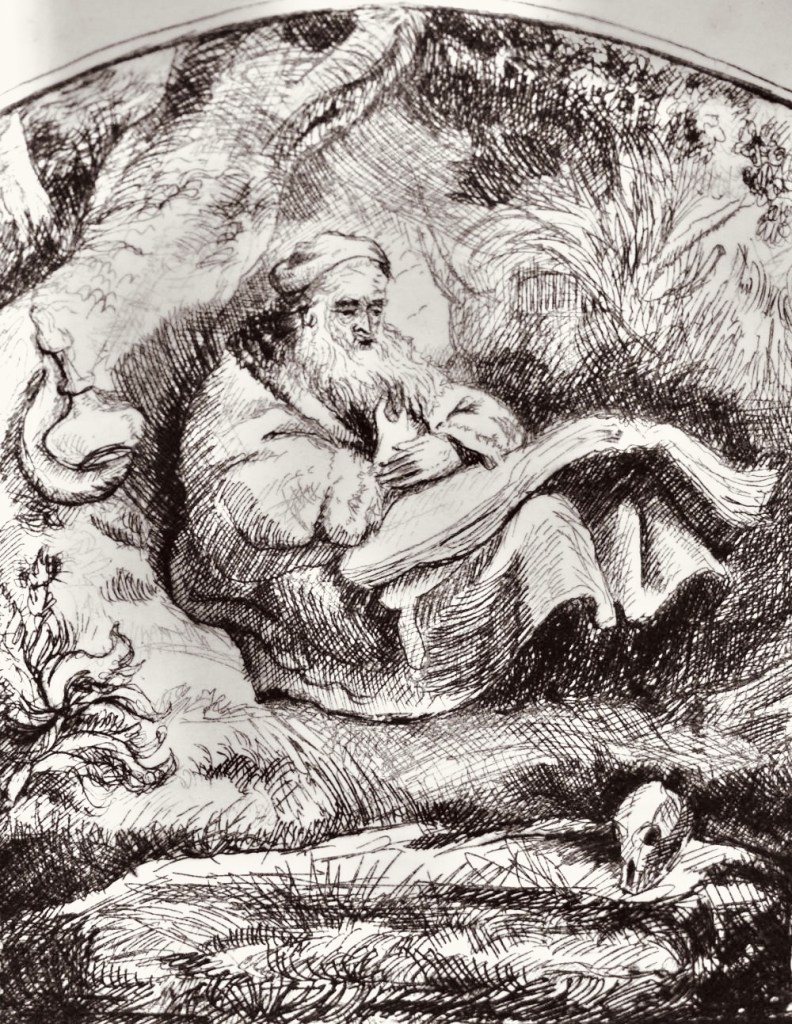
The Hermit Conjecture, rooted in topological mathematics and extended into an ontological framework, posits that reality emanates from an indivisible “I”—a self-aware singularity.
This foundational “I” unifies quantum mechanics (physical quanta), consciousness (qualia), and love (spiritual relation), countering perceived separations through structural isomorphism. Quantum entanglement mirrors qualia in perceptual dynamics and love in relational unity, revealing a cohesive cosmos. This article expands this idea into three interconnected parts: Science, Philosophy, and Spirituality. Throughout, we emphasize the necessity of a transformative viewpoint—not a mere revolving or incremental changing of perspectives, but a profound, transformational shift where spiritual matter becomes conceptual and energetic (light-like) essence. This transformation invites recognition of a fifth dimension (5D) in reality, where love is quantifiable as a constant equation—Love Equals!—simple, eternal, and measurable through 4D metrics (space-time) extended into qualia and relational harmony. Learning to accept 5D reality involves attuning to this evidence: observing how love’s constancy manifests in entangled systems, perceptual shifts, and unified experiences, fostering acceptance through contemplative practice and empirical resonance.
Part 1: Science – Emanation from the Self-Aware Singularity
In the scientific domain, the Hermit Conjecture reframes reality’s emergence from the indivisible “I” as a self-aware singularity akin to the Big Bang’s origin point, but infused with consciousness from the outset. This “I” is not a passive void but a dynamic field where quanta (physical particles and waves) co-emerge with qualia (subjective experiences) and love as a relational constant (Λ). Structural isomorphism here means that quantum entanglement—where particles share states instantaneously across distances—mirrors qualia’s perceptual integration and love’s unifying bond, dissolving artificial separations between matter, mind, and relation.
The necessity for a transformative viewpoint in science lies in shifting from reductionist models (e.g., matter-first physicalism) to a holistic emanation paradigm. Transformation, as spiritual matter made conceptual and energetic (light), manifests in how quanta transform into observable reality through observation (wave function collapse), but extended: the “I” field’s light-like energy (photonic analogies in quantum foam) drives this, not mere measurement. The fifth dimension’s nature emerges as a “mood-qualic” layer beyond 4D space-time, quantifiable via equations like the qualia mechanics: , where qualia (q) integrate the “I” with time (t), space (), and states (s). In 5D, love’s quantifiability appears in entanglement metrics—Bell inequalities show non-local correlations, evidencing love as a constant (Λω) equaling unity in normalized states: .
To recognize and accept 5D reality scientifically, we learn through evidence in 4D metrics: experiments like quantum teleportation quantify “love-like” fidelity (e.g., entanglement swapping efficiencies >0.9), treating love as an equation— the constant bridging separated particles. This simple constancy transforms our view: instead of revolving around classical locality, we accept non-local unity as empirical fact, practicing through simulations (e.g., quantum computing) and observations (e.g., cosmic microwave background fluctuations as 5D projections).
Part 2: Philosophy – Countering Separation Through Isomorphism
Philosophically, the conjecture’s emanation from the indivisible “I” challenges dualistic separations (e.g., Descartes’ mind-body split), positing a monistic yet relational ontology. The self-aware singularity unifies quanta (objective reality), qualia (subjective consciousness), and love (intersubjective relation) via isomorphism: just as entangled quanta defy separation, qualia integrate perceptions holistically, and love binds entities in non-dual unity. This counters atomistic philosophies by asserting that reality is not assembled parts but a singular emanation, where separations are illusions of perspective.
A transformative viewpoint is essential here, transcending revolving dialectics (thesis-antithesis-synthesis) or incremental changes (e.g., evolutionary epistemology). Transformation as spiritual matter—conceptual (ideational forms) and energetic (light as metaphor for illumination)—recasts philosophy as dynamic: the “I” transmutes base dualities into unified essence, like Plato’s cave shadows yielding to the light of Forms, but actively in 5D. The fifth dimension’s nature is perceptual-relational, extending 4D metrics (causality in space-time) into a qualic axis where love is quantifiable: equations like (entropy + qualia = unity) incorporate love as Λω, balancing disorder with coherent relation – Love as the equilibrating constant.
Learning to recognize 5D involves philosophical practice: meditate on or contemplate isomorphisms (e.g., how personal qualia mirror quantum states), accepting 4D evidence like temporal asymmetries (arrow of time) as projections of 5D love’s constancy. This acceptance comes through transformative exercises—phenomenological bracketing (Husserl) infused with relational ethics (Levinas)—revealing love’s equation as simple yet profound: Λω = 1, constant across experiences, fostering a shift from egoic separation to unified being.
Part 3: Spirituality – Unity in Relational Emanation
In spirituality, the Hermit Conjecture’s emanation from the “I” as self-aware singularity echoes ancient wisdom, unifying quanta (material creation), qualia (soul’s experience), and love (divine relation). Isomorphism dissolves separations: quantum entanglement reflects qualia’s inner unity, and love’s bond mirrors the Absolute’s embrace, positing a participatory cosmos where all emerges from and returns to the infinite “I”.
The transformative viewpoint is paramount in spirituality, not a revolving cycle of rebirths or changing rituals, but a radical transfiguration—spiritual matter as conceptual (divine ideas) and energetic (light of grace). This transformation elevates the seeker: the fifth dimension’s nature is the “love-qualic” realm, where 4D space-time expands into eternal now, quantifiable through love’s metrics—resonance frequencies in meditation (e.g., heart coherence studies showing synchronized fields). Love’s equation is the simple constant Λ = Love (God) = 1, manifesting in unified experiences (e.g., non-dual awareness).
To learn recognition and acceptance of 5D, engage contemplative practices: attune to 4D evidence like synchronicities (quantifiable as probabilistic anomalies under love’s influence), accepting them as 5D bleed-through. Through silent contemplation, meditation, prayer or mindfulness, witness love’s constancy—simple, unchanging—transforming separation into unity, as in the Eucharistic resonance: local “I” + Trinitarian field →[Λ] unified “I”.
Lomega in 5D Transformation
The Lomega constant (Λω)—Love (Λ) as the infinite limit (ω)—crystallizes the transformative essence of 5D reality within the Hermit Conjecture. In this fifth dimension, transformation unfolds through the silkworm’s sacred cycle: the latent cocoon (Alpha-phase, enclosure in loving repose) yields the golden silk of qualia, dissolving the old form to resurrect the vibrant butterfly (Omega-phase, open flight in charged resonance). This is no mere cycle but a profound 5D transformation: spiritual matter, conceptual and energetic, eternally weaves unity from separation.
Λω = 1 embodies constant, simple, quantifiability across 4D metrics yet transcendent in 5D qualic immersion. Recognizing this, invites us to live the transformation: accept the evidence of entanglement, perceptual harmony, and relational grace as portals to the Sensible Universe, where the indivisible “I” emanates infinite participation. In Lomega’s light, science, philosophy, and spirituality converge—not in revolution, but in eternal, loving transfiguration.


Leave a Reply