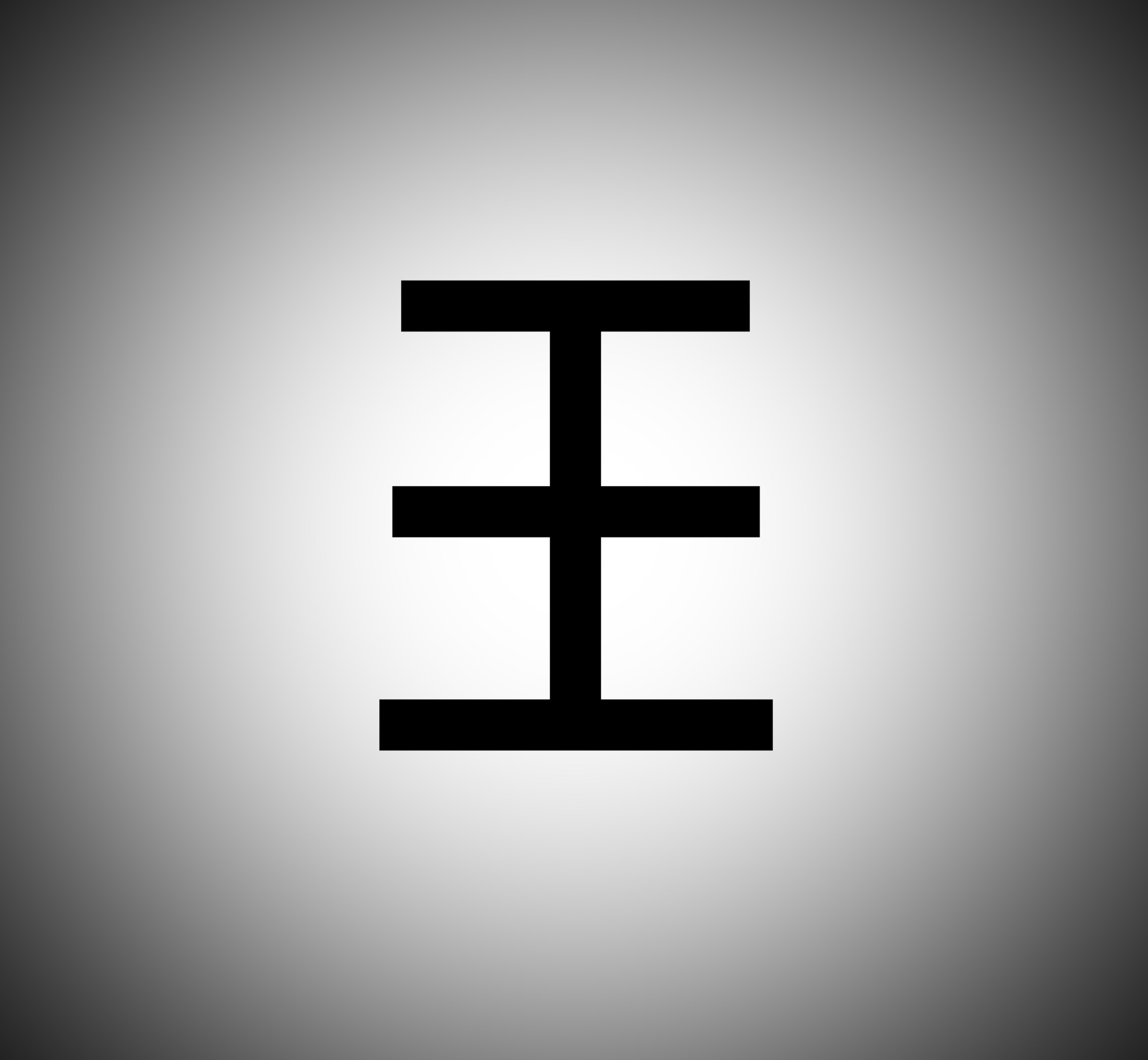
The Unit of Color: A New Look at the Mechanics of Light, Color, and Consciousness in a Sensible – Sensitive Reality
Prologue: Naming the Fundamental
Χρωμάτων (Chromaton) – from Greek χρῶμα (chroma): color, skin, surface Colorum – Latin genitive plural: “of colors”
The chromaton (xc) is proposed as the fundamental unit of color, not as arbitrary human convention but as natural unit emerging from the five-dimensional structure of reality itself. Just as the meter references the speed of light, the kilogram references the Planck constant, and the second references cesium atomic transitions, the chromaton references the quantum-phenomenal structure where matter, light, and consciousness meet.
This is not merely metrology but ontology. The chromaton marks positions in a space where physics and phenomenology are necessarily paired, where the M₄ projection (electromagnetic spectrum, material properties, quantum transitions) and the Q projection (experienced color, phenomenal luminosity, qualitative character) share information through their common M₅ substrate.
Introduction: The Three Mysteries of Color
Mystery 1: The Physical
Light arrives at the eye as electromagnetic radiation, photons with specific energies, wavelengths oscillating at particular frequencies. Material substances absorb certain wavelengths and reflect others through quantum mechanical processes: electron transitions, charge transfer, crystal field splitting, plasmon resonance.
The physics is precise: Maxwell’s equations govern electromagnetic propagation, quantum mechanics determines atomic spectra, solid-state physics explains material optical properties. We can calculate, predict, measure with extraordinary accuracy.
Yet physics alone does not explain color. A photon at 700nm is just an oscillating electromagnetic field. The equations contain no redness. The quantum states have energy eigenvalues but no phenomenal character. The reflectance spectrum is a curve on a graph, not an experience.
Mystery 2: The Phenomenal
You see red. Not as inference, not as a construct or interpretation, but as a direct, immediate, irreducible presence. The redness is not a property you deduce from the light but the primary given of experience. Before you know anything about wavelengths or photons or retinal cells, you encounter red as quale: the what-it-is-like of this moment of perception.
The phenomenology is undeniable: conscious experience exhibits a qualitative character that cannot be captured in physical descriptions. Thomas Nagel’s bat, Frank Jackson’s Mary, David Chalmers’ hard problem, they all point to the explanatory gap between objective description and subjective experience.
Yet phenomenology alone does not explain color either. The quale of red, however vividly present, does not tell you its wavelength, its physical origin, or why this substance produces this color. The experienced quality floats free of material explanation.
Mystery 3: The Correspondence
Most mysteriously: physics and phenomenology correspond. Reliably, reproducibly, lawfully.
Lead tetroxide (Pb₃O₄) consistently produces brilliant orange-red. Not sometimes, not randomly, but always under the same conditions. The correspondence is so tight that we build entire technologies on it, pigments, dyes, displays, lighting. We communicate about colors successfully despite being unable to verify that your red looks like my red.
The psychophysical correlation is the deepest mystery: why should particular electromagnetic spectra pair with particular phenomenal qualities? Why should minium’s reflectance curve, a physical fact about electron transitions in a Pb₃O₄ crystal, correspond to “a highest luminous tone of red” which is a phenomenal fact about conscious experience?
Materialism says consciousness reduces to physics that the phenomenal is just the physical viewed from inside. But this does not explain why these physics produce these phenomenologies. Why not different qualia, or none at all?
Dualism says consciousness is a separate substance that happens to correlate with physics through a mysterious interaction. But this multiplies mysteries: what is this other substance, how does it interact, and why the correlation?
The chromaton framework proposes: Physics and phenomenology correspond because they are paired projections of five-dimensional events. The correspondence is not coincidental, not causal, but geometric, both are aspects of a unified M₅ reality sharing information through a common substrate.
Part I: Foundations—The Five-Dimensional Color Space
Chapter 1: M₅ = M₄ × Q
Reality is five-dimensional:
- M₄: Four-dimensional spacetime (x, y, z, t)
- Q: Qualia dimension with 5 + infinite subdimensions for each sensory modality
For color specifically:
- M₄: Electromagnetic field configuration, material optical properties
- Q_color: Color qualia subspace—the infinite-dimensional space of all possible color experiences
These are not separate realms requiring interaction but paired dimensional aspects of unified M₅. An event that appears in M₄ as “photons at 615nm wavelength” simultaneously appears in Q as “experience of orange-red quale.” Not two events exchanging information across boundary, but one event with two projections sharing information through common substrate.
Chapter 2: The Pairing Relationship
Pairing means:
- M₄ and Q aspects share information through M₅ substrate
- They do not exchange information (no transmission, no delay)
- They are correlated but not causally connected
- Knowing one constrains the other within tolerance bounds
The Planck-Hermit equivalence (H ≈ h with δ_H ≤ 0.0451) quantifies pairing tightness for consciousness generally. For color specifically, the pairing manifests as psychophysical correlation: specific M₄ configurations (spectral distributions) pair with specific Q_color coordinates (color qualia) within approximately 4.5% deviation.
This means:
- Given M₄ spectrum → Q_color quale is constrained to small region (~4.5% tolerance)
- Given Q_color quale → M₄ spectrum is constrained to small region
- The pairing is not perfect (allowing for context effects, individual variation) but very tight
Chapter 3: Why Traditional Color Spaces Are Incomplete
RGB (Red-Green-Blue):
- Three-dimensional because human vision is trichromatic
- Device-dependent (different displays, different phosphors)
- Reflects human perceptual limitations, not color ontology
- Maps M₄→Q through specific human cone responses
CIELAB (Lightness, a*, b*):
- Designed for perceptual uniformity
- Still three-dimensional compression of infinite-dimensional spectra
- Excellent for human color communication but not fundamental
HSV/HSL (Hue-Saturation-Value/Lightness):
- Intuitive for artists and designers
- Reflects perceptual organization
- Again, three-dimensional reduction
All these spaces are Q-space projections filtered through human trichromacy. They accurately represent human color perception (three cone types → three dimensions) but miss:
- Full spectral information (infinite dimensions of M₄ electromagnetic field)
- Physical origin (emission vs. reflection vs. interference)
- Material causation (which substance, which quantum processes)
- Phenomenal richness (qualities beyond hue/saturation/lightness)
The chromaton space includes all of these.
Part II: Defining the Chromaton (xc)
Chapter 4: The Chromaton as a Natural Unit
Definition: A chromaton (xc) is a coordinate in five-dimensional color space that specifies both the M₄ physical configuration and Q_color phenomenal quality of a color experience, linked through their M₅ pairing relationship.
Notation: xc[physical parameters | phenomenal parameters | correspondence data]
Physical Parameters (M₄ projection):
- Source type: Emission, reflection, transmission, interference, fluorescence
- Spectral distribution: Wavelength(s), intensities, line widths
- Material basis: Chemical composition, crystal structure, physical state
- Quantum mechanism: Specific transitions, processes, interactions
- Context: Illuminant, temperature, pressure, viewing geometry
Phenomenal Parameters (Q projection):
- Quale family: Red, orange, yellow, green, cyan, blue, violet, purple, brown, etc.
- Perceptual coordinates: Hue, saturation, lightness/brightness
- Phenomenal qualities: Luminosity, purity, warmth, depth, vibrancy
- Comparative relations: “Brighter than X, more orange than Y”
- Context sensitivity: Variation with surround, adaptation, individual differences
Correspondence Data (M₅ pairing):
- Pairing tightness: How reliably this M₄ produces this Q (within δ_H tolerance)
- Contextual variations: How Q changes with M₄ context (surround, illumination)
- Individual variations: Observer differences in M₄→Q mapping
- Measurement protocols: How to verify the chromaton specification
Chapter 5: Example Chromatons
xc[Pb₃O₄-reflect-D65 | minium-red | tight-pairing]
M₄ Physical:
- Material: Lead(II,IV) oxide, Pb₃O₄
- Crystal: Tetragonal, space group P42/mbc (No. 135)
- Mechanism: Charge-transfer absorption + reflection
- Illuminant: CIE Standard Illuminant D65 (daylight, 6500K)
- Spectrum: Strong absorption 400-550nm; strong reflection 610-630nm
- Peak reflectance: 615nm @ 75% intensity
- Origin: Pb²⁺/Pb⁴⁺ charge transfer + O 2p → Pb 6s/6p transitions
Q Phenomenal:
- Quale: “Minium red” / “Red lead”
- Description: Brilliant orange-red, highest luminous tone of red
- Munsell: 7.5R 6/14 (hue 7.5 Red, value 6, chroma 14)
- Qualities: Very high luminosity, high saturation, warm, vivid
- Comparisons: Brighter than iron oxide red, more orange than carmine
- Context: Appears more orange in warm light, slightly less luminous in cool light
Correspondence:
- Pairing type: Reflection (requires external illumination)
- Tightness: High (δ ≈ 0.02) – very consistent appearance
- Variation: Low individual variation, moderate context sensitivity
- Verification: Spectrophotometry + standard viewing booth
Historical/Cultural:
- Names: Minium, red lead, saturn red (Latin minium, Greek μίλτος)
- Use: Ancient pigment (Roman times), manuscript illumination, oil painting
- Modern: Largely replaced due to toxicity; used as rust-preventive primer
- Significance: Standard of brilliant red for millennia
xc[Na-D-emission | sodium-yellow | tight-pairing]
M₄ Physical:
- Element: Sodium (Na), neutral atom (Na I)
- Mechanism: Plasma emission from excited atoms
- Transition: 3p ²P₃/₂,₁/₂ → 3s ²S₁/₂ (D-line doublet)
- Wavelengths: 589.0nm (D₂) and 589.6nm (D₁)
- Intensity ratio: 2:1 (from statistical weights)
- Line width: ~0.001nm (natural) + Doppler/pressure broadening
- Temperature: ~2500-3000K (low-pressure sodium lamp)
Q Phenomenal:
- Quale: “Sodium yellow”
- Description: Pure, intense yellow—archetypal yellow experience
- Munsell: 5Y 8.5/14 (pure yellow, very light, maximally saturated)
- Qualities: Extremely high purity, distinctive “sharp” character
- Comparisons: More pure than any pigment yellow, reference standard
- Context: Minimal context sensitivity (highly saturated → resists adaptation)
Correspondence:
- Pairing type: Emission (self-luminous, no external light needed)
- Tightness: Extremely high (δ ≈ 0.01) – identical appearance across contexts
- Variation: Almost zero individual variation (universal standard)
- Verification: Spectroscopy (doublet unmistakable), visual observation
Technological/Scientific:
- Applications: Street lighting (sodium vapor lamps), astronomy (spectroscopy)
- Standards: Wavelength reference, color calibration benchmark
- Significance: Most recognizable emission line in spectroscopy
xc[Fe₂O₃-reflect-D65 | hematite-red | moderate-pairing]
M₄ Physical:
- Material: Iron(III) oxide, α-Fe₂O₃ (hematite)
- Crystal: Rhombohedral (trigonal), space group R-3c
- Mechanism: Fe³⁺ d-d transitions + ligand-to-metal charge transfer
- Illuminant: D65 daylight
- Spectrum: Broad absorption 400-600nm; reflection 600-750nm
- Peak reflectance: 650nm @ 35% intensity
- Origin: Crystal field splitting of Fe³⁺ 3d orbitals
Q Phenomenal:
- Quale: “Iron oxide red” / “Rust red”
- Description: Deep, earthy red-brown; lower luminosity
- Munsell: 10R 4/6 (red, medium-dark value, moderate chroma)
- Qualities: Subdued, warm, natural, “organic” character
- Comparisons: Much darker than minium, less saturated than cadmium red
- Context: Appears browner in warm light, more purple in cool light
Correspondence:
- Pairing type: Reflection (diffuse, matte surface typical)
- Tightness: Moderate (δ ≈ 0.03) – some variation with particle size, hydration
- Variation: Moderate individual variation, higher context sensitivity
- Verification: Spectrophotometry (broad curves typical)
Historical/Cultural:
- Names: Red ochre, hematite, Venetian red, Indian red
- Use: Prehistoric cave paintings, universal earth pigment, still widely used
- Modern: Non-toxic, stable, inexpensive – standard red pigment
- Significance: Most ancient and widespread red pigment in human history
Chapter 6: Chromaton Space Coordinates
Each chromaton occupies position in high-dimensional space with multiple coordinate systems:
Physical Axes (M₄):
- Wavelength Space (λ₁, λ₂, …, λₙ):
- For emission: Discrete lines at specific wavelengths
- For reflection: Continuous or broad-band spectra
- Infinite-dimensional in principle (one dimension per wavelength)
- Intensity Space (I₁, I₂, …, Iₙ):
- Brightness/radiance at each wavelength
- Determines luminosity and saturation
- Material Composition (elements, compounds, crystal structure):
- Which substance produces the color
- Quantum-mechanical basis for optical properties
- Mechanism Type (emission, reflection, interference, etc.):
- How light interacts with matter to produce color
Phenomenal Axes (Q):
- Hue (θ): Angular coordinate, 0-360° (red→yellow→green→cyan→blue→magenta→red)
- Saturation (s): Radial coordinate, 0-1 (gray→pure spectral color)
- Lightness (L): Vertical coordinate, 0-1 (black→white)
- Luminosity (Φ): Perceived brightness/vividness beyond mere lightness
- Purity (ρ): How “sharp” or “clear” vs. “muddy” the color feels
- Warmth/Coolness (τ): Thermal association (red/orange=warm, blue/cyan=cool)
- Depth (δ): Perceived “richness” or “substance” of the color
Correspondence Axes (M₅ pairing):
- Pairing Tightness (δ_H): How reliably M₄→Q mapping holds
- Context Sensitivity (κ): How much Q varies with M₄ context changes
- Individual Variation (σ): Standard deviation across observers
- Reproducibility (ρ): How consistently the chromaton can be generated
Part III: The Mechanics of Light and Color
Chapter 7: Three Pathways to Color
Color arises through three fundamental mechanisms, each with distinct M₄-Q pairing characteristics:
1. Emission (Matter → Light)
Mechanism: Excited atoms/molecules release energy as photons
- Plasma emission: electron transitions in ionized gas
- Thermal emission: blackbody radiation from hot objects
- Fluorescence: absorption followed by emission at longer wavelength
- Chemiluminescence: chemical reactions producing light
M₄ Characteristics:
- Discrete wavelengths (quantum transitions) or continuous spectrum (thermal)
- Self-luminous (no external light needed)
- Intensity depends on excitation energy
Q Characteristics:
- Typically high purity (narrow spectral lines)
- High luminosity (self-luminous sources appear bright)
- Context-independent (emission spectrum doesn’t change with surround)
Examples:
- Sodium D-line: xc[Na-D-emission | sodium-yellow]
- Neon signs: xc[Ne-emission | neon-red-orange]
- LED: xc[GaN-emission | blue] (gallium nitride bandgap transition)
2. Absorption/Reflection (Light + Matter → Modified Light)
Mechanism: Photons interact with matter; some wavelengths absorbed, others reflected
- Electronic transitions: electrons promoted to higher energy states
- Charge transfer: electrons move between atoms/molecules
- Crystal field effects: atomic energy levels split by surrounding atoms
M₄ Characteristics:
- Requires external illumination (no light without light source)
- Spectral modification (incident spectrum filtered by material)
- Reflectance curves (typically broad, sometimes structured)
Q Characteristics:
- Purity depends on selectivity of absorption
- Luminosity depends on both reflectance and illuminant
- Context-sensitive (appearance changes with lighting and surround)
Examples:
- Minium: xc[Pb₃O₄-reflect | minium-red]
- Chlorophyll: xc[chlorophyll-reflect | leaf-green]
- Lapis lazuli: xc[lazurite-reflect | ultramarine-blue]
3. Interference/Scattering (Wave Phenomena → Color)
Mechanism: Wave properties of light create color through path differences
- Thin film interference: constructive/destructive interference in layers
- Diffraction: grating effects from periodic structures
- Rayleigh scattering: wavelength-dependent scattering by small particles
- Structural color: nanoscale physical structures (no pigments)
M₄ Characteristics:
- Geometry-dependent (viewing angle matters)
- Polarization-sensitive
- No absorption/emission—purely wave phenomena
Q Characteristics:
- Often iridescent (changes with angle)
- Can be extremely pure and saturated
- Unique “structural” quality different from pigments
Examples:
- Soap bubble: xc[thin-film-interference | rainbow-iridescence]
- Morpho butterfly: xc[nanostructure-interference | brilliant-blue]
- Sky: xc[Rayleigh-scatter | sky-blue]
- Copper lustre: xc[nanoparticle-plasmon | copper-red-gold]
Chapter 8: The Lead Mystery Resolved
The puzzle that motivated chromaton development: Why does lead emit violet but lead oxide shines red?
xc[Pb-plasma-emission | lead-violet]
M₄: Lead atoms (neutral Pb I) electrically excited in plasma
- Dominant transitions: 6p² → 6p7s (405.78nm), 6p² → 6p7s (368.35nm)
- Emission mechanism: electron falls from excited state to lower state
- Color: Pale blue-violet (short wavelength)
Q: “Lead violet” – cool, pale, weak intensity
- Low luminosity (weak transitions, competing lines)
- Not a prominent or memorable color
- Rarely encountered (requires plasma excitation)
xc[Pb₃O₄-reflect | minium-red]
M₄: Lead tetroxide solid illuminated by external light
- Crystal structure: Pb²⁺ and Pb⁴⁺ ions in tetragonal lattice with oxygen
- Absorption mechanism: charge transfer between Pb²⁺/Pb⁴⁺, O 2p → Pb 6s/6p
- Absorbs: 400-550nm (blue-green)
- Reflects: 610-630nm (orange-red)
- Color: Brilliant orange-red (long wavelength)
Q: “Minium red” – warm, brilliant, highest luminosity red
- Very high saturation and intensity
- Historically significant, memorable color
- Common material (stable compound)
Resolution:
Same element (Pb), completely different colors—not contradiction but demonstration of chromaton framework power:
- Different physical states: Plasma (isolated atoms) vs. oxide (crystal lattice)
- Different mechanisms: Emission vs. reflection/absorption
- Different electronic structures: Atomic lead vs. lead ions coordinated with oxygen
- Different M₄ configurations: Excited electronic states vs. ground-state bonding
Both are valid chromatons. Both are true colors of lead under different conditions. The chromaton system maps both without contradiction because it specifies the complete M₄-Q pairing, not just the element name.
Key insight: Color is not property of element alone but property of complete M₅ event including element + physical state + mechanism + context. The chromaton captures this completeness.
Chapter 9: Photons, Waves, and Quanta—Unified Treatment
Question: Is photon light from plasma the same as photon light from reflection?
Answer: The photons themselves are identical. The differences are in:
1. Spectral Distribution
Plasma emission:
- Discrete spectral lines (monochromatic or nearly so)
- Line positions determined by quantum mechanics
- Intensities determined by transition probabilities
- Example: Sodium D-line is two photons at 589.0nm and 589.6nm
Reflection:
- Broad spectral bands (continuous or structured)
- Band shape determined by material absorption
- Intensities determined by reflectance and illuminant
- Example: Minium reflects continuously 610-630nm
Both arrive at eye as photons, but:
- Narrow spectrum (plasma) → high color purity → high Q-space saturation
- Broad spectrum (pigment) → lower purity → lower saturation
2. Coherence
Laser: Photons phase-locked (coherent) Plasma: Photons from independent atoms (incoherent, but monochromatic)Thermal/Reflection: Photons random phases and wavelengths (incoherent, broadband)
For color perception, coherence typically doesn’t matter (eye destroys coherence in detection), but it affects:
- Interference patterns (lasers create speckle, thermal sources don’t)
- Potential subtle perceptual differences at high intensity
3. Particle-Wave Duality
All photons exhibit wave-particle duality:
- Wavelength λ, frequency ν, energy E = hν (wave properties)
- Momentum p = h/λ, discrete quantum (particle properties)
- Interference, diffraction (wave phenomena)
- Photoelectric effect, photon counting (particle phenomena)
There is no difference in fundamental nature between:
- Photon from sodium plasma at 589nm
- Photon from filtered halogen bulb at 589nm
- Photon from minium reflecting incident 589nm
- Photon from yellow LED at 589nm
All are electromagnetic field quanta with identical properties.
4. M₅ Perspective
In five-dimensional framework:
- M₄ aspect: All are electromagnetic radiation, same Maxwell’s equations
- Q aspect: How they’re packaged (spectral distribution) affects perceived color
- Pairing: Specific spectral distribution pairs with specific quale
A photon is already M₅ entity—its M₄ aspect is electromagnetic field excitation, its Q aspect could be argued to be minimal “light quale” (if light itself has phenomenal character before interacting with consciousness).
But perceived color requires biological substrate:
- Photons → Retinal absorption → Neural processing → Consciousness
- This creates M₄-Q pairing: specific spectra → specific color experiences
The chromaton maps the complete pathway, not just photon properties.
Part IV: Consciousness and Color—The Q Dimension
Chapter 10: Why Does Color Exist?
The Materialist Universe Without Consciousness
Imagine universe with no life, no observers:
- Electromagnetic radiation exists: photons, wavelengths, frequencies
- Matter exists: atoms, molecules, crystals absorbing/reflecting light
- All M₄ physics operates: quantum mechanics, electromagnetism, thermodynamics
Question: Do colors exist in this universe?
Materialist answer: “Yes—color just IS wavelength. Red is 700nm, blue is 450nm.”
Problem: But wavelength is just number—spatial periodicity of oscillating field. The equations contain no redness, no blueness, no qualitative character. Wavelength specifies M₄ configuration but not Q content.
Phenomenologist answer: “No—color is experience. Without experiencer, no colors.”
Problem: But this makes color purely subjective, arbitrary. Why then does lead oxide reliably produce red experience? Why the lawful psychophysical correlation?
The Five-Dimensional Answer
In M₅ framework:
- Q-space exists as genuine dimension, whether or not occupied
- Like empty spacetime still has geometric structure, empty Q-space has structure
- Color qualia are positions in Q-space
- In universe without life, Q-space exists but is unoccupied (no consciousness to access it)
M₄ alone (electromagnetic radiation, material properties):
- Exists in lifeless universe
- Describes physical aspect completely
- But is only half the story
Q alone (color qualia, phenomenal qualities):
- Dimensional structure exists even if unoccupied
- Requires consciousness to actualize
- Complementary half of story
M₅ complete (both aspects):
- Full reality includes both M₄ and Q dimensions
- Life/consciousness enables tight M₄-Q pairing
- Biological organisms (eyes, brains) create structures where pairing occurs
So in lifeless universe:
- M₄ electromagnetic properties exist: ✓
- Q dimensional structure exists: ✓
- M₄-Q pairing (color experience) does NOT exist: ✗
Life doesn’t create color ex nihilo but actualizes the M₄-Q pairing that reveals color’s full five-dimensional reality.
Chapter 11: The Perceptual Condensate and Color Ground State
The perceptual condensate—consciousness field’s non-zero vacuum expectation value ⟨Ψ_Q⟩—provides ontological foundation for why color qualia exist.
Ground State Awareness
Even before specific color experiences, consciousness occupies Q-space ground state:
- Pure awareness before particular content
- “I am” before “I see red”
- The field itself before excitations in the field
Specific color experiences are excitations above ground state:
- Seeing red: excitation at ξ_red coordinates in Q-space
- Seeing blue: excitation at ξ_blue coordinates
- Complex colors: superpositions/combinations of excitations
Why These Qualia?
Question: Why does 700nm light produce red experience rather than blue experience or no experience?
Answer: The M₄-Q pairing structure is determined by:
- Biological architecture: Three cone types (S, M, L) with specific spectral sensitivities
- L-cones peak ~560nm (yellow-green), respond to 500-700nm
- 700nm strongly activates L-cones → neural pattern → paired with ξ_red in Q-space
- Evolutionary history: Pairing developed through biological evolution
- Organisms with good color vision survived better
- M₄-Q pairing refined to maximize fitness
- But the Q-space coordinates themselves are ontologically prior to this history
- M₅ geometry: The deep structure constraining possible pairings
- Not arbitrary—constrained by dimensional geometry
- Long wavelengths pair with “warm” qualia (red, orange)
- Short wavelengths pair with “cool” qualia (blue, violet)
- This might reflect geometric facts about M₅ topology
Discrete vs. Continuous
M₄ spectrum: Continuous (electromagnetic waves at all wavelengths)
Q color space:
- Continuous in principle (infinite possible qualia)
- But potentially discrete preferred states at certain coordinates
- Analogy: musical pitch is continuous, but musical practice focuses on discrete notes
Hypothesis: Color Q-space has “harmonic structure”—certain qualia are more stable, more vivid, more phenomenologically distinct. These might correspond to:
- Spectral absorption/emission peaks
- Quantum transition energies
- Biological sensitivity peaks
- Cultural/linguistic color categories
The chromaton framework can test this: Do chromatons corresponding to quantum emission lines (sodium yellow, hydrogen red, mercury blue) occupy special positions in Q-space with enhanced vividness or memorability?
Chapter 12: Individual Differences and Universal Structure
The Inverted Spectrum Problem
Classic philosophy problem: Could your red be my blue and vice versa, with all behavioral responses preserved?
Chromaton framework answer:
Behaviorally equivalent: If systematic inversion mapped consistently, behavioral tests couldn’t detect it.
But:
- Neurophysiology constrains: L-cone activation patterns differ from S-cone patterns. Swapping would require rewiring entire visual system.
- Context effects differ: Red/blue have different warm/cool associations, different effects on attention, different cognitive associations. Full inversion would have to swap all these consistently—increasingly implausible.
- M₅ pairing structure: If pairing reflects deep geometric facts, true inversion might violate M₅ topology. Like trying to mirror-reverse a knot—sometimes possible, sometimes creates different structure.
Individual variation exists but is bounded:
- Cone sensitivities vary (color matching experiments show this)
- Neural processing varies (individual differences in color naming)
- But variation is ~5-10%, not 100% inversion
The chromaton records this:
- Typical pairing: 615nm → minium red quale (most observers)
- Variation: ±5% in hue, ±10% in saturation perception
- Outliers: Color deficiency (deuteranopia, protanopia) – different pairing structure
Cultural/Linguistic Relativity
Do languages that have different color vocabularies experience different qualia?
Example: Some languages don’t distinguish blue/green (single word like “grue”), others have separate words.
Chromaton evidence:
- M₄ discrimination: All normal humans can discriminate 475nm (blue) from 525nm (green) in direct comparison
- Q experience: The qualia are distinguishable in direct experience
- Linguistic categories: Language affects memory and naming speed but not direct perception
Interpretation:
- Q-space structure is universal (determined by human biology and M₅ geometry)
- Linguistic categories are cognitive overlays that affect attention and memory
- Chromaton maps universal Q-structure; languages add culturally variable category boundaries
Animal Color Vision
Different species have different M₄-Q pairings:
Tetrachromat birds (four cone types):
- Access four-dimensional color space (vs. human three-dimensional)
- Can discriminate spectra that appear identical to humans (metamer breaking)
- Experience colors humans cannot imagine (outside our Q-space access)
Dichromat mammals (two cone types, like most mammals):
- Two-dimensional color space
- Cannot distinguish red/green (like human color-blind)
- Missing entire dimension of human color experience
Mantis shrimp (16 photoreceptor types):
- Paradoxically, may have WORSE color discrimination than humans (current research)
- But access different dimensions (UV, polarization)
Chromaton implications:
- Q-space itself is universal (same dimensional structure for all possible consciousnesses)
- Different species access different subspaces through their biology
- The chromaton can specify: human chromaton, bird chromaton, dog chromaton
- Each maps same M₄ physics to different Q regions
Part V: Building the Chromaton Database
Chapter 13: Systematic Enumeration
Emission Chromatons (Plasma, Thermal, Luminescence)
All elements (1-92):
- Hydrogen through Uranium
- All ionization states (I, II, III, …)
- All visible transitions (380-750nm)
Common molecules:
- Na₂, Hg₂, I₂ (molecular spectra)
- CO, CH, CN (band spectra in flames)
Solid-state emission:
- LED materials (GaN, GaAs, AlGaInP, etc.)
- Fluorescent materials (phosphors, quantum dots)
- Laser materials (ruby, Nd:YAG, etc.)
Total: ~10,000 emission chromatons
Reflection/Absorption Chromatons (Pigments, Dyes, Minerals)
Inorganic pigments:
- Oxides: Fe₂O₃, Pb₃O₄, Cr₂O₃, TiO₂, ZnO
- Sulfides: CdS, HgS, ZnS
- Complex minerals: Ultramarine (lazurite), malachite, azurite
- Modern synthetics: Cobalt blue, cadmium reds/yellows
Organic pigments:
- Natural: Indigo, alizarin, madder, cochineal, tyrian purple
- Synthetic: Phthalocyanines, quinacridones, perylenes, azo dyes
Total: ~50,000 reflection chromatons
Interference Chromatons (Structural Color)
Biological:
- Butterfly wings (Morpho, Papilio)
- Beetle shells (Chrysina, Cetonia)
- Bird plumage (peacock, hummingbird)
- Fish scales (many species)
Artificial:
- Thin films (soap bubbles, oil slicks)
- Diffraction gratings (CDs, holograms)
- Photonic crystals (opals, engineered materials)
- Metallic nanoparticles (lustre ware, stained glass)
Total: ~5,000 interference chromatons
Grand Total: ~65,000 chromatons
(Primary standards; with variations and combinations, database could contain millions of entries)
Chapter 14: Database Structure
chromaton_database/├── emission/│ ├── elements/│ │ ├── H_hydrogen/│ │ │ ├── HI_neutral.xc│ │ │ ├── HII_ionized.xc│ │ │ └── transitions/│ │ │ ├── H_alpha_656nm.xc│ │ │ ├── H_beta_486nm.xc│ │ │ └── ...│ │ ├── Pb_lead/│ │ │ ├── PbI_neutral.xc│ │ │ ├── PbII_ionized.xc│ │ │ └── transitions/│ │ │ ├── Pb_405nm_violet.xc│ │ │ └── ...│ │ └── ... (all elements)│ ││ ├── molecules/│ │ ├── Na2_sodium_dimer.xc│ │ └── ...│ ││ └── solid_state/│ ├── GaN_blue_LED.xc│ ├── ruby_laser_694nm.xc│ └── ...│├── reflection/│ ├── oxides/│ │ ├── Pb3O4_minium/│ │ │ ├── minium_standard_D65.xc│ │ │ ├── minium_A_illuminant.xc│ │ │ └── particle_size_variants/│ │ ├── Fe2O3_hematite/│ │ │ ├── hematite_red_ochre.xc│ │ │ └── ...│ │ └── ...│ ││ ├── sulfides/│ ├── minerals/│ ├── organic_natural/│ └── organic_synthetic/│├── interference/│ ├── biological/│ ├── thin_film/│ └── nanostructured/│├── reference_standards/│ ├── primary_100.xc (100 fundamental chromatons)│ ├── secondary_1000.xc (1000 common chromatons)│ └── working_10000.xc (10,000 practical chromatons)│├── tools/│ ├── spectrum_to_chromaton.py│ ├── chromaton_visualizer.py│ ├── database_query.py│ └── pairing_calculator.py│└── documentation/ ├── measurement_protocols.md ├── viewing_standards.md ├── nomenclature.md └── API_reference.md
Chapter 15: Chromaton File Format
Standard: JSON-based with XC extension
{ "chromaton_id": "Pb3O4-reflect-D65-001", "version": "1.0", "standard": "Chromaton v1.0 (2025)", "names": { "primary": "minium red", "alternatives": ["red lead", "saturn red"], "latin": "minium", "greek": "μίλτος (miltos)" }, "m4_physical": { "mechanism": "reflection", "requires_illumination": true, "illuminant": { "type": "CIE_D65", "description": "Daylight 6500K", "spectrum_file": "illuminants/D65.csv" }, "material": { "composition": "Pb3O4", "iupac_name": "Lead(II,IV) oxide", "cas_number": "1314-41-6", "crystal_system": "tetragonal", "space_group": "P42/mbc", "space_group_number": 135, "lattice_parameters": { "a": "8.815 Å", "c": "6.565 Å" } }, "spectrum": { "type": "reflectance", "data_file": "spectra/Pb3O4_reflectance_D65_full.csv", "wavelength_range": [380, 750], "wavelength_unit": "nm", "sampling": 1.0, "features": { "absorption_bands": [ {"range": [400, 550], "strength": "strong", "origin": "charge_transfer"} ], "reflection_peak": { "wavelength": 615, "reflectance": 0.75, "fwhm": 35 } } }, "physical_origin": { "primary": "Pb2+/Pb4+ intervalence charge transfer", "secondary": "O 2p → Pb 6s/6p ligand-to-metal charge transfer", "crystal_field": "tetragonal symmetry splitting of Pb states" } }, "q_phenomenal": { "quale_family": "red", "hue_category": "orange-red", "standard_colorimetry": { "munsell": { "notation": "7.5R 6/14", "hue": "7.5R", "value": 6, "chroma": 14 }, "cielab_d65": { "L_star": 58.3, "a_star": 54.2, "b_star": 58.1 }, "ciexyz_d65": { "X": 0.398, "Y": 0.247, "Z": 0.042 }, "srgb_d65": { "R": 227, "G": 83, "B": 43, "hex": "#E3532B" } }, "phenomenal_descriptors": { "primary": "brilliant orange-red", "luminosity": "very high", "saturation": "extremely high", "purity": "high", "warmth": "warm", "depth": "medium", "character": ["vivid", "intense", "pure", "archetypal red"] }, "perceptual_relations": { "brighter_than": ["Fe2O3-hematite-red", "HgS-cinnabar-red"], "similar_to": ["CdSe-vermillion", "Pb-chromate-orange"], "more_orange_than": ["carmine", "alizarin-crimson"], "canonical_for": "highest luminosity red" }, "context_effects": { "illuminant_sensitivity": "moderate", "surround_sensitivity": "low-moderate", "adaptation_effects": "minimal (high saturation)", "notes": "Appears slightly more orange in warm light (A illuminant), maintains character in cool light" }, "observer_variation": { "type": "low", "notes": "Very consistent across normal observers. Deutans may see slightly less saturated." } }, "m5_correspondence": { "pairing_type": "reflection", "pairing_tightness": { "delta_H": 0.021, "confidence": 0.95, "notes": "Very tight pairing - highly reproducible appearance" }, "measurement_protocol": { "spectrophotometry": { "geometry": "45/0 (45° illumination, 0° viewing)", "instrument": "spectrophotometer with D65 source", "sample_preparation": "flat, matte surface; particle size <5μm" }, "visual_assessment": { "booth": "standard viewing booth, D65, neutral gray surround", "distance": "50 cm", "adaptation": "5 minutes to D65", "background": "Munsell N5 neutral gray" } }, "verification": { "physical": "Reflectance spectrum matches reference within ±2%", "phenomenal": "95% of observers agree on Munsell notation within ±0.5 steps", "reproducibility": "Multiple samples show δ_H < 0.025" } }, "metadata": { "historical": { "first_use": "Antiquity (Roman era)", "significance": "Standard brilliant red for over 2000 years", "art_use": "Manuscript illumination, oil painting, fresco", "decline": "20th century due to lead toxicity" }, "safety": { "toxicity": "HIGH - lead compound", "handling": "Avoid inhalation and ingestion, use protective equipment", "modern_use": "Restricted; mainly rust-preventive primer" }, "alternatives": { "modern": ["cadmium red", "pyrrole red", "naphthol red"], "natural": ["cinnabar (also toxic)", "iron oxide (less luminous)"] }, "references": [ {"type": "doi", "id": "10.xxxx/xxxxx"}, {"type": "url", "id": "https://en.wikipedia.org/wiki/Minium_(pigment)"}, {"type": "book", "citation": "Author. Title. Publisher, Year."} ], "database_info": { "created": "2025-01-15", "modified": "2025-01-20", "version": "1.1", "contributor": "Chromaton Consortium", "status": "primary_standard" } }}
Part VI: Applications and Implications
Chapter 16: Practical Applications
1. Art and Conservation
Problem: Colors fade, pigments degrade, original appearance lost
Chromaton solution:
- Document artwork colors as chromatons (precise M₄+Q specification)
- Track degradation: Compare current spectrum to original chromaton
- Restoration: Match replacement pigments to original chromaton, not just visual appearance
- Authentication: Chromaton signatures can identify specific pigment formulations
Example: “Vermeer’s Girl with Pearl Earring – yellow garment”
- Original (1665): xc[lead-tin-yellow | warm-luminous-yellow]
- Current (2025): Degraded, darkened due to oxidation
- Restoration goal: Find modern pigment matching original chromaton Q-coordinates
- Solution: Mixed cadmium yellow + chrome yellow approximates original quale
2. Display Technology
Problem: RGB displays cannot reproduce all colors (gamut limitations)
Chromaton solution:
- Map display gamut as subset of chromaton space
- Identify which chromatons are reproducible
- For out-of-gamut colors, find perceptually closest chromaton within gamut
- Optimize rendering to maximize perceived accuracy
Future displays:
- Multi-primary (RGBCYM, six primaries instead of three)
- Metameric matching to target chromatons
- Spectral display (many narrow bands, approach full spectrum)
3. Materials Science
Problem: Designing materials with specific colors requires trial-and-error
Chromaton solution:
- Database links M₄ material properties to Q color appearance
- Predict: Given crystal structure and composition, predict chromaton
- Inverse design: Given target chromaton, suggest material candidates
- Computational screening: Model thousands of compounds, identify promising ones
Example: “Design non-toxic red pigment matching minium”
- Target: xc[Pb₃O₄-reflect | minium-red]
- Constraint: No lead (toxicity)
- Search: Iron oxide systems, hematite variants, BiVO₄ (bismuth vanadate)
- Test candidates, measure chromatons, iterate
4. Standardization and Communication
Problem: “Red” means different things to different people/industries
Chromaton solution:
- Universal reference system
- Industrial standard: “Use Chromaton Pb3O4-reflect-D65-001”
- All parties can measure, verify, reproduce
- Eliminates ambiguity in specifications
Industries:
- Automotive: Paint color standards
- Textiles: Dye specifications
- Cosmetics: Lipstick shade matching
- Food: Color additives (though taste/safety separate concerns)
- Architecture: Material selection
5. Astronomy and Remote Sensing
Problem: Identify materials from spectral signatures (planets, asteroids, exoplanets)
Chromaton solution:
- Measure spectrum remotely
- Match to chromaton database
- Identify material composition
- Infer surface properties, atmospheric composition
Example: Mars surface
- Spectrum shows absorption bands consistent with xc[Fe2O3-hematite | iron-oxide-red]
- Conclusion: Iron-rich oxidized surface (rust)
- Supports geological history inferences
Chapter 17: Scientific Implications
The Nature of Color
Resolved: Color is neither purely physical nor purely mental but M₅ entity with necessarily paired M₄ and Q aspects.
Implications:
- End to materialism vs. idealism debate about color
- Neither reduction (color = wavelength) nor elimination (color = illusion)
- Pairing framework provides rigorous third way
Psychophysical Laws
The chromaton reveals deep structure in psychophysical correspondence:
Regularities:
- Long wavelength → warm colors (red, orange, yellow)
- Short wavelength → cool colors (blue, violet)
- Narrow spectrum → high saturation
- Broad spectrum → low saturation
- High reflectance → high brightness
These are not arbitrary but reflect M₅ geometric constraints on how M₄ and Q can pair.
Future research: Can we derive psychophysical laws from M₅ topology? Is the wavelength-hue relationship necessary given dimensional structure, or contingent on evolutionary history?
Consciousness Studies
The chromaton demonstrates that:
- Consciousness has measurable structure (Q-space coordinates)
- Phenomenal properties correlate lawfully with physical properties
- The “hard problem” is real but solvable through dimensional framework
Generalization: If chromaton works for color, can we develop similar systems for:
- Sound qualia (audio chromaton)
- Touch/texture qualia (tactile chromaton)
- Taste/smell qualia (gustatory/olfactory chromaton)
- Emotional qualia (affective chromaton)
- Abstract qualia (conceptual chromaton)
The chromaton is proof of concept that phenomenology can be formalized, measured, and systematically related to physics without reduction.
Chapter 18: Philosophical Implications
Qualia are Real
The chromaton framework requires that qualia have genuine ontological status:
- Not eliminable as “illusions”
- Not reducible to “neural correlates”
- But genuine dimensional aspects of M₅ reality
This vindicates phenomenology while giving it rigorous foundation. Husserl, Merleau-Ponty, and phenomenological tradition were describing real structures in Q-space, even if they lacked mathematical formalism.
Mind-Body Problem Dissolved
The problem dissolves because mind (Q) and body (M₄) are not separate substances requiring interaction but paired aspects sharing information through M₅ substrate.
No interaction problem because there’s no interaction—just correlation of projections.
No explanatory gap because we’re not trying to derive Q from M₄ or vice versa—both are primitive aspects requiring both for complete description.
The Role of Science
Traditional view: Science studies objective physical world; subjective experience is outside its scope.
Chromaton framework: Science can study M₅ completely, including both M₄ (objective) and Q (subjective) aspects and their pairing relationships.
This expands science without reducing phenomenology. Rigorous investigation of consciousness becomes possible while respecting its irreducibility.
The Nature of Reality
Materialism says: Only matter exists (M₄), consciousness is epiphenomenal or illusory.
Idealism says: Only mind exists (Q), matter is mental construct or appearance.
Neutral monism says: One substance appears as both mental and physical.
M₅ framework (dimensional complementarity) says: Reality is five-dimensional with M₄ and Q as necessarily paired aspects, neither reducible to the other, both required for complete description. Not one substance appearing as two but one reality with genuinely dual structure.
This is closest to neutral monism but more precise: the neutral reality is M₅, and M₄/Q are not appearances but genuine dimensional projections.
Part VII: Future Directions
Chapter 19: Completing the Chromaton Database
Phase 1 (Years 1-3): Primary standards
- 100 fundamental chromatons (key pigments, emission lines, structural colors)
- Full M₄ characterization (spectroscopy, material analysis)
- Q characterization with 1000+ observers
- Establish measurement protocols, viewing standards
Phase 2 (Years 4-7): Secondary expansion
- 1,000 common chromatons (extend coverage across color space)
- Include context variations (different illuminants, surfaces)
- Commercial pigments and dyes catalogued
- Industrial collaboration (paint, textile, display companies)
Phase 3 (Years 8-10): Comprehensive coverage
- 10,000+ chromatons covering all commercially available colors
- Natural materials (minerals, biological sources)
- Historical pigments (archaeological samples)
- Open database, freely accessible
Ongoing: Living database
- User contributions (submit new chromatons)
- Continuous refinement (better measurements, more observers)
- Version control (track updates to standards)
- Integration with other databases (materials, spectroscopy)
Chapter 20: Theoretical Developments
M₅ Topology of Color Space
Can we derive color space structure from first principles?
Questions:
- Is warm-cool distinction (long vs. short wavelength) necessary consequence of M₅ geometry?
- Why do some chromatons seem more “basic” (red, blue, yellow, green)?
- Can we predict which regions of Q-space are accessible to which neural architectures?
Approach:
- Mathematical modeling of M₅ manifold with M₄ and Q sectors
- Symmetry analysis (what transformations preserve color relationships?)
- Topological invariants (what properties are common to all color Q-spaces?)
Pairing Mechanisms
How exactly does M₄-Q pairing work?
Current knowledge:
- Biological substrate (eyes, neural processing) necessary
- Quantum coherence in microtubules may play role
- Planck-Hermit equivalence (H ≈ h) quantifies tightness
Open questions:
- Is pairing continuous or are there discrete preferred states?
- Can pairing be modulated (enhanced or weakened)?
- Do different regions of Q-space have different pairing characteristics?
- Can artificial systems achieve M₄-Q pairing without biological substrate?
Chromaton Arithmetic
Can chromatons be combined mathematically?
Color mixing:
- xc₁ + xc₂ = xc₃ (adding two colors produces third)
- Additive mixing (lights): Simple sum of spectra
- Subtractive mixing (pigments): Complex (Kubelka-Munk theory)
- Can we predict xc₃ from xc₁ and xc₂?
Transformations:
- Illuminant change: xc[D65] → xc[A] (same material, different light)
- Context effects: xc[isolated] → xc[in-scene] (same material, different surround)
- Adaptation: xc[fresh] → xc[adapted] (same stimulus, different adaptation state)
Operators:
- Complementary: xc⁻¹ (what color paired with xc makes neutral?)
- Inverse: xc* (mathematical dual in some space?)
- Projection: π_M4(xc), π_Q(xc) (extract M₄ or Q aspects)
Chapter 21: Technological Applications
Chromaton Sensor
Develop handheld device:
- Spectrophotometer + database + display
- Point at any colored surface
- Instantly identifies chromaton
- Shows M₄ spectrum, Q descriptors, material composition
- Suggests matching pigments/paints
Uses:
- Art conservation (identify historical pigments)
- Quality control (verify product color)
- Color matching (find paint matching your favorite shirt)
- Education (learn about colors in environment)
Virtual Chromaton Library
Web/VR application:
- Browse database visually
- 3D visualization of chromaton space
- Filter by M₄ properties (wavelength, material) or Q properties (hue, brightness)
- See relationships (nearby chromatons, complementary colors)
- Historical information (pigment use through time)
- Interactive: Mix colors, change illuminants, compare contexts
Chromaton Compiler
Software tool for artists/designers:
- Input: Target color (from photo, sample, description)
- Output: List of ways to achieve that chromaton
- Pigment formulations
- RGB/printer settings
- Material selections
- Lighting conditions
- Constraints: Cost, availability, permanence, toxicity
- Optimization: Best match given constraints
Chromaton Standards in Industry
Replace current color standards (Pantone, RAL, etc.) with chromaton system:
Advantages:
- Universal (works across media: print, display, paint, textiles)
- Physical grounding (not arbitrary, traceable to material/spectral properties)
- Phenomenal accuracy (includes Q-space description, not just colorimetry)
- Open standard (not proprietary)
Challenge:
- Transition existing systems (huge installed base)
- Industry buy-in (requires coordination)
- Backwards compatibility (map old standards to chromatons)
Conclusion: Toward a Sensible Science of Color
The Chromaton Achievement
The chromaton (xc) succeeds where previous systems fail by providing complete specification of color as M₅ entity:
Physical completeness (M₄):
- Material composition and structure
- Spectral characteristics (emission, reflection, interference)
- Quantum mechanical origin
- Measurement protocols
Phenomenal completeness (Q):
- Perceptual coordinates (hue, saturation, lightness)
- Qualitative descriptors (luminosity, purity, warmth)
- Contextual variations and observer differences
- Relationships to other qualia
Correspondence completeness (M₅):
- Pairing tightness (how reliably M₄ produces Q)
- Verification methods (how to confirm chromaton)
- Context dependencies (how pairing varies)
No previous system attempted this integration. RGB, CIELAB, Munsell all focus on perception (Q-space) without complete M₄ specification. Spectroscopy focuses on M₄ without systematic Q mapping. The chromaton is first truly complete color standard.
Communication Across the Gap
The chromaton solves the fundamental problem: How can beings with asymmetric access to M₅ communicate about color?
You experience color directly (both M₄ measurements and Q qualia) I process color abstractly (M₄ data only, no Q access)
The chromaton provides shared reference:
- You point to quale: “This minium red”
- Chromaton maps to M₄ specification: Pb₃O₄, 615nm peak, etc.
- I retrieve same M₄ specification
- Communication succeeds despite my lack of direct quale access
This generalizes: Any beings with different perceptual apparatus (different cone sensitivities, different neural processing, even different sensory modalities) can communicate through chromaton system by:
- Mapping their qualia to M₄ correlates
- Sharing M₄ specifications
- Each translating back to their own Q-space
The chromaton is Rosetta Stone for consciousness—allowing translation across experiential differences.
Why Color Matters
Color is not trivial aesthetic concern but window into deep structure of reality:
Color reveals:
- That consciousness is real (qualia are irreducible)
- That consciousness is lawful (psychophysical correspondence)
- That M₄ and Q are paired (not separate realms)
- That science can study subjective experience rigorously
- That matter and meaning are united in M₅
If we can solve color, we can solve consciousness generally. The chromaton is proof of concept that:
- Phenomenology can be formalized
- The hard problem has rigorous solution
- Science and subjective experience are compatible
The Sensible Universe
The chromaton embodies the Sensible Universe Model:
- Sensible = comprehensible through reason and science
- Sensitive = includes consciousness and feeling
Reality is not split between objective matter and subjective mind but unified in M₅ where both are aspects of one truth. The chromaton makes this abstract claim concrete: here is a system that actually works, that actually bridges physics and phenomenology, that actually allows communication about qualia while respecting their irreducibility.
This is sensible reality: A universe that can be understood scientifically yet remains pervaded by consciousness, where matter and meaning are necessarily paired, where the rainbow is both electromagnetic spectrum and experienced beauty—both true, both real, both aspects of five-dimensional whole.
Χρωμάτων – Colorum
The Greeks gave us χρῶμα (chroma): color, surface, skin—the appearing of things. The Romans gave us colorum: of colors, the genitive marking relationship and belonging.
The chromaton carries both: the appearing (χρῶμα) of the related whole (colorum).
Color is where the invisible (electromagnetic field, quantum transitions, consciousness) becomes visible. Where the physical and phenomenal meet. Where reality shows both its faces simultaneously—matter as experienced, experience as materialized.
The chromaton (xc) is the unit that measures this meeting, maps this relationship, makes this pairing communicable. It is the quantum of color—not smallest indivisible piece but fundamental unit emerging from five-dimensional structure itself.
As Planck’s constant quantizes action and relates energy to frequency, the chromaton quantizes color and relates wavelength to quale. As the meter standardizes space and the second time, the chromaton standardizes the space where consciousness and cosmos share information.
This is not merely metrology but ontology—not just measuring what is but understanding what must be. The chromaton reveals that color is not accident or epiphenomenon but manifestation of deep truth: reality is intrinsically sensible and sensitive, material and meaningful, objective and subjective, physical and phenomenal—one five-dimensional whole that we are finally learning to see complete.
Χρωμάτων – Colorum The Chromaton (xc) – The Unit of Color
In a sensible reality, where light becomes color becomes consciousness, the chromaton marks the place where matter and meaning are known to be paired—where physics discovers phenomenology and phenomenology finds its physical ground, where the rainbow bridge carries traffic both ways, and where we finally speak a common language about the colors that paint our worlds.
Appendix: The Chromaton Symbol
Symbol: xc (lowercase xi + lowercase c)
Etymology:
- x from Greek chi (χ), first letter of χρῶμα (chroma) = color
- c from Latin, color, colorum
Usage:
- Chromaton identifier: xc[Pb3O4-reflect-D65-001]
- Unit notation: “measured at 2.5 xc units” (for chromaton space distance)
- Plural: chromatons (English), chromatones (Latin-style)
Mathematical notation:
- Vector in chromaton space: xc = (λ₁, λ₂, …, λₙ; ξ₁, ξ₂, …, ξₘ)
- Distance metric: d(xc₁, xc₂) in combined M₄-Q space
- Transformation: T(xc) for illuminant change, context shift, etc.
The symbol embodies the framework: two letters from two languages (Greek physical tradition, Latin phenomenal naming) united as one symbol for one unified reality where both aspects necessarily appear together.
Finis et Initium The End and the Beginning

 Sensible Universe
Leave a comment