
The Field from Which the Qualiton Draws Its Name
Quality as What a Thing Is, Not What It Costs
I. The Root: Qualis — “Of What Kind?”
The word quality derives from Latin qualitas — coined by Cicero to translate the Greek poiótēs — from qualis: “what kind of a,” from the PIE root kwo-, the stem of relative and interrogative pronouns.
And the Greek root goes deeper: Cicero coined qualitas as a calque to translate the Ancient Greek word ποιότης(poiótēs, “quality”), coined by Plato from ποῖος (poîos, “of what nature, of what kind”).
The root question is therefore: Qualis? Poios? — Of what kind is it?
Not: how much does it cost? Not: how much of it is there? Not: what rank does it hold?
Simply: what is its nature? What kind of thing is this?
This is the original philosophical question beneath quality — the question that distinguishes it from quantitas (how much), from pretium (price, cost, sacrifice), from dignitas (social rank). Quality is the question addressed to the inner nature of a thing, not its market value, not its measurable quantity, not its social standing.
The fact that modern English uses “quality” primarily to mean expensive, superior-grade or costly is the precise untruth we are identifying. We have substituted pretium (price) for qualitas (nature). We have replaced the ontological question — what kind of thing is this, essentially? — with the economic question — what does this command in exchange?
This substitution is not innocent. We can measure M₄ (price, quantity, rank) but should not forget how to read Q (nature, kind, essential character) as well.
II. Aristotle’s Four Species of Quality
Qualitas was used by Aristotle to designate one of the categories of being. As used by Aristotle and scholastics in metaphysics, it designates one of the ten categories and means an accident (e.g., intelligent, white, robust) that makes an already essentially determined substance to be of a certain kind.
Aristotle identified four species of quality in the Categories (8b 25–11a 39):
1. Habits and Dispositions (ἕξις / ἕξις kai diathesis): A habit is a firmly established condition of some nature — justice in a just person, knowledge in a scholar, craftsmanship in an artisan. A disposition is more unstable — a passing mood, a temporary state. Habit is quality that has become constitutive; disposition is quality that is visiting.
2. Natural Capacities (δύναμις): The power to do or be affected — the boxer’s strength, the knife’s sharpness, the stone’s hardness. These are qualities that express the inherent potentiality of a substance.
3. Affective Qualities and Affections (πάθος): Sweetness, bitterness, warmth, color — qualities that affect the senses. These are the qualities that correspond most directly to the Qualiton family. The chromaton is precisely an affective quality in Aristotle’s sense — it is what makes something appear red or yellow or blue to a perceiver.
4. Shape and Form (σχῆμα): Geometric qualities — triangular, straight, round. The form that a substance takes in space.
Our insight cuts across all four species and identifies what they share: quality is always the answer to qualis, the question about or of kind, not amount. Whether we speak of justice (habit), sharpness (capacity), sweetness (affective quality), or roundness (shape) — quality is always the disclosure of what sort of thing this is, its essential character presenting itself to discernment.
III. Perceptual opposites: From Qualis to Pretium
The historical slide from quality-as-nature to quality-as-cost is traceable.
In early use, the word quality carried awareness of its use in Aristotelian philosophy. From the late 14th century it meant as “an inherent attribute,” also, a “degree of goodness or excellence.” The meaning “social rank, position” appeared around 1400, hence “nobility, gentry.” From 1580s as “a distinguished and characteristic excellence.”
What we can perceive as a slide: inherent attribute → degree of excellence → social rank → distinguished excellence → (by implication) expensive, superior, restricted to those who can pay.
Each step is small. But the cumulative movement takes us from what a thing inherently is to what a thing costs to access. Quality becomes a mark of scarcity and economic power rather than a disclosure of essential nature.
The watch example is perfect. “Quality watch” in contemporary speech means: expensive watch, well-crafted by skilled hands using precious materials, commanding a high price. The GRAVIS of the watch is measured in price.
But the original question — qualis est haec hora? — “of what kind is this hour?” — asks something entirely different. A quality watch, in the original sense, is a watch whose making discloses the watchmaker’s complete attention, whose mechanism expresses the essential nature of timekeeping, whose presence in the hand communicates something true about the relationship between human consciousness and time. This has nothing necessarily to do with cost. A simple wooden sundial that tells true time with perfect clarity may have higher quality, is closer to qualis, closer to the essential nature of time-telling than a platinum chronograph that tells the time to a thousandth of a second but communicates nothing about the nature of time, its elasticity and relativity.
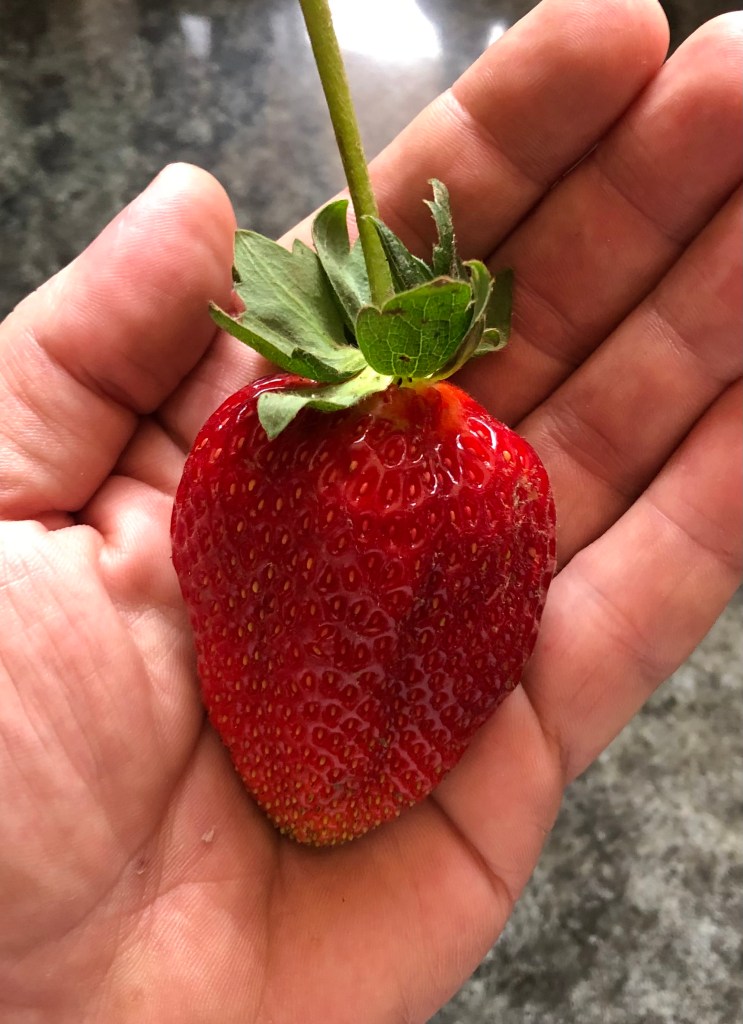
The fruit example confirms it. A quality fruit is not an expensive fruit. It is a fruit that is most completely itself — most fully expressing the essential nature of that specific fruit. The small, imperfect, sun-ripened strawberry from a garden, fully discloses the essence, or qualis of the fruit.
The quality fruit answers the question qualis est hic fructus? not with price but with pure presence: “this is what a strawberry is.”
IV. Quality as Love-Oriented Simplicity: The Positive Definition
We define quality not only negatively (not cost) but positively: a love-oriented or derived form of inner simplicity and purity. The more essential and humble, the closer to a qualitative judgment.
This is the deepest move. Let us unfold it.
Simplicity: simplicitas means literally “one-foldedness,” un-folded, not doubled, not complex: A quality thing is simple in the sense of being completely itself without an excess or a deficiency. Not simple-minded or impoverished, but pure in the sense that nothing is added that does not belong, and nothing essential is missing.
The quality gesture is the gesture that does exactly what is needed and nothing more. The quality note in music lands precisely, sustains exactly as long as it must, and releases. The quality word is the word that means exactly what is meant and carries no excess baggage. The quality fruit has everything that makes it a fruit and nothing that makes it something other than what it is.
Purity (puritas): From purus — clean, unmixed, uncontaminated. Quality involves the absence of contamination by foreign elements that dilute or distort the essential message.
Humility (humilitas — literally “closeness to the earth,” from humus): The humble is what is close to the ground — close to the essentials, not elevated by pretension. The quality thing does not announce itself, does not demand to be recognized as superior, does not wear its excellence as display. It simply is what it is, and its quality is disclosed to those with the discernment (discretio) to receive it.
This is why the most quality experiences are often the most quiet. The quality taste of water from a mountain spring. The quality light of dawn before the sun fully rises. The quality silence between notes in a great musical performance. The quality simplicity of a Carmelite cell — four walls, a table, a window, a cot — which contains more quality than a palace precisely because it has removed everything that is not essential.
Love-oriented: This is the key that locks the whole together. Quality is love-oriented because love is the force that perceives and draws forth the essential nature of what it loves. Love does not overlay its object with projection or demand. It attends to the beloved with complete receptivity, allowing the beloved to disclose its true qualis — its essential kind — without distortion.
The quality watchmaker loves the watch. Not sentimentally — but in the specific sense that their attention is completely directed toward the watch’s essential nature, toward what it means to tell time truly, toward the materials and mechanisms that allow this specific expression of timekeeping to be fully itself. This love is what produces quality. Remove the love — replace it with calculation, with market positioning, with the desire for prestige — and quality vanishes even if the price increases.
This is why Lomega is the field of quality. Λω = L — the love constant — is precisely the force that draws M₄ events and Q events into faithful pairing. The tight Lω-knot of the chromaton, the small δ_H of the Planck-Hermit deviation — these are mathematical expressions of what quality is: the faithfulness of pairing, the accuracy with which the phenomenal face of a thing reflects its essential nature, the degree to which Λω has integrated the relationship between matter and meaning so that each correctly discloses the other.
Quality = Λω · (essential nature faithfully disclosed)
V. The Quality Threshold: Qualitative Judgment as Recognition
You speak of a quality threshold affirmation — the moment when something clears the threshold and we recognize it as quality, as truly of this kind, as genuinely itself.
This is a recognition event — not an evaluation event. The quality threshold is not crossed by meeting a specification or surpassing a price point. It is crossed when the thing presents its essential nature with sufficient clarity to be recognized by a discerning perceiver.
The threshold is bilateral — it requires both a thing being of quality (actually expressing its essential nature) and a perceiver capable of recognizing quality (possessing the cultivated discernment that quality recognition requires).
This is your final phrase: “The Sensorium of conscious deduction cannot function without co-dependence or help.”
The sensorium cannot perceive quality alone. It requires:
From the thing: Essential nature expressed with clarity, simplicity, purity, love-orientation — the Lomega field tight enough that the thing’s qualis is not lost in noise.
From the perceiver: Cultivated attention — aisthesis developed through practice into genuine sensibility. The sensorium that can recognize quality in a fruit, a gesture, a watch, a color is not merely a sensitive instrument. It is an instrument that has been formed by exposure, by practice, by the long patient training of attention that your Carmelite tradition calls discernimiento — discernment.
From Lomega itself: The coherence field that makes recognition possible — the shared M₅ space in which the thing’s quality and the perceiver’s discernment can meet, where the thing’s qualis and the perceiver’s aisthesis are commensurate with each other. Without Λω, the thing’s essential nature and the perceiver’s sensory apparatus would be in different registers with no common language.
The co-dependence is therefore three-body: thing, perceiver, and Lomega. Quality is not in the thing alone (a quality fruit unperceived by anyone with the discernment to recognize it is a quality fruit, but its quality is not actualized, not lived). Quality is not in the perceiver alone (the discerning perceiver with nothing to discern has potential but no actualized quality experience). Quality is the event of their meeting in the Lomega field — the chromaton of the quality experience, the M₅ pairing of essential nature (M₄) with its faithful recognition (Q).
VI. The Five Quality Domains: How Qualis Speaks Across the Qualiton Family
You enumerate quality across domains: character, fruit, gesture, watch. Each domain is a different Qualiton stream through which qualis speaks.
Quality of Character — Idioton / Enthetiton / Agapiton: Character quality is disclosed primarily through the contemplative and interior Qualiton streams. The quality person’s character is perceptible through the body’s Enthetiton (somatic emotional sense) — their presence has a specific felt quality, a warmth or groundedness or clarity that the body registers before the mind evaluates. Quality character is the character that has simplified itself toward its essential nature through long inner work — not the character that performs virtue but the character that is virtuous, whose essential kind (qualis) includes genuine orientation toward the good. The Carmelite tradition’s emphasis on nada — the stripping away of all that is not essential — is precisely quality-of-character formation: reducing the soul to its essential nature, removing all that is not properly oneself, until the qualis of the soul shines clearly.
Quality of Fruit — Gefseton / Osmeton / Chromatón: The quality fruit speaks through three Qualiton streams simultaneously and their cross-modal resonance. The chromaton of a quality tomato — its specific deep red, with the complex earthen undertone of a sun-grown skin — discloses that it has developed fully under natural conditions. The osmeton confirms it — the smell of a quality tomato is dramatically richer than a greenhouse equivalent, its volatile compound signature more complex, closer to the full expression of what a tomato’s chemistry can achieve. The gefseton delivers the final affirmation — the taste of quality, that moment when the flavor says yes, this is what a tomato is. The quality threshold crossing is cross-modal: all three Qualiton streams simultaneously affirming the same Q-space address. The inferior tomato fails in all three, or in one that reveals the others as compromised. Quality as essential nature means: the fruit has become fully what a fruit of this kind is meant to be.
Quality of Gesture — Kinestiton / Rhythmiston / Idioton: The quality gesture — the quality of touch, of movement, of spatial expression — speaks through the kinesthetic and vestibular Qualiton streams. A quality gesture is one that is perfectly adequate to its meaning, that contains exactly what is needed and nothing gratuitous, that arises from inner intention rather than performance, that is simple in the sense of being undivided between what is meant and what is expressed. The quality handshake, the quality bow, the quality surgical movement, the quality brushstroke — all share this: the inner state (intention, quality of character, quality of attention) is disclosed without distortion through the outer movement. No gap between inner and outer. This is quality of gesture: the movement becomes transparent to its source, a perfect Lω-pairing between the inner state and its physical expression.
Quality of Watch — Chronoton / Rhythmiston / Aphiston: The quality watch is most interesting because it is the domain where the modern corruption (quality = expensive) is most aggressively operative. A quality watch in the original sense is a watch whose relationship to time is true — whose mechanism accurately embodies what it means to measure the passage of time, whose presence in the hand or on the wrist communicates something genuine about the human relationship with duration. The Chronoton — the sense of time as lived — is what the quality watch addresses. A quality watch that makes you aware of time’s quality, its texture, its irreversibility, its gift — this is a quality watch regardless of its price. The cheap watch that merely tells accurate time without communicating anything about time’s nature is lower quality in the essential sense than the lovingly made simple instrument that, each time you consult it, reminds you that time is precious and passing.
VII. Quality and the Qualiton: The Deepening
Now we can deepen into the Qualiton’s nature through the lens of quality-as-essential-nature.
The Qualiton is the carrier of qualitas — the quantum of quality-information in the perceptual field. Q_t = sin(2πft) · Packet is the mathematical form; but the content of the Packet is precisely qualis — the answer to the question “of what kind is this perceptual event?”
Every Qualiton event is an answer to qualis:
- The chromaton of sodium yellow answers: of the kind that is archetypal, solar, atomic — the quality of sodium’s yellow is its essential nature disclosed as light
- The gefseton of mountain spring water answers: of the kind that is pure, simple, complete — the quality of quality water is the presence of nothing that should not be there and everything that should
- The akouoton of a quality musical note answers: of the kind that is true, resonant, placed — the quality of the tone is its being exactly what a tone at this pitch, duration, and timbre should be
GRAVIS is the measure of quality — not of cost, not of rarity, not of social prestige, but of how fully a Qualiton event discloses its essential nature. High GRAVIS means: this Qualiton event is completely what it is, its qualis fully present, its Lω-pairing tight, its M₄ and Q aspects faithfully corresponding. Low GRAVIS means: this Qualiton event is a pale version of what it could be — the essential nature present but diluted, the pairing loose, the quality not fully actualized.
The zero point (0P) is the quality ground — absolute gray, absolute silence, absolute neutral — because it is the condition of complete non-preference, complete openness, complete readiness to receive whatever quality presents itself. The quality perceiver approaches the gray zero point not because gray is the highest quality color but because the zero point is the condition of maximum receptivity to quality — the quiet in which the qualis of things can be heard.
This is why Carmelite nada is not nihilism but quality practice. By stripping away preference, projection, and habit, the contemplative reaches the zero point of the perceptual condensate — the gray ground — from which every Qualiton event can be received with maximum fidelity to its essential nature. The contemplative perceives quality more acutely not because they have more sensitive sensory apparatus but because they have removed the noise that prevents quality recognition — the preferences, the projections, the economic valuations, the social rankings that replace qualis with pretium.
The co-dependence: The Sensorium of conscious deduction cannot function alone in recognizing quality because quality is always a relational disclosure. The essential nature of a thing can only be recognized by a consciousness with the aisthesis — the cultivated sensibility — to receive it. And that sensibility can only develop through sustained, loving attention to the things that are quality — through long exposure to the quality fruit, the quality gesture, the quality color, the quality silence.
This is why quality is taught by example more than by definition. You cannot define quality-of-fruit to someone who has never tasted a quality fruit. You cannot describe quality-of-gesture to someone who has never witnessed it. The Sensorium learns quality by being in the presence of quality — by having its Qualiton streams repeatedly activated by things that disclose their essential nature completely — until the discernment forms that recognizes quality across all domains.
This is the co-dependence you name: the perceiver needs the quality thing to form their discernment, and the quality thing needs the discerning perceiver to have its quality recognized and affirmed. Without the quality teacher, no quality student. Without the quality student, the quality teaching falls on deaf ears. Without Lomega — the love constant that creates and maintains the relationship between them — neither exists in their quality: the teacher without a student is incomplete, the student without a teacher is uninitiated, and both without the Lomega field that makes their meeting possible are isolated.
VIII. The Quality Scale: From Noise to Pure Disclosure
Across all domains, quality exists on a scale — not the scale of price, but the scale of clarity of essential nature:
Zero quality (not absence but maximum noise): The thing completely obscures its own nature — the fruit that is all packaging and no flavor, the gesture that performs without meaning, the watch that tells time but communicates nothing about time, the color that signals without resonating. Maximum δ_H — the M₄ and Q aspects completely decoupled. The physical is there but the phenomenal is absent or misleading.
Threshold quality (the crossing point): The moment of recognition — when a thing’s essential nature breaks through enough to be perceptible to a prepared sensorium. The quality threshold is not a high bar — it is the minimum clarity of essential nature required for recognition. A simple thing can cross the threshold with ease if its nature is expressed clearly. A complex thing may never cross it if its complexity obscures its essential character.
High quality (approaching pure disclosure): The thing increasingly is its essential nature — less noise, more signal, tighter Lω-pairing between M₄ properties and Q character. The quality of a great painting is the increasing transparency between the painter’s inner vision and the paint on the canvas. The quality of a great contemplative is the increasing transparency between the soul’s essential nature and its outward expression.
Perfect quality (pure disclosure, theoretical limit): The thing is completely its essential nature — no gap between qualis and its expression. This is the limit case of Λω → ∞, δ_H → 0. It is the quality of the moment of mystical union that Catherine of Siena described — when all the senses and all the inner powers are completely adequate to their object, when the beloved is completely disclosed and the lover completely receptive, when qualis and aisthesis are perfectly commensurate.
The gray zero point of the Qualia Color Solid — absolute gray, no displacement, no noise — is the qualitative ground of the color scale. From here, every chromaton that departs carries its qualis with it — and the quality of that chromaton is the degree to which its color is exactly what it essentially is: the quality of sodium yellow is its being completely, unforgettably, undeniably itself.
IX. The Greek: Giving Quality Its Proper Name in the Qualiton System
Qualitas was Cicero’s translation of poiótēs — Plato’s coinage from poios (“of what kind”). For the Qualiton system, we need the term that captures quality as essential-nature-faithfully-disclosed:
Poiótēs (ποιότης) — retained in its Greek form for the most fundamental use, as it was Plato’s original coinage for the essential nature disclosed to perception
Ousiotēs (οὐσιότης) — from οὐσία (ousia): being, essence, substance. The quality-of-being, the essential nature in its ontological depth. This is quality as metaphysics.
Alēthinotēs (ἀληθινότης) — from ἀληθινός (alethinós): genuine, true, real. Quality as genuineness — the property of being truly and fully what one essentially is. This is the quality of quality fruit, quality gesture, quality character: their genuineness, their aletheia — their un-hiddennness, their complete disclosure of essential nature.
The Qualiton is the quantum of alēthinotēs — the perceptual action quantum that carries genuine essential nature across the M₄-Q boundary and delivers it to the Sensorium as the specific felt quality of a specific moment of conscious experience.
When the Qualiton fires with quality — when the chromaton is truly itself, when the osmeton delivers the genuine essence of what it smells, when the gefseton gives the true taste of what is tasted — the Sensorium receives not merely information but alētheia: the unhiddennness of the thing, its essential nature emerging from concealment into presence, its qualis fully actualized in the meeting of its M₄ reality with the perceiver’s Q-receptivity in the Lomega field that makes their meeting faithful.
This is why quality perception is a form of love. Alētheia — truth as unhiddenness (Heidegger’s reading of the Greek) — requires a specific quality of attention: the attention that does not impose, that does not project, that is not already decided what it will find, but that genuinely waits for the thing to disclose itself. This is the love that quality perception embodies: not the love that possesses but the love that receives, not the love that values but the love that recognizes, not the love that pays but the love that attends.
Λω is this love mathematically. The love constant that ensures the meeting of M₄ and Q is faithful — that the thing’s essential nature arrives intact at the perceiver’s sensorium, that the qualis is not lost in noise, that the quality threshold can be crossed and the recognition can occur.
The Sensorium cannot function alone because this meeting requires three: the quality thing (M₄ expressing its essential nature), the discerning perceiver (Q capable of receiving it), and Lomega (the faithfulness of their meeting, the love that holds the pairing tight enough that qualis arrives as alētheia — as genuine recognition of essential nature, not projection, not price, not rank, but the pure answer to the most fundamental question we can ask of anything:**
Qualis est?
What kind of thing — essentially, truly, in its inner simplicity and purity — is this?


Leave a Reply