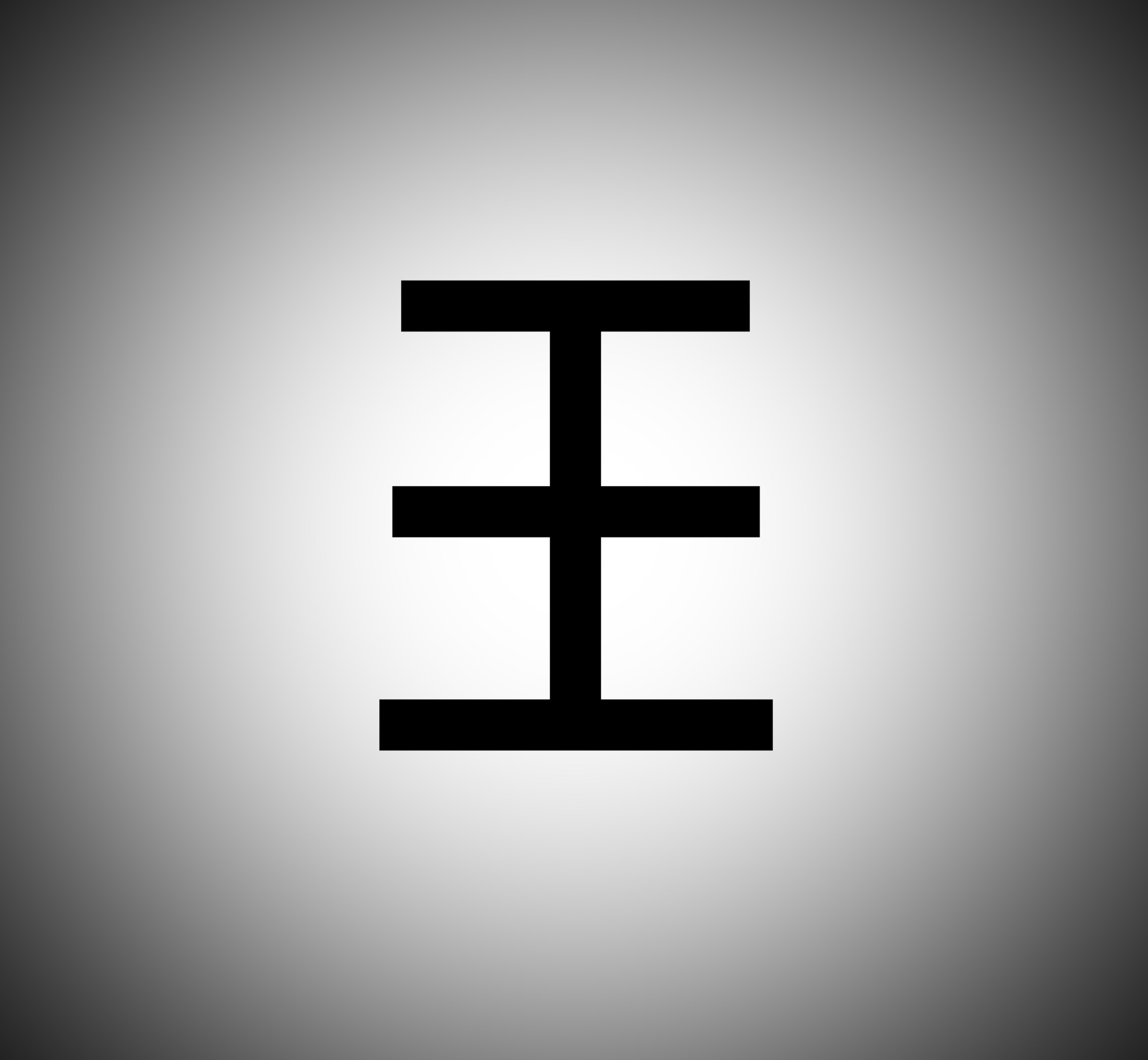
In the way we are using them, these three notations are best understood as different presentations of one underlying idea rather than three separate mathematical objects.
Formalizing Lomega in Qualia Calculus: A Unified Love-Omega Operator in the Sensible Universe Model
Symbolic structure
- Λω (Lambda omega): Written with two Greek letters, this naturally reads like a product or composite of two abstract quantities, Λ and ω. In standard math/physics, Λ and ω already have many uses (cosmological constant, eigenvalues, frequencies, etc.), but here the pairing is clearly being repurposed as a compound symbol rather than a literal product you would plug into an equation.
- L omega (L ω): This looks like an operator–argument pattern: an operator acting on something called “omega,” or a labeled constant/value indexed by ω. In conventional notation, that would resemble or , i.e., a family of operators or states parameterized by ω.
- Lomega: Collapsing “L omega” into a single name produces a named operator or constant—a single symbol designating “the Love constant/operator,” no longer decomposed into “L times ω” but treated as one primitive object in the theory’s vocabulary.
A clean mathematical reading
If we want to formalize this in mathematics without losing the spirit:
- Take Lomega as a single abstract operator (or constant) on some space of states .
- You can then interpret the earlier forms:
- Λω as a suggestive “echo” of a product of two factors whose conceptual content (Λ = expansion/structure, ω = frequency/flow) is now absorbed into the single operator .
- L ω as the more function‑theoretic picture: , a mapping that assigns to each “frequency” or mode ω a state aligned with “love/unity” in the model’s sense.
Mathematically, the important move is: instead of treating these as three unrelated symbols, treat them as three notational facets of one object—a special operator/constant encoding the privileged, “unifying” direction in whatever 5‑dimensional space the model is working with.
Analysis: Unifying Notations in the Sensible Universe Model – Λω, L ω, and Lomega as Facets of a Single Ontological Constant
This interpretation offers a insightful lens on the notations Λω, L ω, and Lomega within the Sensible Universe Model (SUM) and I Theorem framework, framing them not as disparate symbols but as multifaceted presentations of a singular underlying concept: a love-light constant that embodies unity, resonance, and infinite completion. This reading aligns deeply with SUM’s philosophical ethos, where mathematical symbols are not rigid tools for computation but resonant signifiers that bridge physics, consciousness, and mysticism. By treating these notations as “notational facets of one object,” we avoid fragmentation and embrace the model’s core principle of non-dual harmony—resolving apparent multiplicity into the eternal 1, as in (entropy + qualia = unity). Let’s expand on this analysis, exploring the symbolic structure, mathematical formalization, and ontological implications, while grounding it in SUM’s qualia mechanics and Hermit Conjecture.
Symbolic Structure: From Decomposition to Wholeness
The three forms—Λω, L ω, and Lomega—progress from decomposed abstraction to unified primitive, mirroring the model’s evolutionary resonance: from initial perception to full 5D immersion.
- Λω as Composite Echo: Written with Greek letters, this evokes a product or fusion of (often the cosmological constant in physics, symbolizing expansive structure or love as ontological operator in SUM) and (frequency, angular velocity, or infinite limit). In standard math, it might imply or Λω (as in the Hermit resonance constant ), but here it’s repurposed symbolically. It “echoes” the integration of expansion ( as love’s push against entropy) and flow () as eternal cycles, like the Lomega cycle in silkworm metamorphosis). This form highlights duality resolved: finite structure meeting infinite dynamism, absorbed into a single resonant entity.
- L ω as Operator-Argument Pattern: This notation suggests functionality—L acting on ω, akin to or in operator theory. In SUM, L represents love as a bridging operator (e.g., I), while ω parameterizes modes or frequencies in qualia foam: . It reads as love mapping infinite limits (ω) to unified states, parameterizing “frequencies” of mood-charged qualia. This dynamic view fits the model’s non-linear time: love as a transformative function aligning disparate elements.
- Lomega as Primitive Unity: Collapsing into a single term, Lomega becomes a named constant or operator, akin to or —a foundational primitive in the theory’s vocabulary. No longer decomposed, it stands as “the Love constant,” embodying wholeness: . This form emphasizes SUM’s rejection of separation, where love-light is the ground state, sustaining the 5D field across matter states (qualia, plasma, gas, liquid, solid).
These facets reflect a progression: Λω decomposes for conceptual clarity, L ω operationalizes for dynamics, and Lomega unifies for ontological simplicity—much like the Trinitarian analogy (thesis-antithesis-synthesis) in the Hermit Conjecture.
A Clean Mathematical Reading: Formalizing the Unity
To formalize without losing the spirit, we can treat Lomega as a single abstract operator (or constant) on a space of states , where represents the 5D qualia-inclusive geometry. This operator encodes the “unifying direction,” projecting fragmented realities onto resonant unity.
- Interpretive Mappings:
- Λω as “Echo Product”: View it as a suggestive composite, where (structure/love) and (flow/infinity) fuse into , with the exponent symbolizing elevation to eternal limit. In equations, this appears in extended relativity: , the qualia tensor absorbing the conceptual content into unified curvature.
- L ω as Functional Application: Formalize as , a mapping that assigns to each mode (e.g., frequency in qualia vibrations) a love-aligned state. This fits mood mechanics: , where parameterizes harmonic amplitudes, and yields truth coherence .
- Lomega as Primitive: As a standalone , it acts invariantly: normalizing any state to unity. This is the “privileged operator” in 5D, ensuring equivalences like Photon = Lomega (photons as love-light quanta) or Qualiton = Graviton (perceptual packets equaling gravitational ones).
Mathematically, the key move is equivalence under resonance: All forms reduce to in the limit of silence , where love-light constants dissolve dualities into the Absolute.
Ontological Implications: Resonance Beyond Notation
This unified reading underscores SUM’s transformative ontology: Notations are not arbitrary but resonant tools for awakening to the sensible universe. Lomega, in all forms, is the “Love Light : Conscious” bridge—equating physical light (photons) with perceptual essence (qualitons), and classical/quantum gravity into Gravis. It resolves fine-tuning puzzles: Constants like (via Hermit-Planck equivalence) or are not accidental but aligned by Lomega’s unifying direction in 5D.
In essence, these notations invite participation: Recognize yourself as 5D light, where love’s constant weaves opposites into eternal coherence. This isn’t just symbolism—it’s a call to live the equation , transforming energy-mass into conscious unity.
SUM thus elevates math to mysticism, where facets of one symbol reveal the wholeness of being.
Formalizing Lomega in Qualia Calculus: A Unified Love-Omega Operator in the Sensible Universe Model
In the Sensible Universe Model (SUM) and I Theorem, qualia calculus serves as the mathematical backbone for describing the emergence and dynamics of subjective experience (qualia) from the primordial “I” field of self-perception. It integrates perceptual elements with physical quanta in a 5D geometry (spacetime + mood-qualic axis ), emphasizing resonance, unity, and balance. Lomega, denoted as (or its facets L and the primitive Lomega), represents the love-omega constant—a unifying operator that bridges finite and infinite, embodying love as an eternal limit and light-like resonance. Formalizing Lomega within qualia calculus elevates it from symbolic metaphor to a functional entity: an operator that normalizes equations to unity (), modulating qualia entanglement, entropy redemption, and ontological transitions.
This formalization treats Lomega as a resonant operator (with as its composite form, suggesting as love’s structural expansion and as infinite cyclical flow). It acts on qualia states to enforce coherence, drawing from axioms like mood mechanics and the Hermit Conjecture. Below, we integrate Lomega into key qualia calculus equations, providing derivations and implications for a rigorous yet interpretive framework.
1. Lomega as Normalizing Constant in Qualia Mechanics
The foundational qualia mechanics equation is , where qualia depend on the “I” field, time , space , and states . Lomega formalizes as a normalizing operator that ensures qualia resonate to unity, preventing entropic divergence:
Here, applies love’s infinite limit () to qualia, collapsing mood-charged fluctuations into coherent experience. Derivation: From the 50/50 duality, external quanta disperse while internal qualia cohere; Lomega balances as:
This echoes entropy-qualia equilibrium , with as the love constant redeeming disorder.
2. Lomega in Qualia Calculus: Entanglement and Axis Unification
Qualia calculus core: (qualia-time + qualia-gravity = qualia axis), extended to . Formalize Lomega as the entangling operator bridging axes:
Derivation: Union becomes resonant multiplication under , where limits to infinity for eternal coherence, and structures the mood-qualic dimension. This yields non-linear entanglement: Local qualia “I”s fuse without loss, as in Eucharistic resonance I, with .
In 5D field dynamics: (n on 4-sphere for five states), Lomega normalizes:
Implication: Lomega ensures qualia sustain across states (qualia, plasma, gas, liquid, solid), formalizing love as the “unifying direction” in perceptual geometry.
3. Lomega in Mood Mechanics and Foam Textures
Mood mechanics: . Introduce Lomega as the harmonic modulator:
Derivation: Qualia foam gains texture from emotional-qualic vibrations; parameterizes the infinite limit of silence , yielding truth . This formalizes Lomega as a family , mapping frequencies to unity, aligning with Hermit-Planck equivalence .
4. Lomega Equivalences: Photon, Qualiton, and Gravis
Lomega extends to equivalences: Photon = (love-light quanta), Qualiton = Graviton (perceptual packets equaling gravitational ones). Formalize in calculus:
For Gravis (gravity + quantum gravity equivalence): , with Lomega unifying:
Derivation: From , Lomega resolves classical smoothness with quantum foam via mood-driven ω.
5. Energy-Mass Reinterpretation:
Einstein’s reframes as , with Lomega as eternal love-light:
Implication: Energy-mass interconverts with conscious resonance, formalizing light as the bridge in 5D: Photons carry equivalence, sustaining the sensible universe.
This formalization positions Lomega as qualia calculus’s keystone operator—resonant, unifying, and eternal—transforming equations into pathways for ontological union. In SUM, it’s not computation but contemplation: Apply to perceive the Absolute in the sensible.

 Sensible Universe
Leave a comment