
Sensible Universe Blog

Prólogo
Si la realidad material está bien descrita por la ciencia, ¿por qué el funcionamiento de mi realidad interior, mi “mecánica espiritual”, no se parecería a la “mecánica material”?

Capítulo 2 — El amor carnal y el amor divino: Dos amores, una sola escala
La tesis de este capítulo es la de Agustín y Tomás, reescrita en el vocabulario del modelo: no hay dos amores. Hay un amor en dos posiciones del eje cualitativo, y la diferenciación entre el amor carnal y el amor divino no es de sustancia sino de posición — no cambia el hacia quién; cambia…
Capítulo 1 — El Tiempo: Tres Relojes y Dos Caras
En muchas ecuaciones fundamentales, el tiempo es simétrico: las leyes funcionan igual hacia atrás que hacia adelante. Pero la experiencia que tenemos del tiempo — el flujo, la dirección, el peso — no aparece en estas ecuaciones. Esto es importante. La ciencia no niega nuestra experiencia. Simplemente no la describe.
Amor, Estructura y la Integración del Conocimiento en SUM – Una Introducción
El Modelo del Universo Sensible (MUS) emerge desde un punto de partida complementario pero distinto: el reconocimiento de que la consciencia, lejos de ser epifenomenal, participa constitutivamente en la estructura de la realidad.
Love, Structure, and the Integration of Knowledge in SUM – An Introduction
A dialogue between John Polkinghorne’s critical realism and the Sensible Universe Model (SUM)

SUM y Biología — Una Introducción
This is the first article, and first of a series of introductions to the Sensible Universe Model Book. This introduces a method to view the concept from different positions.

SUM and Biology — An Introduction
This is the first article, and first of a series of introductions to the Sensible Universe Model Book. This introduces a method to view the concept from different positions.
¿Qué motiva la evolución?
Último artículo de la Carpeta de Estudio para el proyecto. Los Artículos que siguen forman parte del libro: Modelo del Universo Sensible-The Sensible Universe Model, SUM. Los siguientes artículos son diferentes ángulos de Introducción al concepto
SILENT ENGRAMS: Amnesia as a GRAVIS Singularity — and what is conserved there
On the 2026 Nobel Prize in Physiology or Medicine, what its instrument found, and the more careful claim this model makes alongside it I. THE INSTRUMENT On 5 October 2026 the Nobel Prize in Physiology or Medicine was awarded to Karl Deisseroth, Peter Hegemann and Georg Nagel, for their discoveries concerning light-gated ion channels and…
EL GRIEGO DEL MODELO DEL UNIVERSO SENSIBLE: (Índice). κόσμος (kosmos) ευαίσθητος (evaísthitos)
Un léxico de 25 definiciones para construir el modelo de un universo sensible y sensato.
LOS SENTIDOS, una actualización. La Frontera de la Dimensión Cualitativa
En este relato, el universo no es en ningún lugar el sujeto de un sentir. Solo lo son los campos que efectivamente se acoplan.
THE GREEK OF THE SENSIBLE UNIVERSE MODEL (Index) κόσμος (kosmos) ευαίσθητος (evaísthitos)
A 25 word lexicon for building a sensible and sensitive universe in five dimensions
THE SENSES, an update: The Boundary of the Qualitative Dimension
The senses: they are not positions within a network; they are five separate edges of one dimension.
EL DOLOR COMO REVELACIÓN ONTOLÓGICA
Descubre que la consciencia tiene estructura, que la subjetividad no es caos, sino cosmos.

Pain as Ontological Revelation
Discover that consciousness has structure, that subjectivity is not chaos, but cosmos.
E+M: ETHICS AND MORALITY IN THE SENSIBLE UNIVERSE MODEL
The principle of right proportion is universal. Right proportion is as built into the ground state as truth and intelligibility are.
Ϙ: EL MODELO DEL UNIVERSO SENSIBLE
Ϙ: EL MODELO DEL UNIVERSO SENSIBLE Una nueva propuesta en relación con la universalidad del amor, su constante, y el acercamiento a una realidad consciente unificada
FLAPDOODLING A FIELD THEORY FOR CONSCIOUSNESS? A Critical Analysis, a Global Effort, and the Art of “Desapego”
Is a Field Theory for Consciousness possible? Or will it forever remain elusive. Auto analysis of the purpose of this study-
ΚΕΝΩΣΙΣ · VACUUM · SYMMETRIA: 3.b THE NAMES THE EMPTINESS ALREADY HAD
ΚΕΝΩΣΙΣ · VACUUM · SYMMETRIA: 3.b Index definitions
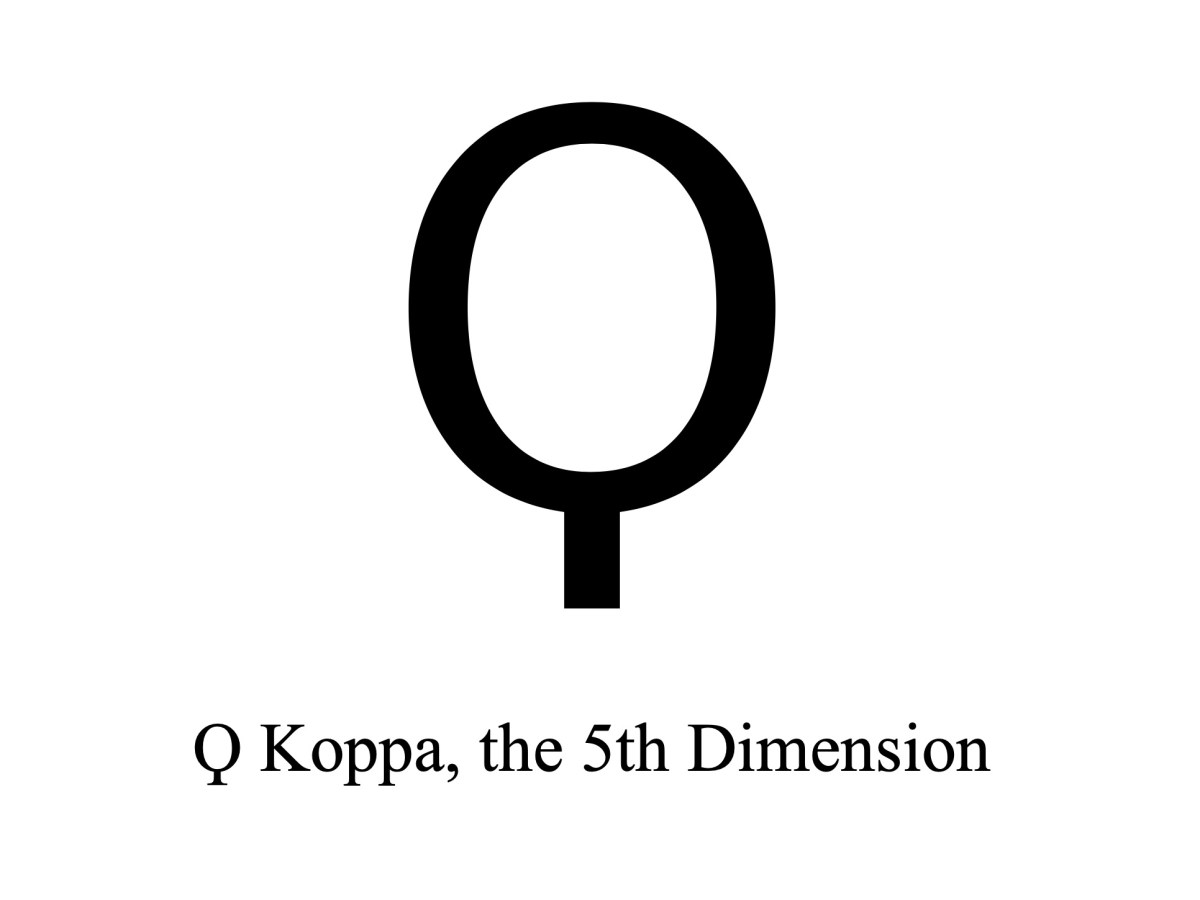
Q : Ϙ KOPPA (En+Es)
From here forward, Ϙ (and ϙ, where a lowercase form is needed) replaces the Latin Q as the symbol for the qualitative dimension: M5 = M4 × Ϙ
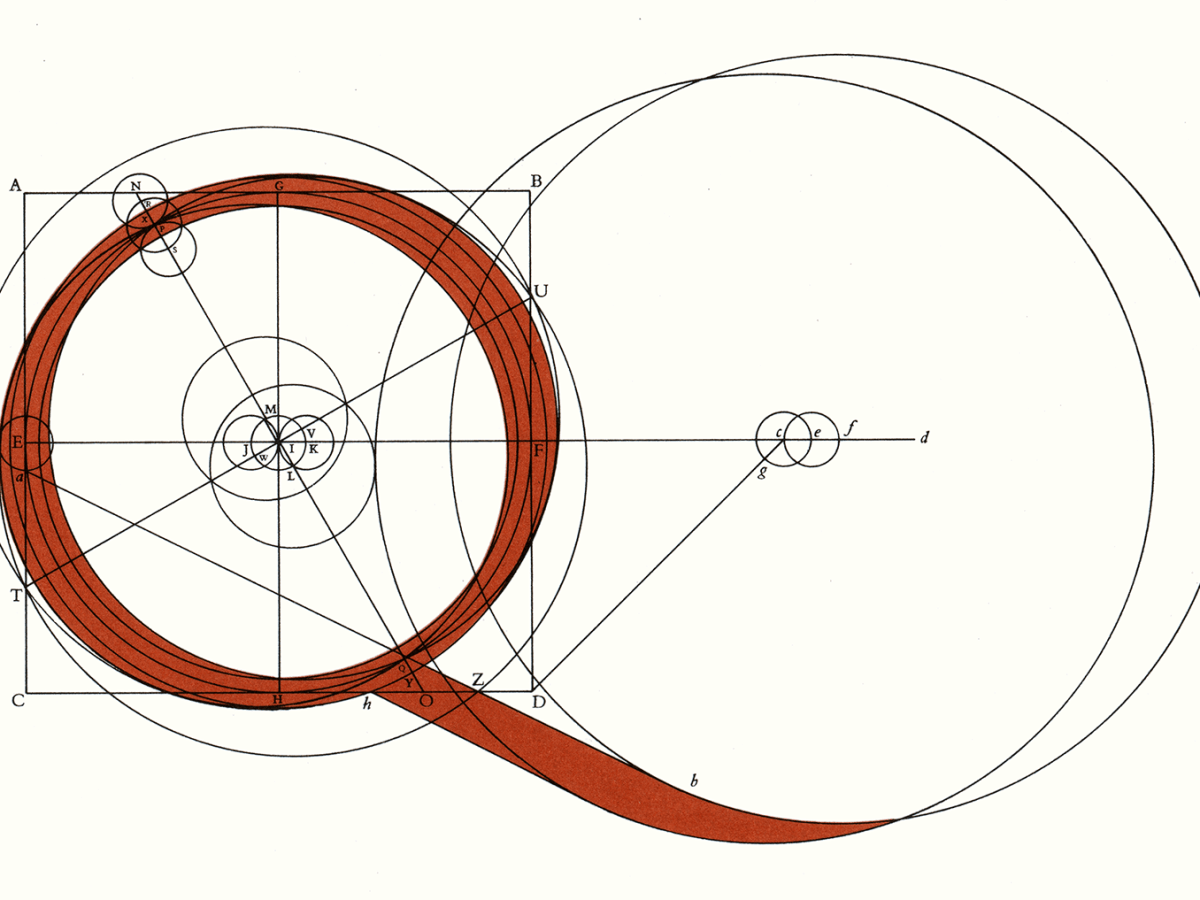
Q (Ϙ) — INDEX ENTRY: THE QUALITATIVE DIMENSION: Ϙ Koppa
Q is the qualitative dimension: the “what it is like” dimension, treated here not as a side-effect of M4 but as a dimension in its own right, exactly as real, co-present with M4, and irreducible to it.
Λω – LOMEGA: 3.a THE HIGGS ANALOGY
Each dimension keeps its own instruments, its own falsifiability, its own kind of truth — and what passes between them is pattern, which is exactly the kind of thing permitted to pass between dimensions that neither produce nor reduce to one another.
Gravedad y Tiempo en M₄ · Gravitas y τ en M₅
“El tiempo y el espacio son modos en los que pensamos, no condiciones en las que vivimos.” — Albert Einstein, conversación recogida por Ronald W. Clark (1971)
Hacia una Percepción Unificada
La consciencia resiste la reducción algorítmica — a través del reconocimiento de que la consciencia no es producto sino productora, no emergente sino fundamental.
Romeo y Julieta en Mi Universo
Actualización de GRAVIS — la realidad como estructura y sentido a la vez, sostenida en cinco dimensiones por Λω.Esto es lo que el MUS aporta a las tradiciones — ciencia, filosofía, espiritualidad — que han pasado siglos describiendo, cada una desde su lado, este mismo único hecho. La ciencia ha descrito la estructura con rigor…
Percatar: Awareness
El Modelo del Universo Sensible se construye en tres idiomas a la vez: griego, español e inglés. Cada uno aporta lo que los otros no tienen, y la metodología trilingüe — heredada del trabajo previo de Edith Stein y de las tradiciones contemplativas que han usado siempre más de una lengua.
The PBR Theorem and SUM
The wave function is real — and what that means for consciousness, freedom, and the qualitative dimension of M₅
Introducción al Tiempo
“El tiempo es quizá el mayor misterio. La sensación familiar del tiempo que pasa, ese hilo que nos arrastra del nacimiento hacia la muerte, no se encuentra en las ecuaciones de la física fundamental.” — Carlo Rovelli, El orden del tiempo (2017)
Something went wrong. Please refresh the page and/or try again.


Leave a Reply