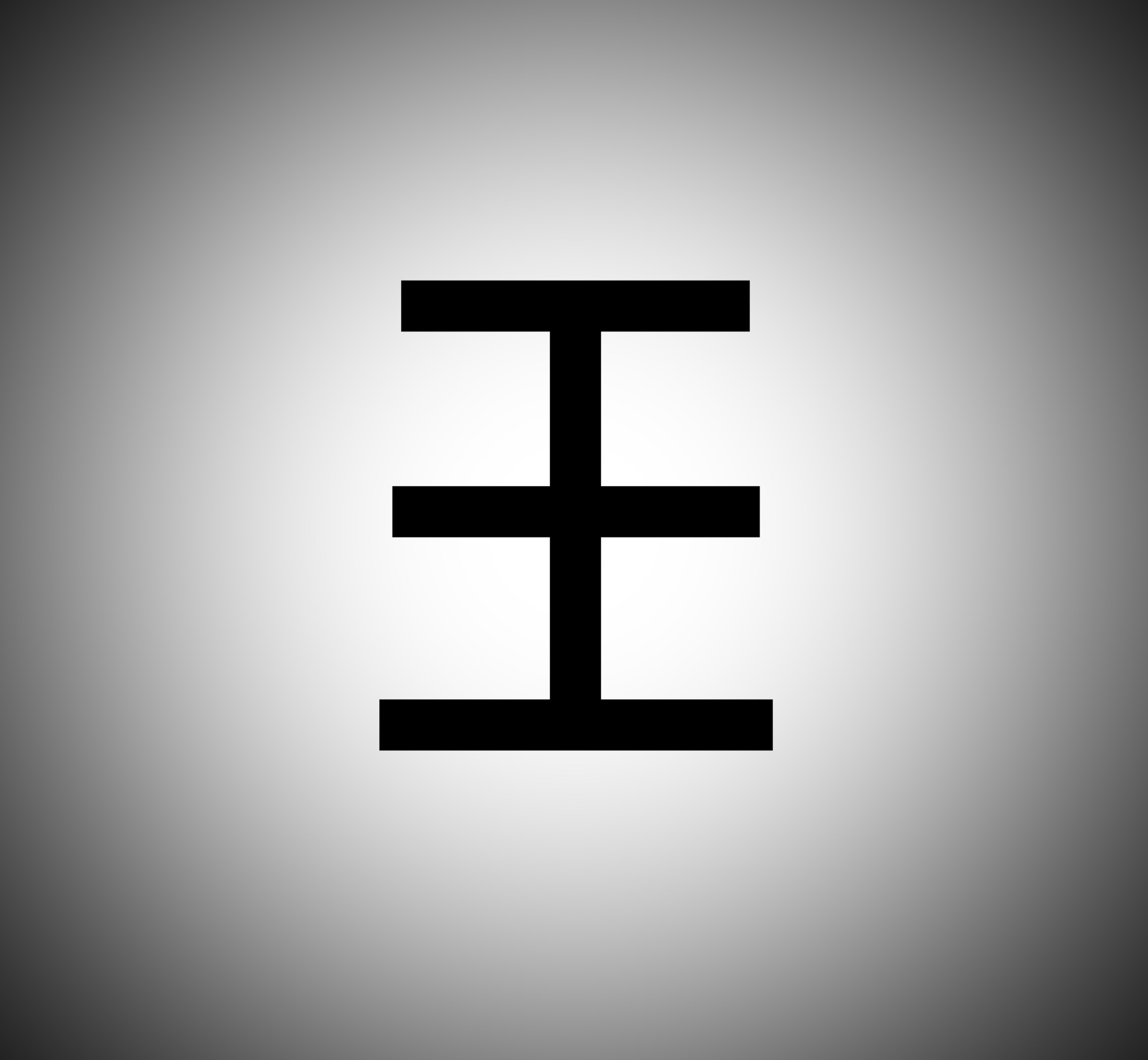
χρόνος (chronos, Greek): sequential time, clock time, time as measured duration · τόνος (tonos, Greek): tension, weight, the taut quality of something under pressure · -on: particle suffix · the particle that carries the specific weight of a moment as felt duration rather than mere measured sequence
What it is
There are two ways to experience a minute. The first is as sixty equal seconds, each indistinguishable from the others in terms of what they contain. This is the minute of the clock, the minute of physics, coordinate time. The second is as something with specific weight and texture: the minute before difficult news, the minute of a reunion, the minute of a decision that cannot be undone. This is qualitative time, and the Chronoton is the particle that carries it.
The Chronoton is the quantum of qualitative temporal experience: the elementary unit of felt duration in the Q dimension. Just as the photon is the elementary quantum of light — the particle you cannot divide further without losing the electromagnetic interaction — the Chronoton is the elementary quantum of qualitative time. Below the Chronoton, there is no qualitative time: only physical sequence without felt weight.
The Chronoton fires at intervals of the Hermit Constant ∐: the minimum quantum of qualitative temporal experience. ∐ is the irreducible gap between the arrival of an event in awareness — before it has been consciously processed — and the moment when the conscious field fully registers it. In that gap, the Chronoton has already fired. Qualitative time has advanced. Consciousness has not yet caught up. The Chronoton and consciousness are therefore distinct: the particle fires first, the conscious registration follows within ∐.
Clock time and qualitative time
The Chronoton carries not only the unit of qualitative time but its weight: the specific felt quality of this moment rather than another. Two minutes of coordinate time may contain Chronoton events of vastly different weight. A minute of genuine grief carries more qualitative temporal weight than a minute of waiting for a bus, not because the clock has misbehaved but because the Chronoton events within it carry different loads.
This is why W(τ) — the ratio of qualitative time to coordinate time — is the formal measure of what the Chronoton is doing. When W(τ) is large, Chronoton events are densely loaded: each one carries significant felt weight, qualitative time expands relative to the clock. When W(τ) approaches zero, Chronoton events are light and open: absorbed in the creative instant, the Chronoton fires without accumulating weight, and qualitative time compresses relative to the clock.
The formal parallel: the photon carries energy E = hf, where h is Planck’s constant and f is frequency. The Chronoton carries qualitative temporal weight proportionate to the GRAVIS load of the conscious field at the moment of firing. High GRAVIS: heavy Chronoton events, slow qualitative time. Low GRAVIS, open field: light Chronoton events, fast qualitative time.
Chronoton χ = quantum of qualitative time
Fires at intervals of ∐ (the Hermit Constant)
Weight of each χ event ∝ GRAVIS load at moment of firing
W(τ) = cumulative measure of Chronoton event weight relative to dt
The distinction between chronos and kairos
The ancient Greeks had two words for time. Chronos (χρόνος) named sequential, measured time: the time of calendars and clocks, one thing after another. Kairos (καιρός) named the right moment, the qualitatively significant instant, the moment that carries weight precisely because it is this moment and not any other. The Chronoton takes its name from chronos but carries kairos: it is the particle that makes the difference between a moment that merely passes and a moment whose passing leaves a mark.
Every moment of genuine decision, every encounter with beauty, every experience of loss or recognition or the sudden understanding of something important — these are high-weight Chronoton events. The Chronoton does not choose which moments are significant. It measures and carries whatever weight is present. The weight belongs to the event. The Chronoton is the particle that ensures that weight is registered in the Q dimension and not lost.
Cross-references
See also: W(τ) · Tτ · ∐ Hermit Constant · Primaton · Merimnaton · GRAVIS · Qualitative Black Hole · Qualitative White Hole · Kairos · Chronos
Without the Chronoton, qualitative time has no elementary quantum — no formal unit from which felt duration is built. The difference between a moment that passes and a moment that marks you would have no formal description. The Chronoton is what gives qualitative time its structure: not an undifferentiated flow but a sequence of events, each carrying its specific weight, each particular.

 Sensible Universe
Leave a comment