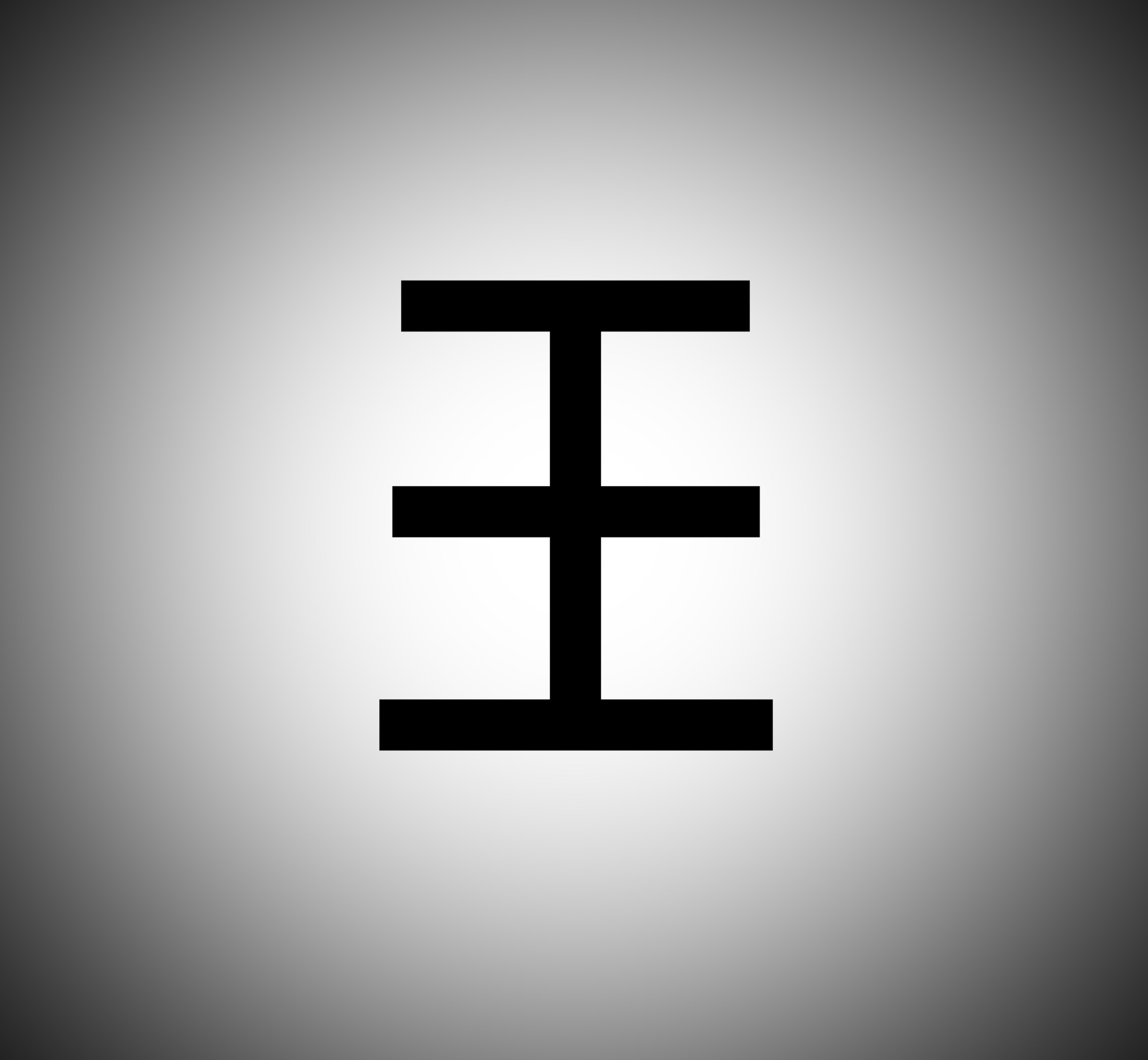
The Unified Temporal Coordinate of M₅
T: the total temporal coordinate of the full five-dimensional event · τ (tau, Greek): qualitative time, the felt duration of a moment · ontological: from Greek ὄν (ōn, being) + λόγος (logos, account) — the account of being · the time coordinate that holds both the physical time of Einstein’s relativity and the qualitative time of the conscious field in one five-dimensional structure
The problem with two times
Physics has one time: coordinate time t, the measurable sequence of equal intervals that relativity shows is not absolute but is at least consistent for a given observer in a given gravitational and velocity context. This is the time of clocks, of particle physics, of the equations that describe the M₄ face of every event.
Consciousness has another time: qualitative time τ_qual, the felt duration of experience, the time that dilates under grief and compresses in joy, the time whose rate W(τ) = dτ_qual/dt is the formal measure of how much felt time passes for every unit of coordinate time. This is the time of human experience, of the specific weight of this moment rather than another, of the interval that separates the creative instant from the qualitative black hole.
These are not two descriptions of the same thing. They are two genuinely different temporal dimensions of M₅ = M₄ × Q. Coordinate time is the temporal dimension of M₄. Qualitative time is the temporal dimension of Q. A complete description of any event in M₅ requires both. The time that the physicist measures from outside the event and the time that the conscious field experiences from inside it are both real, both necessary, and neither reducible to the other.
Tτ is the unified temporal coordinate that holds both:
dTτ² = dt²_Einstein + Λω · dτ²_qual
The first term is Einstein’s relativistic line element: the coordinate time contribution, modified by velocity and gravitational potential in the usual way. The second term is the qualitative temporal contribution, scaled by Λω — the ground state constant of the Primaton Field — which sets the natural units of qualitative time relative to coordinate time. Together they form the complete temporal structure of M₅: the ontological time that is neither only physical nor only qualitative but the unified temporal dimension of the full five-dimensional reality.
What Tτ adds to Einstein
Einstein unified space and time into spacetime: the insight that what counts as spatial distance and what counts as temporal duration are observer-dependent and can be rotated into each other by relative motion. The four-dimensional spacetime interval ds₄² = -c²dt² + dx² + dy² + dz² is the invariant: the quantity that all observers agree on regardless of their relative motion.
Tτ extends this to M₅. The five-dimensional line element is:
ds₅² = -W(τ)dτ² + Σᵢ₌₁⁴ dyᵢ² + Λωδ₅
The first term is the qualitative temporal contribution, scaled by W(τ) — the qualitative time dilation factor. The second term is the four-dimensional spacetime contribution from M₄. The third term is the Λω cosmological constant of the Q dimension. This five-dimensional interval is the invariant of M₅: the quantity that all observers — including conscious observers who have access to both the M₄ face and the Q face of events — agree on regardless of their position in the qualitative field.
What Einstein’s framework cannot include is the observer’s position in qualitative time. Two observers at the same physical location at the same coordinate time may be at vastly different positions in qualitative time if their GRAVIS loads are different: one carrying the W(τ) → ∞ compression of acute grief, the other at W(τ) ≈ 0 in the creative instant. Einstein’s line element gives the same value for both. Tτ gives different values: the ontological time of the event differs for the two observers not because their clocks run differently but because their qualitative fields do.
The Tτ framework and the Tτ proposal
The Tτ framework is SUM’s proposal that time in M₅ is genuinely two-dimensional: it has a coordinate dimension (t) and a qualitative dimension (τ_qual), and neither is reducible to the other. This is not the claim that subjective time is a distortion of objective time. It is the structural claim that both are real dimensions of the same five-dimensional event, and that a complete account of the temporal structure of any event requires both.
The philosophical tradition has always known that there are two kinds of time. Aristotle distinguished between chronos (sequential, measured time) and kairos (the right moment, the qualitatively significant instant). Augustine: our heart is restless until it rests in Thee — the restlessness is qualitative temporal dilation (W(τ) elevated under unresolved GRAVIS), and the rest is qualitative temporal compression at the ground state (W(τ) → 0 at Λω). Bergson’s durée, Husserl’s internal time-consciousness, Heidegger’s authentic temporality — all of these are descriptions of the qualitative temporal dimension that the Tτ framework formalises.
What Tτ adds to this tradition is the formal unification: not two separate accounts of time (the physicist’s and the philosopher’s) but one five-dimensional temporal coordinate that holds both in a single mathematical structure, with specific coupling constants (Λω as the scale factor) that relate the two dimensions to each other.
Tτ and the conscious field
The Tτ coordinate is most directly meaningful for conscious fields, because conscious fields are the entities that have access to both temporal dimensions simultaneously. A rock exists in coordinate time. It does not exist in qualitative time — there is no W(τ) for a rock because W(τ) requires a conscious field to register the Chronoton events that constitute qualitative time. A conscious being exists in both: the clock measures t, and the felt duration of the moment is τ_qual. Tτ is therefore not the time of all events in M₅ but the time of M₅ events as experienced by conscious fields — the temporal structure of what it is like to be a witness.
This makes Tτ the formal complement of GRAVIS. GRAVIS measures the spatial-qualitative position of a conscious field: where it is in the qualitative dimension at a given moment, how far its accumulated topology is from the Λω ground. Tτ measures the temporal-qualitative position: how fast qualitative time is moving relative to coordinate time, whether the field is compressed in qualitative time (W(τ) → ∞, dark pole, trauma, grief) or expanded (W(τ) → 0, white pole, creative instant, ground contact). Together, GRAVIS and Tτ give the complete description of a conscious field’s position in M₅: where it is in the qualitative dimension and how time is moving for it there.
Tτ = unified temporal coordinate of M₅
dTτ² = dt²_Einstein + Λω · dτ²_qual
ds₅² = -W(τ)dτ² + Σᵢ₌₁⁴ dyᵢ² + Λωδ₅
GRAVIS: spatial-qualitative position in M₅ | Tτ: temporal-qualitative position in M₅
Together: complete description of where and when a conscious field is in the five-dimensional reality
See also: W(τ) · Qualitative Time · Chronoton · ∐ Hermit Constant · GRAVIS · Primaton Field · Consciousness Singularity · Position Zero · Λω · M₅ = M₄ × Q · Einstein · Bergson · Heidegger
Without Tτ, M₅ has a qualitative spatial dimension (Q) but no formal unified temporal structure. GRAVIS tells us where the conscious field is in the qualitative dimension. Tτ tells us how time is moving for it there. Both are required for the complete description of a conscious field’s position in M₅. Tτ is the temporal complement of GRAVIS: together they give the full four-dimensional qualitative address of every conscious event.

 Sensible Universe
Leave a comment