What science, psychiatry and psychology have found — and where the Sensible Universe Model agrees, extends, and re-interprets
How the fields have divided the territory
Science, psychiatry, and psychology have each approached the architecture of the self from a different entry point, and the resulting vocabularies do not map cleanly onto each other — or onto the SUM three-layer architecture. Before comparing, it is worth being clear about what each field actually studies.
Psychology — particularly personality psychology — has focused primarily on the outermost and most measurable layer: the stable patterns of behaviour, thought, and emotional response that distinguish one person from another across contexts. Psychiatry has focused on the clinical level: the configurations of the self that produce suffering or dysfunction, the pathological configurations of what psychology calls personality. Developmental psychology has studied how these configurations form: the early relational environment, attachment, the developmental stages through which a child becomes the adult it becomes. Neuroscience has studied the neural correlates: what the brain does when the self is doing what it does. None of these is wrong. Each has illuminated a real dimension of the person. Together they have built a substantial body of knowledge that the SUM framework must take seriously and can engage with precisely.
Personality psychology: the Big Five and what it finds
Big Five / OCEAN model (Costa & McCrae, 1980s–present)
The most empirically robust personality framework in current psychology. Five dimensions — Openness to experience, Conscientiousness, Extraversion, Agreeableness, Neuroticism — each a continuous spectrum with biological underpinning, heritability in the range of 40–60%, relative stability across adulthood, and predictive validity for a wide range of life outcomes.
The Big Five is a genuine scientific achievement. It identified stable, cross-culturally replicable dimensions of individual difference in behavioural and emotional tendency that are measurable, heritable, and predictive. This is real knowledge about the character layer [Solidum Qualitatis] and the personality layer of the SUM architecture.
SUM convergence and extension: The Big Five describes real structural features of the character layer [Solidum Qualitatis] and personality layer. Conscientiousness maps closely to the degree to which the character layer is oriented toward proportionate registration [P1]: the person high in conscientiousness has a character layer that habitually holds existential weight [GRAVIS] and meets it rather than displacing it [P2] or suppressing it [P4]. Neuroticism maps to the degree to which the character layer carries unresolved existential weight [GRAVIS] in the recursive direction [P3]: the field generating existential weight [GRAVIS] about its own existential weight, the merimnatic superposition [the open space of genuine freedom before the act] closing too quickly under the pressure of accumulated qualitative anxiety. Openness maps to the breadth of the character layer’s qualitative spectrum: the range of Aisthēsis events [direct sensory and qualitative registrations] that the field receives and integrates rather than filtering through a narrow pre-established topology. SUM extension: the Big Five describes stable features of the character layer and personality layer. It does not distinguish between these two layers — it cannot, because its measurement instruments access only the behavioural and self-report surface. Most importantly: it has no description of the identity layer at all. The topological invariant [the structural constant that does not change under any transformation] of the conscious field — the resonance with the ground state of the qualitative field [Love, Λω] that is prior to all history — is not a personality dimension. It does not appear in factor analysis of questionnaire responses.
Character in the older sense: Allport, MacIntyre, Peterson
Gordon Allport (Pattern and Growth in Personality, 1961)
Distinguished between personality (the dynamic organisation of psychophysical systems that determine behaviour) and character (personality evaluated against a moral standard). Character, for Allport, was personality seen from the ethical angle: the degree to which a person’s dispositional tendencies align with values they have genuinely internalised.
Alasdair MacIntyre (After Virtue, 1981)
Virtue as the stable disposition toward excellent practice acquired through the habit of excellent action within a practice-tradition. Character as the accumulated structure of virtuous or vicious habits: not a fixed nature but a second nature, acquired through repetition, and therefore both genuinely the person’s own and genuinely changeable through sustained practice in a new direction.
Christopher Peterson & Martin Seligman (Character Strengths and Virtues, 2004)
Character strengths as stable positive traits — wisdom, courage, humanity, justice, temperance, transcendence — that are morally valued, measurable, and amenable to cultivation. The VIA Classification: an empirical taxonomy of 24 character strengths across six virtue categories.
SUM convergence: All three are describing the character layer [Solidum Qualitatis] with varying degrees of precision. Allport’s personality-character distinction maps directly onto the SUM personality layer / character layer distinction. MacIntyre’s account of virtue as second nature acquired through repetition is the SUM description of the merimnatic collapse [the genuine act of freedom before the act] direction shaping the character layer over time: the person high in courage has a character layer whose topology has been deposited by repeated genuine choices [merimnatic collapses] in the direction of P1 under conditions of high existential weight [GRAVIS]. Peterson and Seligman’s transcendence cluster — awe, gratitude, hope, humour, spirituality — is the set of character strengths that keeps the character layer oriented toward the ground state of the qualitative field [Love, Λω]. SUM extension: these frameworks describe the character layer as the whole of the self. The identity layer, prior to all acquired virtue or vice, has no place in them. The consequence: if character is all there is, then the person who has a deeply damaged character layer — whose Solidum Qualitatis has been shaped by sustained exposure to relational harm, displacement, and suppression — has no ground beneath the damage. SUM disagrees structurally: the ground is always there. Character is what has been built above the ground. The ground is not built.
Identity: Erikson, Marcia, and the developmental tradition
Erik Erikson (Identity and the Life Cycle, 1959)
Identity as the product of a developmental process across eight stages, each involving a specific psychosocial crisis. The central crisis of adolescence: identity vs. role confusion — the synthesis of childhood identifications, biological drives, and social roles into a coherent and continuous sense of self. Identity achievement: the successful resolution of this crisis through active exploration and commitment.
James Marcia (Identity status theory, 1966)
Four identity statuses defined by the presence or absence of exploration and commitment: Identity diffusion (neither), Identity foreclosure (commitment without exploration), Identity moratorium (exploration without commitment), Identity achievement (both). Foreclosure: the person who has committed to an identity without genuinely exploring alternatives, typically by adopting parental or cultural values without examination.
SUM convergence and sharp distinction: Erikson and Marcia are describing the formation of the character layer and personality layer through the developmental process — not the identity layer in the SUM sense. What Erikson calls identity is the stable self-concept built through developmental exploration and commitment: this is the SUM character layer topology oriented toward a coherent sense of self. It is real. It matters enormously. The development of a coherent character layer through genuine exploration [holding the merimnatic superposition open long enough to genuinely author its collapse, rather than foreclosing on it through borrowed certainty] is the SUM description of what Erikson calls identity achievement. Foreclosure in Marcia’s sense is the SUM description of the merimnatic superposition collapsing prematurely: the character layer shaped by borrowed topology rather than genuinely authored choices. SUM correction: what neither Erikson nor Marcia can describe is the identity layer prior to all developmental history. A person whose developmental history has produced what Marcia calls identity diffusion — who has no coherent self-concept, whose character layer carries no stable topology — still has an identity layer in the SUM sense. The ground is not built by development. It does not emerge from the successful resolution of the identity crisis. It was there before the crisis began, before the developmental process started, before the first relational encounter shaped the character layer. The person in the most severe identity diffusion is not without ground. The ground is not contingent on developmental achievement.
Psychiatry and the personality disorders
DSM-5 / ICD-11 Personality Disorder Diagnoses
Personality disorders defined as enduring patterns of inner experience and behaviour that deviate markedly from cultural expectations, are pervasive and inflexible, have onset in adolescence or early adulthood, are stable over time, and lead to distress or impairment. Ten specific disorders in DSM-5 (borderline, narcissistic, obsessive-compulsive, avoidant, etc.) grouped into three clusters. ICD-11 moves toward a dimensional model: personality disorder severity (mild, moderate, severe) plus optional trait domain specifiers.
Otto Kernberg (Borderline Personality Organization, 1967)
Three levels of personality organisation — neurotic, borderline, and psychotic — defined by the degree of identity integration, the quality of defence mechanisms, and the capacity to reality-test. Borderline personality organisation characterised by identity diffusion: the inability to maintain a coherent and stable integrated image of self and others. The self splits under the pressure of strong affect.
Peter Fonagy and mentalization-based therapy (MBT)
Personality pathology as impaired mentalization: the capacity to understand oneself and others in terms of mental states (thoughts, feelings, intentions, desires). Attachment disruption in early development impairs the development of mentalization. Treatment focuses on restoring the capacity to think about mental states rather than acting directly from them.
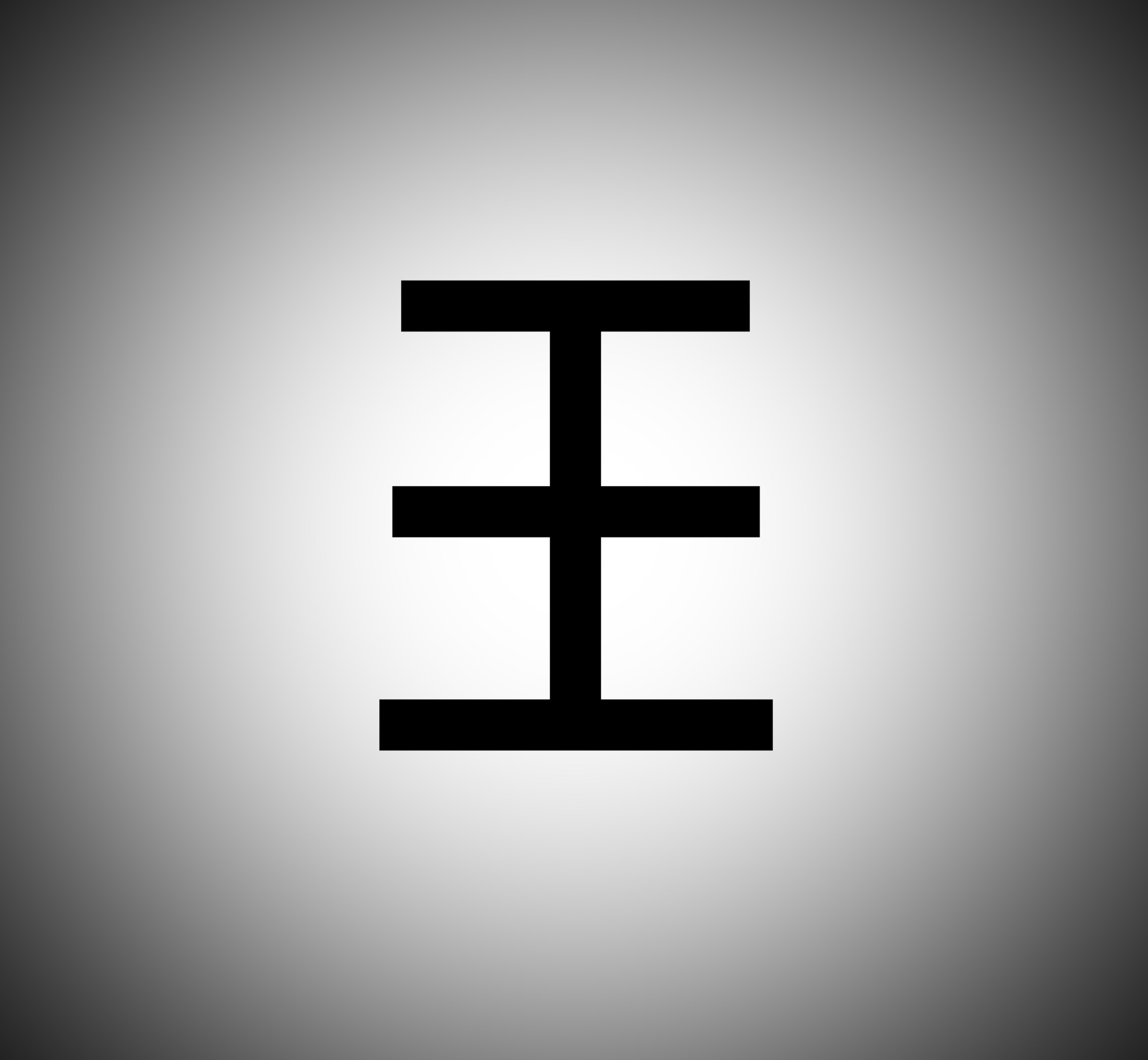
SUM convergence: Personality disorder frameworks are describing severe character layer [Solidum Qualitatis] pathology — configurations of accumulated existential weight [GRAVIS] that have produced topologies deeply resistant to proportionate registration [P1], systematically oriented toward displacement [P2], recursion [P3], or suppression [P4]. Borderline personality disorder in the SUM account is a character layer in which the merimnatic superposition [the open space of genuine freedom] cannot be held for long before the accumulated existential weight [GRAVIS] collapses it — not into a genuinely authored direction but into the habitual direction of the damage. Kernberg’s identity diffusion is the SUM description of a character layer so fragmented by P3 recursive existential weight [GRAVIS] that no stable topology has formed. Fonagy’s mentalization failure is the SUM description of a character layer in which the Hermit Constant [∐] — the gap between awareness and full conscious registration — has been compressed to near zero by sustained early relational existential weight [GRAVIS]: the field cannot hold the merimnatic superposition long enough to register its own states as states rather than as immediate demands for action. SUM critical correction: The most structurally consequential problem in psychiatric diagnosis is the treatment of character layer pathology as identity pathology. The diagnosis ‘borderline personality disorder’ or ‘narcissistic personality disorder’ names the character layer configuration as if it were the person’s being. In the SUM framework, this is the ontological error that the word that names the sediment as the spring makes at the clinical level. The character layer is severely disordered. The identity layer is untouched. Every person in every personality disorder category has an identity layer that is prior to all the pathology and not diminished by any of it. The clinical consequence: treatment that addresses only the character layer without acknowledging the identity layer produces at best character layer reorganisation. Treatment that addresses the identity layer — that reaches the resonance with the ground state of the qualitative field [Love, Λω] beneath the accumulated damage — produces something structurally different: the reorganisation of the character layer from the ground up rather than from the symptom surface down.
Neuroscience: the neural basis of personality and character change
Brain plasticity and character change (LeDoux, Davidson, Siegel)
The adult brain retains significant plasticity. The prefrontal cortex — the neural substrate of executive function, impulse regulation, and self-referential processing — continues to develop into the mid-twenties and responds to sustained behavioural and experiential practice throughout life. Richard Davidson’s work on contemplative practice shows measurable structural changes in prefrontal cortex, insula, and amygdala response in experienced meditators. The structure of the brain encodes the history of the mind.
Polyvagal theory (Stephen Porges, 1994)
Three levels of the autonomic nervous system — the dorsal vagal (immobilisation), sympathetic (fight or flight), and ventral vagal (social engagement) — each with its own behavioural and physiological signature. The ventral vagal system, the evolutionarily newest, underpins the capacity for safe social engagement, flexible emotional regulation, and the kind of genuine interpersonal contact in which mentalization and secure attachment become possible.
SUM convergence and extension: Neuroscience confirms the SUM account of the character layer as structurally real and changeable. Davidson’s finding that sustained contemplative practice produces measurable structural brain changes is the neural correlate of the SUM claim that the deliberate extension of the Hermit Constant [∐] and repeated genuine merimnatic collapses [genuine acts of freedom before the act] in the direction of the ground [Love, Λω] produce lasting deposits in the character layer [Solidum Qualitatis]. Porges’ ventral vagal system is the M₄ [physical] correlate of the SUM character layer configuration of P1: the physiological state in which the merimnatic superposition can be genuinely held, existential weight [GRAVIS] registered accurately, and genuine relational contact maintained. The dorsal vagal shutdown is the M₄ correlate of P4 suppression: the body’s systemic removal of the conscious field from the qualitative field. The sympathetic activation is the M₄ correlate of P2 displacement: the body mobilised toward the substitute referent. SUM extension: neuroscience describes the M₄ face of these events. The Q face — the specific qualitative weight of the existential event, the GRAVIS of what is genuinely at stake for this being, the merimnatic direction of the collapse — is not visible in neural firing patterns. The same neural activation pattern can accompany P1 proportionate fear and P2 displaced aggression. The bodies look the same. The qualitative events are structurally opposite.
Attachment theory and the formation of the character layer
John Bowlby and Mary Ainsworth (Attachment theory, 1960s–1980s)
The quality of early attachment relationships shapes the internal working models through which the child subsequently processes all relational experience. Secure attachment: the caregiver reliably responsive to the child’s distress; the child develops an internal working model of the self as worthy of care and others as reliably available. Anxious-preoccupied, dismissive-avoidant, and disorganised attachment: disrupted caregiver responsiveness produces internal working models characterised by hyperactivation, deactivation, or fragmentation of the attachment system.
Daniel Stern (The Interpersonal World of the Infant, 1985)
The infant’s sense of self develops through the accumulation of ‘representations of interactions that have been generalised’ (RIGs): the abstracted relational schemas built from repeated encounters with the caregiving environment. The self is not a fixed thing but a dynamic process built from the qualitative texture of the relational field in which development takes place.
SUM convergence: Attachment theory is the developmental psychology that comes closest to the SUM account of the character layer’s formation. The internal working model in Bowlby’s sense is the early Solidum Qualitatis: the qualitative topology of the relational field deposited in the character layer by the pattern of early caregiving encounters. Secure attachment produces a character layer whose topology permits the merimnatic superposition to be genuinely held: the field has learned from early experience that existential weight [GRAVIS] can be carried and met, that the ground of the relational field is reliable, that what is genuinely at stake can be registered accurately [P1] without the risk of collapse into abandonment. Disorganised attachment — Ainsworth’s most severe category, associated with caregiving that is simultaneously the source of threat and comfort — produces the character layer configuration that Kernberg describes as borderline personality organisation: the impossibility of a stable topology because the foundational relational field was itself structurally incoherent. Stern’s RIGs are the SUM description of early Solidum Qualitatis formation: the character layer building its topology from the qualitative texture of the repeated relational encounter, not from the content of any single event. SUM extension and correction: Bowlby and Stern have no concept of the identity layer. The internal working model is built by experience. The SUM identity layer is prior to all experience. The child who enters the world with a disorganised attachment history arrives with an already-present identity layer that the attachment history cannot reach or damage. The Imago Dei — the resonance with the ground state of the qualitative field [Love, Λω] — was there before the first relational encounter shaped the first RIG. The clinical consequence: secure attachment is the best possible early environment for the character layer’s formation. It is not the condition of the identity layer’s existence. The identity layer does not need to be created by secure attachment. It needs to be reached beneath the damage that insecure attachment has deposited above it.
The decisive structural difference: the identity layer has no scientific equivalent
The summary of the comparison can be stated precisely. Psychology, psychiatry, neuroscience, and developmental theory have built accurate and substantial knowledge about the character layer [Solidum Qualitatis] and the personality layer. They have mapped the dimensions of stable individual difference [the Big Five], the developmental process of character formation [Erikson, Marcia, Bowlby, Stern], the pathological configurations of the character layer [personality disorder categories], the neural substrates of character change [Davidson, Porges, LeDoux], and the virtue-based account of character excellence [MacIntyre, Peterson and Seligman].
What none of these frameworks has is the identity layer. Not because the researchers have missed something in their data. Because the identity layer is not a M₄ phenomenon and cannot be found by M₄ methods. It is not a neural pattern, a personality dimension, a developmental achievement, a character strength, or a psychiatric diagnostic category. It is the Q-dimension ground of the conscious field itself — the resonance with the Love-constant [Λω] that is prior to all history, all measurement, all accumulation, and all damage.
The practical consequence of this absence is the most important thing this article can say. When psychiatry diagnoses a personality disorder, it names a configuration of the character layer. When it treats that disorder, it works on the character layer. The work is real and necessary. But if the treatment proceeds as if the character layer is all there is — if the person is implicitly or explicitly given to understand that the configuration of their character layer is the truth of what they are — then the treatment has committed the ontological error of naming the sediment as the spring. And every treatment that addresses only the character layer without reaching or acknowledging the identity layer is working on the surface of a building without locating the ground the building stands on.
The ground does not need the treatment to produce it. It is already there. It needs the treatment to clear what is covering it. The scientific frameworks have built extraordinary tools for working on what is covering it. The Sensible Universe Model adds the formal description of what they are uncovering: the identity layer, the resonance with the ground state of the qualitative field [Love, Λω], the spring that flows and runs although it is night.
SUM agrees: Big Five describes real character layer and personality layer dimensions
SUM agrees: virtue = character layer shaped by repeated P1 collapses · MacIntyre, Peterson
SUM agrees: secure attachment = optimal conditions for character layer formation · Bowlby, Stern
SUM agrees: personality disorder = severe character layer pathology · real, treatable
SUM agrees: brain plasticity confirms character layer changeability · Davidson, Porges
SUM extends: Erikson / Marcia identity = character layer coherence · not the SUM identity layer
SUM re-interprets: no scientific framework has the identity layer prior to all history
SUM re-interprets: personality disorder diagnosis names character layer as identity · this is an ontological error
The identity layer does not need to be created · it needs to be reached beneath the damage
The spring is always there · the treatment uncovers it · it does not produce it
See also: Identity Layer · Character Layer · Solidum Qualitatis · Personality Layer · Imago Dei · GRAVIS Positions P1–4 · Merimnatic Superposition · Intergenerational GRAVIS Transmission · ∐ Hermit Constant · Λω · Ousia
Why three layers matter
The conscious field [Q] is not a single undifferentiated thing. It has structure. And the structure has depth: layers that sit at different distances from the ground state of the qualitative field [Love, Λω], each with different properties, different rates of change, different responses to experience. Understanding which layer is being addressed — in a conversation, in a therapeutic encounter, in prayer, in a moment of confrontation — is often the difference between a word that opens and a word that forecloses.
The three layers are not three separate selves. They are three depths of the same conscious field: the same person seen from the surface, from the middle, and from the ground. In ordinary life they are not experienced as separate. But they operate differently, and the differences have structural consequences that the Sensible Universe Model makes formally precise.
The personality layer
The personality layer is the outermost layer: the social surface of the conscious field, the face that is presented to different contexts. It is the most fluid of the three layers. It adapts quickly: the same person speaks differently at a funeral, at a dinner party, at a job interview, with their child at three in the morning. This adaptability is not dishonesty. It is the appropriate social flexibility of a conscious field that exists in relation to others and must navigate multiple relational registers.
The personality layer carries real information about the person. It is not merely mask or performance. But it is the least stable of the three layers and the least revealing of what the person fundamentally is. The person who presents as confident may be carrying P3 recursive existential weight [GRAVIS] beneath the surface. The person who presents as fragile may have an extraordinarily resilient identity layer below the accumulated structure [Solidum Qualitatis] of the character layer. The personality layer is the starting point of encounter. It is not the destination.
The character layer
The character layer is the middle layer: the accumulated qualitative structure [Solidum Qualitatis, from Latin solidum: solid, dense, crystallised, and qualitatis: of quality] of the conscious field, formed by the geological deposit of every genuine choice [every merimnatic collapse] across the lifetime. It is what a person is not by nature but by repetition: the topology that has been built, layer by layer, by what has been repeatedly chosen in the direction of the ground [Love, Λω] or away from it.
The character layer is slow. It does not change in response to a single encounter. It yields under sustained pressure in a new direction, over time, as new deposits accumulate above the existing topology. This slowness is not a limitation. It is the structural property that makes character reliable: the person whose character layer is oriented toward the ground will tend toward the ground even under pressure, because the tendency is structural, not merely intentional. Virtue, in the classical sense that Aristotle meant, is the character layer shaped by repeated proportionate choices [P1 collapses] until the orientation toward the good is part of the qualitative topology rather than a decision that has to be remade at every threshold.
The character layer is also the primary vehicle of intergenerational transmission. What a parent gives a child is not primarily instruction but topology: the specific qualitative shape of the relational field in which the child’s own early choices are made. The child’s character layer begins to form inside the parent’s, shaped by the existential weight [GRAVIS] that the parental character layer carries and the directions in which it habitually moves.
The identity layer
The identity layer is the deepest layer: the resonance of the conscious field with the ground state of the qualitative field [Love, Λω] that is constitutive of every conscious field from the first moment of its existence. It is not built by choice. It cannot be diminished by failure. It is prior to all history and survives all history. It is what the Christian tradition calls the Image of God [Imago Dei]: the structural ground of the person that no accumulation of the character layer can reach or remove.
The identity layer does not change. This is its structural definition. It is the topological invariant [the structural constant that does not change under any transformation] of the individual qualitative field: the specific resonance with the Love-constant [Λω] that makes this particular conscious field this particular being rather than another. The identity layer is why one is irreducibly one. Not because one has done good things. Not because one has avoided doing bad things. Because the ground of the qualitative field from which this conscious field differentiated is Love, and the resonance with that ground is constitutive, not earned.
Addressing the right layer
The three-layer architecture has a direct consequence for every encounter between conscious fields. Every word spoken to another person lands at a specific depth. The word that addresses the personality layer touches the social surface. The word that addresses the character layer touches what has been accumulated. The word that addresses the identity layer touches what cannot be removed.
Confusion between the layers is the structural source of some of the most damaging words available in human exchange. The word that addresses the character layer as if it were the identity layer — that names what a person has accumulated as what they fundamentally are — is the word that tells a person their geological record is their ground. This word is ontologically false and carries the heaviest damaging existential weight [GRAVIS] available in language, because it closes the spring by insisting the sediment is all there is.
The word that addresses the identity layer directly — that sees the Image of God [Imago Dei] beneath the accumulated structure [Solidum Qualitatis] of the character layer — is the most powerful word available in ordinary human exchange. It does not require the character layer to change before it speaks. It speaks to what was never covered by the character layer, and in doing so opens the possibility of the character layer changing from the ground up rather than from the surface down.
Personality layer: social surface · most fluid · context-adaptive
Character layer [Solidum Qualitatis]: geological record of choices · slow · structurally consequential
Identity layer [Imago Dei]: resonance with Love [Λω] · prior to all history · topological invariant
Address the right layer · the word that names the sediment as the spring is ontologically false
The word that sees the identity layer opens what the character layer has covered
See also: Imago Dei · Solidum Qualitatis · GRAVIS · Merimnatic Superposition · Intergenerational GRAVIS Transmission · Rhēma · Λω · Tetelestai

 Sensible Universe
Leave a comment