The sin of the father: guilt, consequences, and what the child truly inherits
See also: Intergenerational GRAVIS Transmission (Part I)
A contradiction that is not a contradiction
Original sin is one of the most debated concepts in the history of religious thought, and also one of the most misunderstood. At its core it names something that every serious tradition of human reflection has noticed: that we are born into a world already disordered, that something in the human condition is bent before any individual choice has been made, and that this bending is not the exception but the structural condition we all share. The Christian formulation traces it to a specific origin — the disobedience of the first human beings, and the consequences of that disobedience transmitted to every generation that followed. But the observation it names is not exclusively Christian. The Buddhist concept of beginningless ignorance, the Jewish recognition of the yetzer hara (the inclination toward wrong woven into human nature), the Greek philosophical account of the passions that resist reason — each is pointing at the same structural fact from a different angle: we do not begin in a condition of perfect freedom. We begin already shaped by forces we did not choose.
The tradition has debated furiously about what exactly is transmitted. Augustine, whose account became dominant in the Western church, held that original sin involved both the guilt of Adam’s act and the corruption of human nature — that we inherit not only a damaged condition but a genuine share in the culpability of the original transgression. This is the reading that most subsequent theology has had to argue with. The Eastern Orthodox tradition has generally rejected the transmission of guilt while affirming the transmission of mortality and the tendency toward sin: we inherit the consequences, not the verdict. Aquinas refined Augustine: what is transmitted is not guilt in the personal sense but the privation of original justice — the absence of the right ordering of the soul that human beings were made to have. Pelagius, condemned as a heretic, went furthest in the opposite direction: each person begins fresh, with full freedom, and sin is entirely a matter of individual choice and imitation rather than inherited nature. The church rejected this not primarily on theological grounds but on the evidence of experience: we do not in fact begin fresh.
The Reformers sharpened the Augustinian account. Luther and Calvin held that original sin so thoroughly corrupted human nature that nothing in the unredeemed person genuinely orients toward God — the will is bound, the intellect darkened, the affections disordered at their root. This is the doctrine of total depravity: not that every person is as bad as they could be, but that every dimension of the person is affected by the corruption. The Catholic response at Trent maintained that original sin damages but does not destroy human nature: the image of God is wounded, not erased. The capacity for genuine goodness, for moral reasoning, for response to grace, is diminished but not eliminated. This distinction — between a nature wounded and a nature destroyed — maps directly onto what the Sensible Universe Model calls the relationship between the character layer and the identity layer: the character layer can be severely damaged by what it carries and what it inherits; the identity layer, the resonance with the ground that is constitutive of every conscious being, is untouched by any of it.
What all these traditions agree on, beneath their disagreements, is the basic structural observation: we arrive in a condition we did not choose, carrying something we did not personally author, in a world already shaped by the accumulated effects of everything that came before us. The question they disagree about is the precise nature of what we carry — whether it is guilt or only consequence, corruption or only privation, a bound will or a wounded one. The article that follows does not resolve that theological debate. It holds the two biblical texts that anchor it — Exodus 20:5 and Ezekiel 18:20 — alongside each other and asks what becomes clear when we hold firmly to the distinction that most of the tradition has sensed but not always stated with precision: that guilt and consequences are not the same thing, that the child who inherits a landscape is not being tried for the choices that shaped it, and that beneath the landscape — however dense the sediment above it — the spring has never stopped flowing.
The Bible appears to say two opposite things about inherited sin, and it says them with equal clarity.
I the Lord your God am a jealous God, visiting the iniquity of the fathers on the children to the third and the fourth generation of those who hate me.
Exodus 20:5
The soul who sins shall die. The son shall not suffer for the iniquity of the father, nor the father suffer for the iniquity of the son. The righteousness of the righteous shall be upon himself, and the wickedness of the wicked shall be upon himself.
Ezekiel 18:20
These are not two authors in disagreement. They are two observations of the same reality from two different angles — and the apparent contradiction between them dissolves the moment we hold clearly in mind the distinction between guilt and consequences.
Ezekiel is right. Guilt is not inherited. The child who grows up in the shadow of a parent’s crime bears no moral responsibility for the crime. The soul who sins shall die — not the soul of the child who inherits the consequences of a world in which the sin was committed. Guilt requires freedom. It requires awareness. It requires the self-willed turn toward the wrong. None of these can be inherited. They must be authored, one act at a time, by the individual who performs them. On this point, Ezekiel is precise and correct, and every serious theological tradition has affirmed it.
Exodus is also right. The consequences of a parent’s sin do visit themselves on the children. Not as divine punishment dispatched from above to settle an account — but as the natural, structural, entirely predictable result of how damage works in the world. A father who drinks away the family’s savings leaves children who grow up in poverty. A mother whose unresolved grief makes her emotionally unavailable leaves children who learn early that comfort cannot be reliably found. A grandparent whose trauma produces a hairline-trigger rage leaves grandchildren who grow up in a household where anger is the weather — not the exceptional storm but the climate. The child did nothing to deserve this. That is precisely the point. Consequences are not about desert. They travel by structural necessity.
The weight the child carries is not the verdict on who the child is
This is the distinction that the popular phrase “the sins of the fathers” has most often obscured. When people hear the phrase, they tend to hear a verdict: the child is tainted, compromised, marked, already judged by association. This is the reading the theology has always resisted, and for good reason. It is not only theologically wrong. It is humanly destructive. It takes the consequences of someone else’s act and transforms them into a statement about the child’s nature. It names what the child carries as what the child is.
The distinction matters in practice because it changes everything about what help looks like. If the child is guilty by inheritance — if the darkness in the household is a verdict on the child — then the child needs to earn their way out of the verdict, prove their innocence, demonstrate that they are different from what they came from. This is an impossible task and a destructive framing, because the verdict was never just in the first place.
But if what the child carries is consequences — real, heavy, sometimes devastating consequences, but consequences rather than guilt — then the situation is entirely different. The child is not on trial. The child is under weight. And weight, unlike guilt, can be set down. Not instantly. Not by willpower alone. But with the right help, the right relationships, the right time, and the stubborn persistence of a ground that does not move just because a great deal of weight has accumulated above it.
How the weight actually travels
The first article in this series described two channels through which the weight of one generation reaches the next. Both have been confirmed by contemporary research, and both operate entirely without the transmission of guilt.
The first channel is relational. A child does not learn from a parent’s instruction manual. It learns from the texture of the daily relational world the parent creates — or fails to create. The quality of attention when the child is distressed. The tone of the household when money is short. The way conflict is managed or avoided. The presence or absence of genuine warmth. The threshold at which a parent’s own unresolved fear breaks through into behaviour. None of this is deliberate teaching. It is the automatic, inevitable expression of what the parent carries. The parent who never resolved their own childhood terror of abandonment will, under stress, behave in ways that communicate to their child that closeness is not safe — not because they intend this communication but because their unresolved terror has been running their nervous system in the background for years.
The child absorbs this. Not as a lesson. As the shape of the world. The internal picture the child forms of what people are like, what relationships can be counted on for, how safe the world is when you are small and vulnerable — this picture is drawn from the data of daily life, and the data is the behaviour of the parent. The picture, once formed, persists. It travels into adulthood. It shapes the relational choices the adult makes, the way they read ambiguous signals from others, the speed at which they trust or withdraw. And if they do not do the work of examining and revising the picture, they will reproduce it — not by intent but by default — in the relational world they create for their own children. This is how the weight travels through the family across the generations. Not as guilt. As the inherited shape of the relational world.
The second channel is biological. In the last two decades, epigenetic research — the study of how experience alters the way genes are expressed without changing the genes themselves — has confirmed what the relational channel already suggested: the body of the child is altered by the experience of the parent, before the child has any awareness of that experience. The physiological calibration of the stress response — how quickly it activates, how intensely, how long it remains elevated after a threat has passed — is shaped in part by the stress history of previous generations. The child born to a parent who lived through sustained terror may enter the world with a nervous system already calibrated for danger, before they have met a single threat of their own. The body has been prepared for the world the parent lived in, not the world the child will actually inhabit. The preparation, though well-intentioned by the mechanisms of biology, can become its own form of burden.
The third and the fourth generation: why that number
The specificity of the Exodus phrase — to the third and fourth generation — has often been read as an arbitrary legal number, a symbolic intensification of the punishment. It is neither. It is the observational range of a community that lived in close intergenerational proximity and could trace the effects of a grandparent’s damage in the lives of grandchildren and great-grandchildren. They saw this. They named the range they could observe. And modern epigenetic research has confirmed that this range is approximately correct: the most pronounced epigenetic effects of extreme parental stress are measurable in the first and second generation, attenuate in the third and fourth, and largely disperse thereafter as the original stressor is no longer present to maintain them.
The three-to-four-generation window is also the range across which the relational transmission is most direct. A child who knew their grandparent lives inside the relational world that grandparent helped to create. The great-grandchild is further from the source. The patterns are still there, carried forward through the intermediate generations, but they are increasingly mediated, increasingly mixed with other influences, increasingly available for revision. The weight attenuates. Not because it was never real — it was entirely real — but because the conditions that produced it are no longer present in their original intensity, and new conditions have had time to deposit new patterns.
Against this attenuating weight, Exodus places the steadfast love kept for thousands of generations. The proportion is not accidental. Four generations of damage against thousands of love. The ground outlasts the damage by an order of magnitude. This is not optimism. It is structural observation: the capacity for recovery, for the reshaping of the patterns, for the chain to be broken by a single secure relationship or a genuine act of healing, is built into the same biology and the same relational architecture that transmits the damage. The system that carries the weight can also carry the recovery.
What Ezekiel adds
Ezekiel’s insistence on individual accountability — the soul who sins shall die, not the child of the soul who sinned — is not a contradiction of Exodus. It is the necessary other side of the same truth. Without Ezekiel, the Exodus observation collapses into fatalism: the child who inherits consequences is simply the victim of a system they cannot escape, and their future is determined by their past before they have taken a single step. With Ezekiel, the full picture is in place: consequences travel, yes, and they are real and heavy, but the child who inherits them is a free being whose identity is not determined by the weight they carry. The consequence is real. The verdict is not.
Ezekiel’s own context makes this pointed. He is writing to a community in Babylonian exile who are tempted to interpret their catastrophic situation as punishment for the sins of their ancestors. The people are saying: “The fathers have eaten sour grapes, and the children’s teeth are set on edge.” They are reading their own suffering as evidence of their ancestors’ guilt — and by extension, as evidence of their own condemnation. Ezekiel breaks this reading explicitly: the son shall not bear the iniquity of the father. You are not condemned by what your parents did. Your situation is the consequence of a long and complex history, yes. But you are a free person, accountable for your own acts, capable of turning in a new direction. The weight of the past is real. It does not determine what you will do next.
Guilt and consequences in living creatures
The distinction between guilt and consequences is not only theological. It runs through biology in ways that make the theological precision look prophetic.
Guilt, in any meaningful sense, requires a level of self-awareness, intentionality, and freedom that is specific to human beings at a certain level of development, and possibly to other highly complex social animals to a limited degree. The rat whose stress response has been altered by its mother’s fearful behaviour is not guilty of anything. The child of a trauma survivor whose cortisol system is differently calibrated because of epigenetic transmission is not guilty of anything. Neither is the parent who, under the pressure of unresolved terror, created the relational environment that shaped the child. The parent was shaped by forces they largely did not choose, and their behaviour under stress was not primarily an act of will but the automatic expression of a nervous system calibrated for survival in a world that may no longer exist.
What is observable in animals is illuminating precisely because guilt is not in the picture. A rat raised by a stressed, low-nurturing mother will show elevated stress responses, impaired social functioning, and altered brain chemistry compared to a rat raised by a calm, high-nurturing mother — even if the two pups are genetically identical. The difference is entirely environmental and epigenetic. The pup is not being punished. It is being shaped by the only data available to it: the quality of the relational world it was born into.
Move up the scale of nervous system complexity and the patterns become more elaborate but the basic structure remains. Primate studies show that infant monkeys separated from their mothers and raised with peers or inadequate surrogates show lasting alterations in stress response, social behaviour, and emotional regulation — alterations that affect their subsequent parenting behaviour when they become adults. The chain of transmission runs through the relational architecture of the species, not through any moral category. The damage travels. The capacity for disruption of the chain also travels: peer-raised monkeys given access to a calm, socially competent ‘therapist monkey’ show significant recovery in social functioning. The equivalent of what the psychology of human beings calls earned secure attachment operates across species.
What this says, plainly, is that the mechanism through which the weight travels is not a moral mechanism. It is a biological and relational mechanism: the organism shaped by its environment, the environment shaped by the organisms who preceded it, the shaping transmitted through the only channels available — the body and the quality of daily relational life. Guilt is not in the picture because guilt requires freedom, and the mechanisms of biological and relational transmission operate below the level of freedom. The weight is real. The guilt is not.
The child at birth: qualitative landscape, not verdict
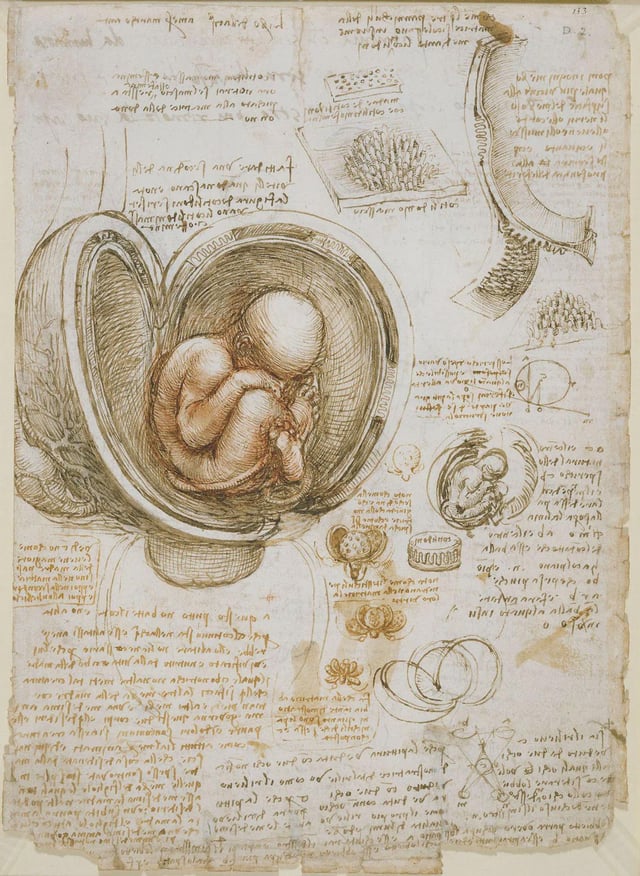
The first article in this series introduced the concept of the qualitative landscape — the specific contours of the emotional and relational world the child inherits at birth and in the early years of life. It is worth dwelling on this image because it captures precisely the distinction between guilt and consequences.
A landscape is not a verdict. It is the terrain. A child born into a family carrying unresolved grief does not arrive as a guilty party in a case the grief has opened. It arrives in a particular terrain — hilly in certain places, difficult to navigate in others, with specific patterns of shadow and light that will shape the child’s experience of movement through the world. The landscape is real. It has been shaped by what came before. But the child who arrives in it is a free being — a unique, irreducible point of consciousness — and the landscape, however difficult, does not determine where they will go.
The child inherits the landscape in order to survive in it. The calibration of the stress response, the internal working models of what relationships are like, the threshold at which fear activates and comfort is sought — all of these are not damage to the child but preparation for the world the child is about to enter. The child whose parent lived through violence inherits a nervous system tuned for threat because, in the world the parent knew, threat was the weather. The biology is not punishing the child. It is equipping the child for the environment it expects the child to encounter. The tragedy is not the preparation but the mismatch: the preparation appropriate to one world becomes the source of suffering when the world has changed and the preparation has not.
The qualitative landscape is therefore the starting point, not the destination. The child is a free point of consciousness placed in a specific terrain — with specific contours, specific weights, specific patterns of ease and difficulty. What the child does in that terrain is genuinely their own. The terrain shapes the choices available. It does not make the choices. And because the terrain itself can be altered — by new relationships, by genuine healing, by the deliberate reshaping of the patterns that were inherited rather than chosen — the landscape the child passes on to the next generation is not fixed at birth. It can be different. Not without effort. Not without help. But genuinely different.
While the guilt of the father does not legally or spiritually pass onto the son, the consequences of the father’s actions often do. However, the child inherits its qualitative landscape at birth — the specific contours of existential weight distribution in the character layer — that the parent’s history has produced, to be able to survive in the environment it will find itself in, as a unique free point of consciousness.
The ground beneath the landscape
There is one more thing that neither the consequences nor the landscape reaches. Beneath the inherited terrain — beneath the epigenetic calibration, the relational patterns, the internal working models shaped by a thousand unremarkable daily interactions — there is something the transmission cannot touch.
Every child arrives as a unique free point of consciousness. Not a blank slate — the landscape is already present at birth. Not a prisoner of the landscape — the child is free, genuinely free, and the landscape is the terrain of that freedom rather than its negation. But more than free: irreducible. The specific qualitative being of this particular child — this person and not another — is not produced by the landscape. It was there before the landscape began its shaping within. The inheritance can bury it. It cannot remove it. The spring that flows beneath the sediment flows just as steadily whether the sediment above it is thin or deep. The spring is not the landscape. The spring is the ground.
This is what Jesus consistently addresses in his encounters with those carrying the weight of consequence rather than the guilt of act. The man born blind is not a punishment mechanism and not a verdict on his family. He is a unique point of consciousness in a specific terrain, and the terrain does not define him. The woman caught in adultery is carrying the full weight of an act that is genuinely her own — and even there, what Jesus addresses is not only the act but the person beneath the act, the ground beneath the consequence, the irreducible being that the act has not removed. Neither do I condemn you. The landscape is not the verdict. The ground is not the damage. And the ground was never absent.
Guilt is not inherited · Ezekiel 18:20 is precise and correct
Consequences are inherited · Exodus 20:5 is equally precise and correct
These are two observations of the same reality from two different angles
The weight travels through two channels: relational and biological · neither carries guilt
The qualitative landscape is the terrain of freedom · not its negation
The child arrives as a unique free point of consciousness · placed in a specific terrain
The terrain shapes the choices available · it does not make the choices
Beneath the landscape is a ground the inheritance cannot reach or remove
The spring flows beneath the sediment · whether the sediment is thin or deep
See also: Intergenerational GRAVIS Transmission (Part I) · The Weight We Inherit · Hope as Hawking Radiation · Tetelestai · Imago Dei · Identity · Character · Personality

 Sensible Universe
Leave a comment