The direct knowing before the word arrives — the field at the threshold of consciousness
And this is my prayer: that your love may abound more and more in knowledge and depth of insight [epignōsis], so that you may be able to discern what is best.
Philippians 1:9–10
I keep asking that the God of our Lord Jesus Christ, the glorious Father, may give you the Spirit of wisdom and of revelation in the knowledge [epignōsis] of him.
Ephesians 1:17
Two kinds of knowing
The Greek New Testament has two words where English has one: gnōsis [γνῶσις] and epignōsis [ἐπίγνωσις]. Gnōsis is general knowledge — the knowing that comes from information, from reasoning, from the accumulation of correct beliefs. It is the knowing that can be written in a book, communicated in a lecture, verified by checking the sources. Epignōsis is something different. The prefix epi- in Greek intensifies and also specifies: it means upon, at, directly on. Epignōsis is knowing directly upon the thing itself — not knowing about it but knowing it by contact, in the full presence of what is known.
Paul uses epignōsis consistently for the kind of knowing that transforms the knower: the knowledge of God that is not information about God but direct encounter with God, the knowledge of Christ that is not Christology but the living contact with the person. When he prays in Philippians that love may abound more and more in epignōsis, he is not praying for better theology. He is praying for the capacity for direct encounter: the field open enough, the accumulated structure of the character layer stilled enough, that what is genuinely present can be genuinely received.
The gap the Hermit Constant names
In the Sensible Universe Model, the formal distinction between awareness and consciousness maps exactly onto the distinction between epignōsis and syneidēsis [συνείδησις, conscience and full conscious registration].
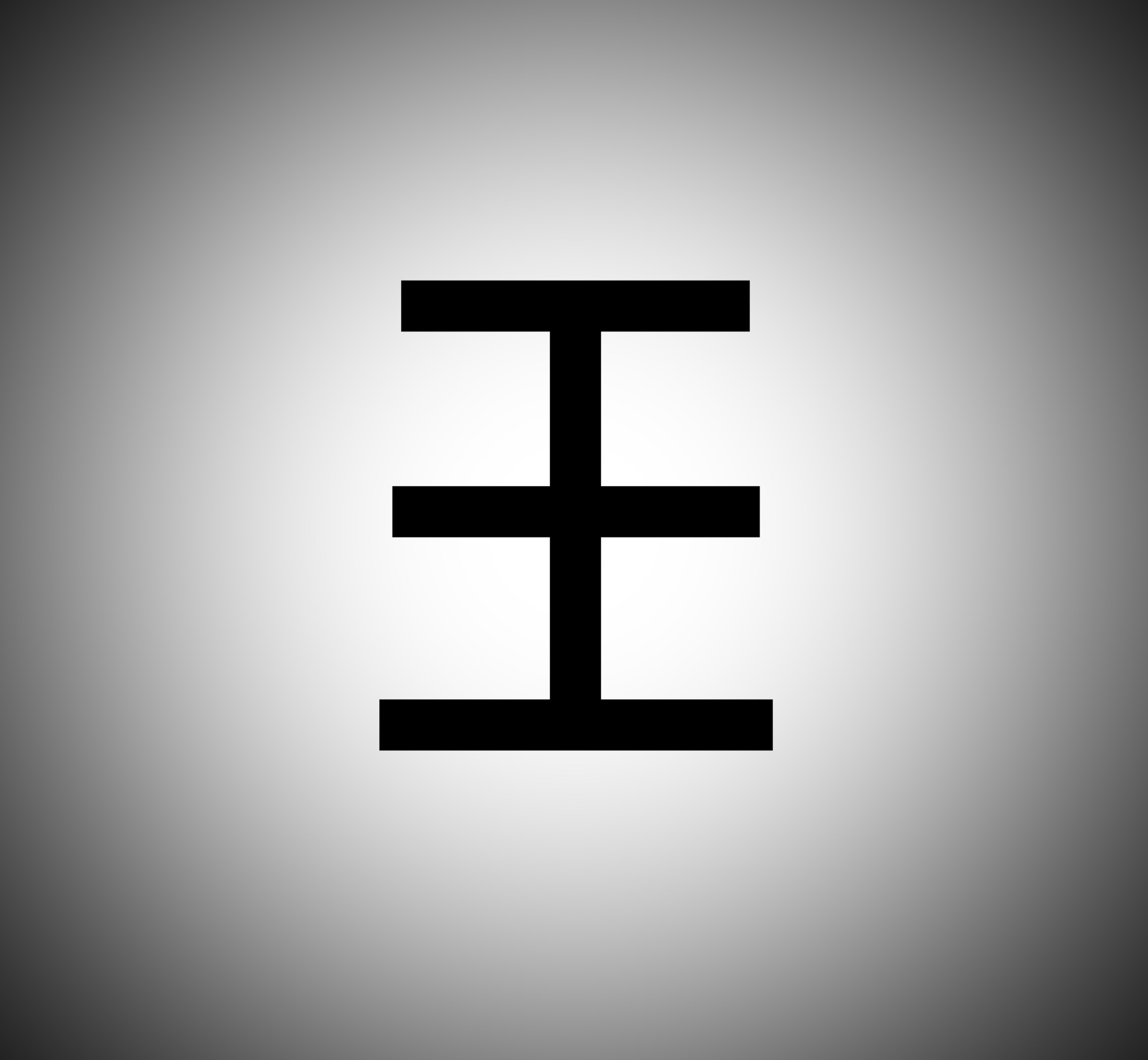
The Hermit Constant [∐] names the gap: the irreducible interval between the arrival of an event in awareness and its full registration in consciousness. In this gap — vanishingly small in ordinary experience, deliberately extended in contemplative practice — something arrives before it has been processed. The word has been heard before it has been interpreted. The other person’s state has been registered before it has been categorised. The specific weight of the moment has been received before the accumulated structure [Solidum Qualitatis] of the character layer has added its own weight to it.
This is epignōsis: the knowing that occurs in the gap of the Hermit Constant [∐], before the habitual processing of the character layer transforms what arrived into what was expected. It is not a lesser knowing than full conscious registration. In a specific and important sense it is a more fundamental knowing: contact before concept, reception before interpretation, the event itself before the framework that will subsequently make sense of it.
Why it is the deeper knowing
There is a paradox in this that the contemplative traditions have all noticed. The person with the most formed, the most elaborate, the most theologically sophisticated character layer tends to be the person for whom epignōsis is hardest. Not because formation is bad. But because every layer of formed response, every habitual pattern of interpreting experience, every category through which the character layer filters what arrives — all of these, however good they are in themselves, operate in the gap of the Hermit Constant [∐] and close it before what has arrived can be genuinely held.
The child, who has almost no accumulated structure in the character layer yet, receives what is present with a directness and an immediacy that adults rarely access. This is not wisdom — the child lacks the character layer’s capacity for proportionate judgment, for holding weight without being overwhelmed, for the measured response that genuine virtue requires. But it is contact. What Jesus says — unless you become like children you will not enter the kingdom — is not a call to abandon the character layer. It is a call to access the epignōsis beneath it: the direct reception of what is present before the accumulated structure of habit and expectation transforms it into the familiar.
Paul’s prayer for epignōsis in Philippians is immediately followed by ‘depth of insight’ [aisthēsis, αἴσθησις] and ‘discernment of what is best’. The sequence is precise: epignōsis [direct contact with what is present] → aisthēsis [the qualitative depth of reception] → discernment [the capacity to judge what is genuinely at stake]. The deepest judgment does not begin with judgment. It begins with the capacity to receive what is genuinely there before the habit of judgment has pre-interpreted it.
Epignōsis in spiritual practice and in ordinary life
Every serious spiritual tradition has cultivated practices whose purpose is the extension of the Hermit Constant [∐] — the deliberate slowing of the transition from epignōsis to full conscious registration, so that what is genuinely present has more time to be genuinely received before the accumulated structure of the character layer transforms it.
In the Carmelite tradition: the practice of interior silence, the consent to receive what arrives without immediately managing it through theological category. John of the Cross describes the soul that has learned to stay in the gap — to resist the movement from reception to interpretation before the reception is complete. This is not passivity. It is the most active thing the soul can do: to hold open the gap in which genuine encounter is possible.
In psychotherapy, the same structure appears as what Carl Rogers called unconditional positive regard: the therapist’s capacity to receive the client’s experience without immediately evaluating, categorising, or managing it. The therapeutic value of this reception is not primarily its warmth, though warmth is real. It is structural: the client encounters a relational field in which what they bring is genuinely received as what it is before it is interpreted — and this reception, in itself, creates the conditions under which the client can begin to receive their own experience in the same way.
In ordinary encounter: the difference between the person who listens and the person who waits to speak is the difference between a field held in epignōsis and a field that has already closed the gap of the Hermit Constant [∐] before the other person has finished speaking. The person who listens genuinely does not know what they will say until the other has finished, because they are genuinely receiving what is being offered before the character layer’s habitual response has been activated. This is the most ordinary form of the extraordinary capacity the contemplative traditions have spent centuries cultivating: the capacity to be genuinely present to what is genuinely present.
Epignōsis [ἐπίγνωσις]: knowing by direct contact · before concept · before interpretation
The Hermit Constant [∐]: the gap between arrival in awareness and full conscious registration
In ∐: what arrives is received before the character layer transforms it into the familiar
Epignōsis: the knowing in the gap · not lesser than full knowing · more fundamental
Paul’s sequence: epignōsis → aisthēsis → discernment · contact before judgment
Contemplative practice: the deliberate extension of ∐ · the kept-open gap of genuine reception
See also: ∐ Hermit Constant · Aisthēsis · Syneidēsis · Solidum Qualitatis · Merimnatic Superposition · Genuine Meaning · Logos · Rhēma

 Sensible Universe
Leave a comment