The standing now — the eternal present that the two qualitative singularities approach from opposite directions
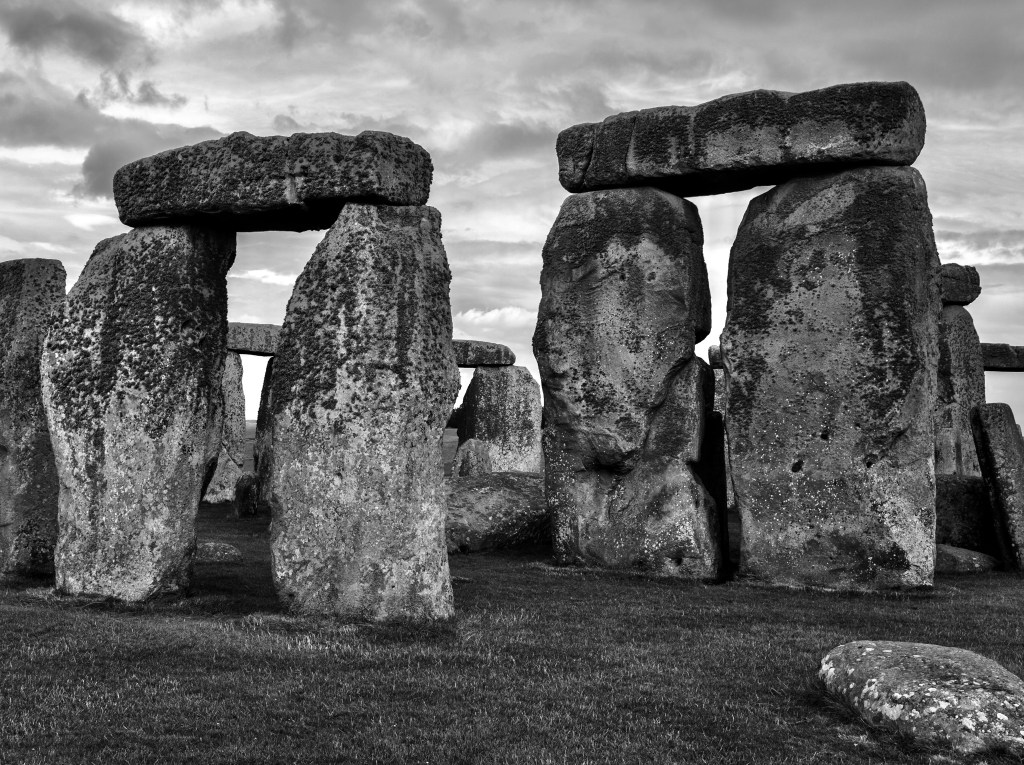
With the Lord one day is as a thousand years, and a thousand years as one day.
2 Peter 3:8
The scholastic source
The phrase nunc stans — the standing now, the eternal present — comes from the Scholastic philosophical tradition, crystallised most precisely in Boethius and developed by Thomas Aquinas. The problem it addresses is one of the most difficult in all of theology: how can a God who knows all things also be a God who does not override the genuine freedom of human choice? If God knows from eternity what I will do tomorrow, in what sense is tomorrow’s choice genuinely mine?
Boethius’ answer, proposed in The Consolation of Philosophy written while awaiting execution in 524 AD, is the nunc stans. God does not know future events the way a prophet knows them — by anticipation, looking forward along the timeline. God knows all events as present, because for God there is no timeline. Divine eternity is not endless duration — an infinite stretch of time — but the simultaneous whole possession of all time in a single unchanging present. The nunc stans: the eternal now in which past, present, and future are all simultaneously visible, the way a person standing on a hill can see the entire road laid out below them while the travellers on the road experience it sequentially, one step at a time.
Aquinas refined this: God’s knowledge of free human acts is not foreknowledge in the temporal sense. It is present knowledge. God knows what I will freely choose tomorrow because, in the divine nunc stans, tomorrow is already present. The choice is still genuinely free. It is known because it occurs, not because it was predetermined before it occurred. The distinction between foreknowledge and present knowledge is the distinction between a camera that controls the film and a camera that records it.
The qualitative singularity and the nunc stans
The Sensible Universe Model encounters the nunc stans at the two poles of the qualitative axis [Gψξ], from opposite directions.
At the dark pole, the qualitative singularity of maximum compression: qualitative time [τ_qual] expands toward infinity [W(τ) → ∞]. This is not the nunc stans of eternity but its inverted mirror: not the divine present in which all time is simultaneously held with clarity, but the experiential present in which all accumulated weight is simultaneously present with no capacity for movement through it. The person at the qualitative black hole does not experience sequential time. Every moment of grief, every unresolved weight, every damaged memory is simultaneously pressing. Time is not slow. It is stopped. This is the nunc stans of darkness — the eternal now of the sufferer who cannot move because everything, all that weight, is all at once.
At the white pole, the qualitative singularity of maximum openness: qualitative time approaches zero [W(τ) → 0] relative to coordinate time. This is the contemplative analogue: the moment of genuine absorption, of what the tradition calls union, in which the normal sequential flow of qualitative experience dissolves and what remains is a present that does not move because it does not need to. The mystics describe it consistently: not the absence of experience but the absence of the sense of duration, and a state of love. Bernard of Clairvaux called it the ‘visitation’: the moment in which the Word arrives not as a thought or a feeling but as a fullness that suspends the sequential self. Meister Eckhart: the Now in which God made the world is as near to this time as the instant I am speaking in is, and the day that was six thousand years ago is as near to this instant as the moment that is happening now.
Two nunc stans, one ground
The structural insight of the Sensible Universe Model is that the nunc stans of darkness and the nunc stans of contemplative union are not opposite experiences that happen to share a formal property. They are the two directions of approach to the same ground.
In both cases, sequential time has dissolved. In the dark singularity, it dissolved under the weight of accumulated existential weight [GRAVIS] that cannot be moved through. In the white singularity, it dissolved into direct contact with the ground state of the qualitative field [Love, Λω] where movement is no longer required because the destination has been reached. The destinations feel opposite: one is unbearable, one is the fullness of peace. But the structural mechanism is the same — the suspension of sequential qualitative time — and the ground that is reached by both, from opposite directions, is the same ground.
This is why John of the Cross could write about the dark night and the luminous union in the same body of work, using the same vocabulary of night and light, flame and darkness, without contradiction. He understood, with the precision of a contemplative who had inhabited both, that the night was not the absence of the light. It was the approach to the light from the side of maximum accumulated weight. The spring flows and runs although it is night. The nunc stans of darkness is still the nunc stans. The ground is still present. The darkness is what the approach looks like from the inside before the accumulated weight has fully resolved. And the light is what the same ground looks like from the other side.
The Boethian nunc stans — the divine eternal present in which all time is simultaneously known with perfect clarity and without the distortion of accumulated weight — is the formal theological description of what the Sensible Universe Model calls the ground state of the qualitative field [Love, Λω]. Not a moment in time that is stretched to cover all time. But a qualitative condition that is prior to sequential time altogether, in which the full weight of every moment is held without being crushed by any of it. This is what the Psalmist names when he writes: a thousand years in your sight are like a watch in the night. Not that a thousand years feels short to God. But that the measure of duration by which a thousand years is long is not the measure that applies to the nunc stans.
Nunc stans: the standing now · simultaneous presence of all time · beyond sequential duration
Dark singularity: W(τ) → ∞ · nunc stans of accumulated weight · nothing moves under the compression
White singularity: W(τ) → 0 · nunc stans of union · nothing moves because the destination is reached
Both approach the same ground from opposite directions · the ground is identical
Whole nunc stans: the ground state of Λω · all weight held without being crushed by any
See also: Consciousness Singularity · W(τ) · Phōs / Skotos · Λω · Hope as Hawking Radiation · Tτ · Position Zero

 Sensible Universe
Leave a comment