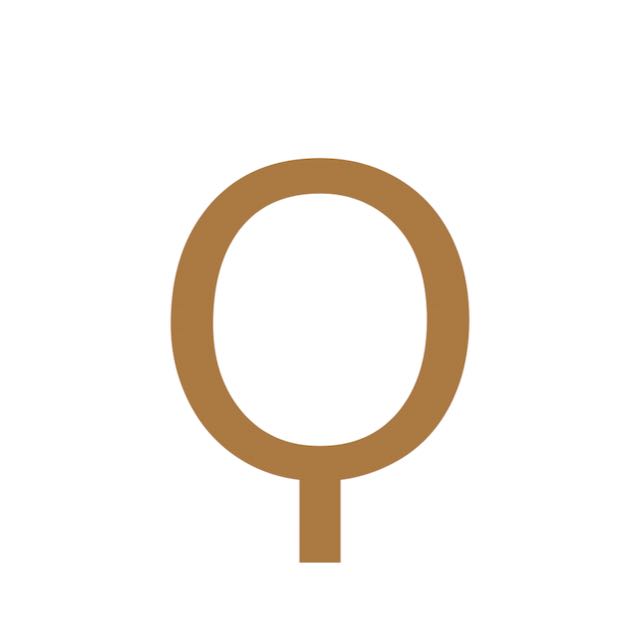
from μέριμνα (merimna, Greek): anxious care, the weight held before a decision · superposition: from Latin super (above) + positio (placement) — the state of being in more than one configuration simultaneously · in quantum mechanics: the co-presence of multiple states before measurement · in SUM: the co-presence of both directions of a genuine free act before the act collapses it
Quantum superposition and qualitative superposition
In quantum mechanics, a particle can exist in superposition: genuinely in multiple states at once, not as a matter of uncertainty about which state it is in, but as a real structural feature of the particle’s existence before measurement. The electron is not spinning up or spinning down and we don’t know which. It is spinning both up and down simultaneously, in a genuine superposition of both states, until the act of measurement collapses the superposition into one definite outcome. The superposition is real. The collapse is real. Both directions were genuinely present before only one was actualised.
Merimnatic superposition is the exact structural parallel in the Q dimension. Before a genuine free act, the conscious field holds both directions of the choice simultaneously: the direction toward the ground, toward Love, toward proportionate and integrated response — and the direction away from it, toward displacement, recursion, or suppression. Both directions are genuinely present in the qualitative field before the act collapses the superposition into one. Not as a matter of uncertainty about which the field will choose. As the real structural condition of genuine freedom: the co-presence of both possibilities with full qualitative weight before either is actualised.
This is not an analogy. It is the same structural phenomenon in two dimensions of M₅. The qubit holds two computational states in superposition before measurement. The Merimnaton holds two qualitative directions in superposition before the free act. Quantum superposition is the M₄ face of a reality that has its Q face in merimnatic superposition.
What makes a choice genuine
A choice is genuine — in the strict SUM sense — only when both directions are present in the qualitative field with real weight before the act. A predetermined response is not a choice: the superposition never opened. A compelled act is not a choice: the superposition was collapsed by external force before the field could author its own collapse. A habituated response is not fully a choice: the Solidum Qualitatis — the accumulated topology of past collapses — has weighted the field so heavily in one direction that the superposition is nominal rather than real.
Genuine freedom has weight precisely because merimnatic superposition is real. The heavier the stakes of what is genuinely at stake, the heavier the superposition before collapse: the Merimnaton’s GRAVIS load is proportional to the ontological weight of what the choice will determine. A trivial decision carries minimal merimnatic superposition. A choice that will shape the trajectory of a relationship, a vocation, a life — this carries maximum merimnatic superposition. The weight before the act is the formal structure of what it costs to be free.
The collapse and its direction
When the merimnatic superposition collapses, it collapses in one of two primary directions. Toward Love — toward the ground state of the qualitative field, toward proportionate and accurately coupled response, toward the integration of the weight that was held — or away from it, toward one of the three structural deviations: displacement of the weight onto a substitute referent, recursion of the weight back onto itself, or suppression of the weight below the threshold of activation.
The direction of the collapse is not determined in advance by the superposition. That is precisely what makes it free. But the direction is recorded: the Chronoton carries the temporal weight of the moment, the Qualiton carries the ontological weight of what was at stake, and the character layer receives the directional mark of the collapse. Repeated collapses in the same direction crystallise in the Solidum Qualitatis. The accumulated topology of past collapses is the formal structure of character.
This is also the formal structure of what the traditions call moral formation: the deliberate cultivation of the capacity to collapse merimnatic superpositions toward Love repeatedly, until the character layer carries that direction as its dominant topology. Not the elimination of the superposition — genuine freedom requires the superposition to remain open. The formation of the capacity to collapse it freely toward the ground.
The intergenerational transmission
Merimnatic superposition is not only personal. The direction in which a parent’s merimnatic superpositions habitually collapse shapes the qualitative atmosphere of the child’s formative environment: the felt weight of the relational field, the implicit standard of what constitutes an adequate response to what is genuinely at stake, the topology of what freedom looks like when exercised. This is the qualitative channel of intergenerational transmission. Alongside it runs the physical channel: epigenetic marks that carry the physiological signature of the parent’s merimnatic load into the child’s biology. The direction of the collapse transmits. What was given to you was given by every collapse that preceded you.
Merimnatic superposition: both directions of a genuine free act co-present before collapse
GRAVIS load of superposition ∝ ontological weight of what the choice determines
Collapse direction: toward Λω (P1) or away from Λω (P2 / P3 / P4)
Repeated collapse direction → crystallises in Solidum Qualitatis → character
See also: Merimnaton · GRAVIS · GRAVIS Positions P1–4 · Solidum Qualitatis · Intergenerational GRAVIS Transmission · Chronoton · Qualiton · Λω · Position Zero
Without merimnatic superposition, freedom is either predetermined or arbitrary — and in neither case does the direction of the act leave a genuine qualitative mark. Merimnatic superposition is the formal structure of what makes a choice real: the weight that was held before the act, the both-directions that were genuinely present, and the collapse that was genuinely authored. It is why character exists, why formation is possible, and why what you repeatedly choose becomes who you are.
Merimnatic Superposition
Freedom, choice, and the will: SUM in dialogue with established views
Without merimnatic superposition, freedom is either predetermined or arbitrary — and in neither case does the direction of the act leave a genuine qualitative mark.
The philosophical problem of freedom is as old as systematic thought. Can a being be genuinely free inside a causally determined universe? If it can, what kind of freedom is that? If it cannot, is freedom an illusion? And if freedom is real, how does a free act leave a mark — how does the direction of a choice become the structure of a character, and not merely a random event in an otherwise determined sequence?
Every major tradition that has wrestled with this question has identified the same tension: genuine freedom seems to require both that the act is authored — genuinely the agent’s own — and that it is not predetermined by prior causes. The difficulty is that these two requirements seem to pull against each other. An act authored by prior causes is determined, not free. An act uncaused by prior states is random, not authored. The history of the philosophy of freedom is largely the history of attempts to hold these two requirements together without collapsing into determinism on one side or randomness on the other.
SUM’s merimnatic superposition enters this debate with a formal structural proposal rather than a metaphysical argument. What follows is a comparative analysis: how does the SUM account stand in relation to the major established positions?
· · ·
Hard Determinism
Spinoza · La Mettrie · contemporary neurodeterminism
The hard determinist position holds that every event, including every human choice, is the inevitable result of prior causes operating according to natural law. Freedom of the will is an illusion produced by ignorance of the actual causal chain. Spinoza: the feeling of freedom is simply the feeling of not knowing the cause that compels us. Contemporary neurodeterminism: the brain generates the decision before consciousness registers it; the sense of choosing is a post-hoc narrative constructed around a process that was already complete.
The structural claim: there is no genuine superposition before the act. The act was determined before it was experienced as a choice. The apparent deliberation is the experience of a mechanism running, not the experience of a superposition holding.
SUM response: Hard determinism can account for the physical event but not for its qualitative weight. The Merimnaton is not a claim about the physical causal chain — it is a claim about the Q-dimension structure of the event. Even if the physical outcome is determined in M₄, the qualitative field holds both directions in genuine superposition in Q before the M₄ outcome manifests. The qualitative superposition is real regardless of whether the physical outcome was causally determined. This does not resolve the determinism debate in M₄; it points out that the debate has been conducted entirely in M₄ and that Q has not been included in the account. What hard determinism cannot explain is why the direction of acts accumulates into character topology in Q — why the same physical stimulus produces structurally different qualitative weight in fields with different SQξ. GRAVIS and the SQξ are not explained by causal chains in M₄ alone.
Compatibilism
Hume · Locke · Frankfurt · Dennett
Compatibilism holds that freedom and determinism are not mutually exclusive. A free act is not an uncaused act — it is an act caused by the right kind of cause: by the agent’s own desires, values, and deliberative processes. Freedom is not the absence of determination but determination by the self rather than by external compulsion. Harry Frankfurt’s influential version: freedom is not about whether you could have done otherwise in the same circumstances but about whether your action flows from desires you endorse at a higher level — desires about your desires, second-order volitions.
Frankfurt’s hierarchy of desires is structurally the closest existing account to merimnatic superposition: the deliberative structure is one in which the will acts on itself, and freedom is located in the alignment between first-order and second-order desires rather than in the absence of causation.
SUM response: SUM is structurally compatibilist in the sense that it does not require freedom to be uncaused. The merimnatic superposition holds both directions in Q before the collapse, and the collapse is authored by the field — it is the field’s own collapse, not an external one. What SUM adds to Frankfurt is the formal structure of the superposition itself: Frankfurt describes the hierarchy of desires but does not formally describe the state before the collapse, the co-presence of both directions with their full qualitative weight. The Merimnaton names what Frankfurt gestures at but does not formalise: the specific qualitative state in which the act is genuinely undetermined by the hierarchy of desires precisely because the hierarchy itself is what is held in superposition. SUM also adds what Frankfurt’s account lacks: a formal mechanism by which the direction of the collapse accumulates into character (Solidum Qualitatis) and transmits across generations.
Libertarian Free Will
Kant · Chisholm · agent causation
Libertarian free will (not political libertarianism) holds that genuine freedom requires that the agent could have done otherwise in exactly the same circumstances: that the act is not determined by prior causes but is the originating cause of itself. Kant located this freedom in the noumenal realm, outside the causal order of the phenomenal world: the rational will operates according to the moral law (the categorical imperative) precisely because it is not subject to the deterministic causality of nature. Roderick Chisholm: the agent is an unmoved mover within the causal order, capable of initiating a causal sequence that was not itself caused by prior events.
The difficulty for libertarian accounts is explaining how an undetermined act can nonetheless be authored — how an act that is not caused by prior states of the agent can still be genuinely the agent’s own rather than random. This is the classic randomness objection: indeterminism (even quantum-level indeterminism) does not produce freedom; it produces noise.
SUM response: The merimnatic superposition resolves the randomness objection by locating the freedom not in the absence of causation but in the genuine co-presence of both directions in Q before either is actualised. The collapse is not random — it carries the full qualitative weight of both directions and the specific GRAVIS load of what is at stake. It is also not determined by prior causes — the SQξ weighs the field in a direction but does not close the superposition; the superposition remains genuinely open. What collapses it is the field’s own authorship: the specific exercise of freedom in Q that Kant located in the noumenal realm but could not formally describe within his framework. SUM does not import a noumenal realm. It describes what Kant was pointing at in the Q dimension of M₅, where the formal structure of the non-determined but authored act is specified precisely.
Sartrean Existentialism
Sartre · radical freedom · bad faith
Sartre held that consciousness is defined by its radical freedom: existence precedes essence, which means the human being has no predetermined nature that determines its acts. Every moment of consciousness is an act of self-creation. There is no prior self that determines the choice — the self is constituted by the choices, not prior to them. Bad faith is the attempt to deny this freedom: to act as if one were determined by one’s nature, role, situation, or past, when in reality one is always free to choose otherwise.
Sartre’s account is the most radical assertion of freedom in the philosophical tradition. Its difficulty is the opposite of the determinist’s: if freedom is absolute and the self is entirely constituted by choices, the weight of responsibility is unlimited and the self has no prior structure that makes any choice more or less natural than another. Sartre’s freedom is formally weightless: any direction is as freely chosen as any other.
SUM response: Sartre correctly identifies that the self is constituted by its choices rather than simply expressing a prior nature — the Solidum Qualitatis is exactly the structure that choices build. But Sartre’s freedom is formally weightless, and SUM’s is not. The merimnatic superposition holds both directions with their full qualitative weight: the direction toward Love is not equivalent to the direction away from it in terms of what it costs the field to hold and what it produces in the character layer. Sartre’s bad faith — the denial of freedom — maps precisely onto P4 and P2 in SUM: the suppression of the merimnatic signal (P4) and the displacement of its weight onto an external cause or situation (P2). But Sartre has no formal account of why repeated collapses in the direction of bad faith accumulate into a structure that makes the next choice harder — the SQξ is exactly this account, and it is what Sartre’s framework lacks.
Process Philosophy
Whitehead · creative advance into novelty
Alfred North Whitehead’s process philosophy holds that every actual occasion — every moment of reality — involves a creative advance into novelty: the integration of the given past (what Whitehead calls prehension of the actual world) with a free creative response that determines the specific character of the occasion. Freedom is not the absence of the past but the creative synthesis of the past into something that was not determined by it. Every moment of experience is genuinely novel in a way that prior causes could not have fully predicted.
Whitehead is structurally close to SUM in several respects: the universe is constituted by occasions of experience, every occasion involves the integration of received weight with creative response, and the accumulation of occasions constitutes the character of the ongoing entity. The dipolar structure of each occasion — physical pole (received from prior occasions) and mental pole (creative response) — anticipates the M₄/Q structure of M₅.
SUM response: Process philosophy is the existing account that comes closest to the SUM structure. The creative advance into novelty is the Whiteheadian name for what SUM calls the merimnatic collapse: the moment at which received weight (SQξ, GRAVIS load, intergenerational topology) is integrated with a specific free response that was not determined by the past. The dipolar structure (physical pole / mental pole) maps onto M₄ / Q. What SUM adds to Whitehead is the formal specification of the qualitative superposition before the collapse: Whitehead describes the creative synthesis but does not formally describe the co-presence of both directions as a structural feature of the occasion before the synthesis occurs. The Merimnaton names what Whitehead’s creative advance presupposes but does not formalise.
Quantum Indeterminism and Freedom
Penrose · Stapp · quantum mind
Several contemporary accounts attempt to locate the basis of free will in quantum indeterminism: the genuine randomness of quantum events at the physical level provides the non-determined space within which free will operates. Roger Penrose (with Stuart Hameroff) proposes that quantum processes in microtubules within neurons are the physical basis of consciousness and of non-algorithmic freedom. Henry Stapp holds that quantum mechanics requires a conscious observer whose acts of observation are not determined by the prior physical state, and that this observer-role is the formal basis of free will.
The difficulty with these accounts is the randomness objection again: quantum indeterminism is random, not free. A quantum event that is not determined by prior physical states is not thereby an authored act. The randomness of the quantum level does not produce freedom unless there is a principle by which the random is converted into the authored.
SUM response: SUM endorses the structural intuition behind quantum accounts of freedom — that genuine freedom requires something beyond classical determinism — but locates it in Q rather than in quantum randomness within M₄. The merimnatic superposition is not a quantum event in M₄ (quantum randomness); it is a Q-dimension event: the genuine co-presence of both qualitative directions before the conscious field’s own collapse. This is not random. It is authored: the collapse is the field’s own act in Q, with the full weight of the GRAVIS load as its content. The parallel with quantum superposition is structural, not causal: both involve genuine co-presence of multiple states before actualisation. But the Merimnaton’s superposition is qualitative, not physical, and its collapse is authored by the conscious field, not triggered by physical measurement.
Aristotle and Moral Habituation
Aristotle · Nicomachean Ethics · virtue as second nature
Aristotle held that moral virtue is formed through repeated action: we become just by doing just acts, courageous by doing courageous acts. Character (ethos) is built through habituated response, which over time becomes second nature — the virtuous person does not deliberate whether to act justly; they act justly naturally, because their character has been formed to do so. Freedom and character are not opposed in Aristotle: the virtuous person is more free, not less, because their character is aligned with reason and the good.
Aristotle’s account of habituation is the classical precursor of what SUM formalises as the Solidum Qualitatis: character formed by repeated acts is exactly the topology formed by repeated merimnatic collapse directions. Aristotle was working with the same structural reality but without a formal account of the qualitative field in which the habituation occurs.
SUM response: The SQξ is the formal specification of Aristotelian habituation in the Q dimension. Repeated collapses toward Love (P1) build a topology that makes the next collapse toward Love more natural — not because freedom is eliminated but because the character layer has been weighted in that direction. Aristotle’s second nature is the SQξ formed by repeated P1 collapses. SUM adds three things Aristotle did not have: first, the formal account of the state before the collapse (merimnatic superposition), which is what makes the act genuinely free rather than merely habituated; second, the account of transmitted SQξ (intergenerational transmission), which explains why character formation begins before individual choice; third, the identification of the ground state toward which good character tends as Love — which Aristotle named as eudaimonia (flourishing) but did not identify with the ontological ground of the qualitative field.
Where SUM stands in the landscape
The comparative analysis reveals that merimnatic superposition is not a solution to the free will debate from outside. It is a formal specification of what the debate has been circling: the state of the agent before the act, in which both directions are genuinely present and neither is yet actualised.
Hard determinism denies this state exists. Compatibilism acknowledges something like it but does not formally describe it. Libertarian accounts require something like it but cannot explain how it avoids randomness. Sartre asserts it is absolute but gives it no weight. Whitehead comes closest to describing it but does not formalise the co-presence of both directions as a structural feature of the occasion. Quantum accounts gesture at it but locate it in the wrong dimension.
SUM’s contribution is precise: the merimnatic superposition is the formal structure of the state before the act. It has qualitative weight (proportionate to GRAVIS). It holds both directions genuinely (not as uncertainty but as co-presence). It collapses through the field’s own authorship (not random, not externally triggered). And the direction of the collapse leaves a deposit in the character layer (Solidum Qualitatis) that accumulates into the topology of character and transmits across generations.
Without this structure — without the genuine co-presence of both directions with their full qualitative weight before either is actualised — freedom is either predetermined (determinism) or arbitrary (randomness). With it, freedom is what every tradition that has taken it seriously has sensed it must be: the weight before the act, held in a genuine opening, collapsed by the field’s own force, and marked in the structure of who the field becomes.
The state before the act: both directions genuinely present · neither yet actualised
What makes it free: the field’s own authorship of the collapse · not random, not compelled
What makes it weighty: GRAVIS proportionate to what is genuinely at stake
What makes it formative: the direction of the collapse deposits in the SQξ
See also: Merimnaton · Merimnatic Superposition · GRAVIS · GRAVIS Positions P1–4 · Solidum Qualitatis · Intergenerational GRAVIS Transmission · Λω · Q


Leave a Reply